Nearly half the world's children exposed to three or more climate risks: UNICEF / Photo: © AFP

 Athletes 'can't take it any more' as Asian Games issues mount
 Allen lights up Bills' new stadium with 41-31 win over Lions

 Afghan medical students in Pakistan hope court stops college expulsions
 AI doomsday warnings unlikely to slow IPOs but questions linger
 ICC eyes China in bid to expand cricket
 Nkunku craving freedom and fun on RB Leipzig return

 Bhutan's traditional archers lose ground to development
 Asian stocks track Wall St rally as oil prices drop

 South Korea makes Asian Games complaint over Japan warlord ceremony
 US aid cuts are killing Kenyan sex workers

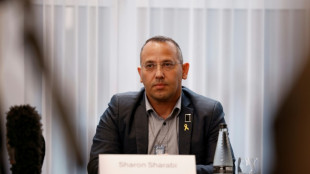 October 7 survivors, families take centre stage in Israel vote
 Captain Mat Ryan axed from Socceroos squad for Brazil games

 US approves sale of 48 F-35 jets to Saudi Arabia
 Juventus, Palace cruise to Europa League wins, Bournemouth beat Sociedad

 Stocks climb as oil retreats, Fed calms inflation fears

 Russians begin voting in controlled election as war drags

 Hispanics feel 'betrayed' on immigration, Republican warns Trump

 High-scoring Bears face Vikings in battle of NFL unbeatens
 'In our lane': Fed's Warsh defies Trump but still fighting for credibility

 Trump admin makes major cut to endangered species protections

 Princess Diana's brother makes new explosive claims against Charles

 Ovechkin on Russian political video: 'I support my country'

 Can we shut down AI?
 Teenager Sullivan named in new-look US squad
 Travis Scott and Keith Richards feature on GTA VI soundtrack

More than one billion children face at least three overlapping climate hazards, UNICEF warned Monday, while highlighting the disproportionate impact in some regions of the world.
For the report, the UN agency cross-referenced data showing where the roughly 2.4 billion children on the planet live with the geographic distribution of the eight most common climate impacts. They are coastal flooding, river flooding, drought, tropical storms, heat waves -- at least three days above a high temperature threshold, which varies by country -- extreme heat, wildfires and sandstorms.
The report primarily focuses on the 1.1 billion children who are exposed to at least three risks, with the most common combination being drought, extreme heat (above 35 degrees Celsius) and heat waves.
That combination affects some 296 million children, including 74 million in Nigeria, 34 million in Pakistan and 32 million in India.
The number of children in this three-or-more category has increased sharply over the past 20 years.
Almost all children -- some 2.3 billion -- are exposed to at least one risk. Two billion are exposed to at least two, while 364 million face at least four.
Of the 123,000 children exposed to seven or more climate hazards, some 46,000 are in Myanmar.
"Children are at the forefront of the impact of climate change," said UNICEF chief Catherine Russell.
As for the worst place for a child, "there isn't a super short answer," one of the report authors, Tom Slaymaker, told AFP.
- 'Hot spots' -
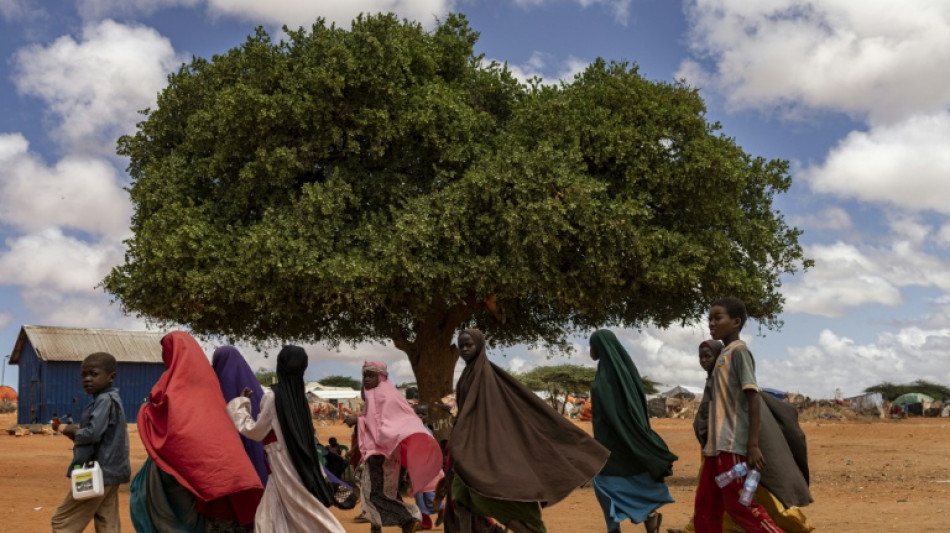
"But they're not all equal," Slaymaker said. "We do see some hot spots... it's really concentrated in Sub-Saharan Africa and parts of South Asia."
Countries with large populations of children -- including Bangladesh, India, Nigeria and Pakistan -- are at the top of the list for the number of children exposed to at least three hazards.
But in sheer percentage terms, countries in Sub-Saharan Africa -- particularly the Sahel -- have the largest proportion of children affected by hazards. The impacts are often exacerbated by governments' inability to cope with climate hazards.
Chad, for example, faces a humanitarian crisis with limited access to water, electricity and food. According to the report, more than 95 percent of kids in the country are exposed to at least three hazards -- one of the highest proportions in the world.
Other particularly vulnerable countries include 39 island states that face challenges such as limited freshwater, import dependence, and inability to easily shelter elsewhere after a disaster such as a hurricane.
- Nowhere to hide -
No country is truly spared, the report shows.
"In many countries, there will be small pockets of the population which are not exposed to these hazards," Slaymaker said. "They tend to be in the northern hemisphere, particularly so, parts of Scandinavia."
But that is because the report looks only at the eight most common risks worldwide, he stressed, noting that children in those countries may face other threats not covered in the report, such as melting glaciers or thawing permafrost.
abd/pnb/ksb/dw
E.Gasser--VB