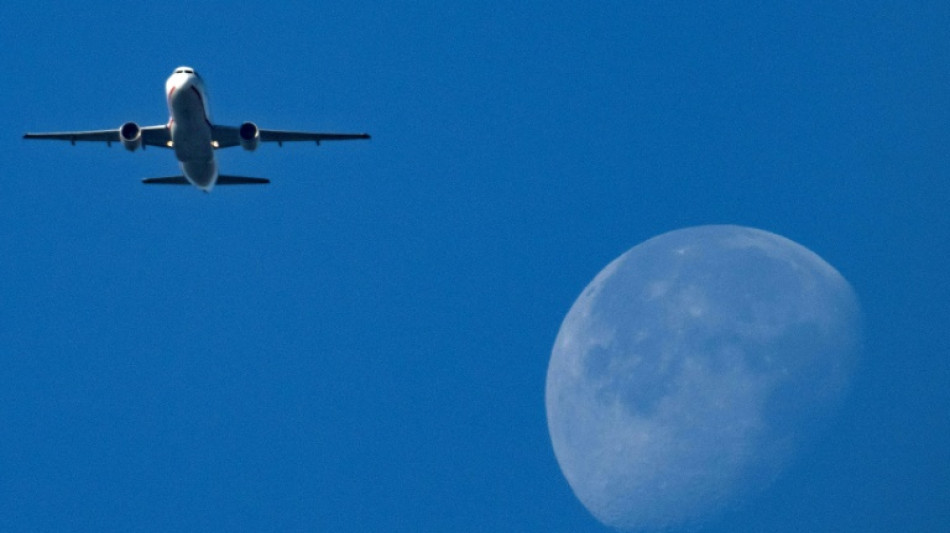
Europe's green jet fuels see upside in Iran war / Photo: © AFP/File

 Athletes 'can't take it any more' as Asian Games issues mount
 Allen lights up Bills' new stadium with 41-31 win over Lions
 Afghan medical students in Pakistan hope court stops college expulsions
 AI doomsday warnings unlikely to slow IPOs but questions linger
 ICC eyes China in bid to expand cricket
 Nkunku craving freedom and fun on RB Leipzig return

 Bhutan's traditional archers lose ground to development
 Asian stocks track Wall St rally as oil prices drop
 South Korea makes Asian Games complaint over Japan warlord ceremony

 US aid cuts are killing Kenyan sex workers

 October 7 survivors, families take centre stage in Israel vote
 Captain Mat Ryan axed from Socceroos squad for Brazil games

 US approves sale of 48 F-35 jets to Saudi Arabia

 Juventus, Palace cruise to Europa League wins, Bournemouth beat Sociedad

 Stocks climb as oil retreats, Fed calms inflation fears

 Russians begin voting in controlled election as war drags
 Hispanics feel 'betrayed' on immigration, Republican warns Trump

 High-scoring Bears face Vikings in battle of NFL unbeatens

 'In our lane': Fed's Warsh defies Trump but still fighting for credibility
 Trump admin makes major cut to endangered species protections

 Princess Diana's brother makes new explosive claims against Charles

 Ovechkin on Russian political video: 'I support my country'
 Can we shut down AI?
 Teenager Sullivan named in new-look US squad
 Travis Scott and Keith Richards feature on GTA VI soundtrack

At a plant near Frankfurt, in Germany, hydrogen and CO2 sourced from a chlorine factory and a biogas facility nearby are piped into a reactor and -- after a few more steps -- turned into jet fuel.
Interest in such synthetic propellants is growing as the Iran war pushes Europe to reassess its dependencies, raising hopes of a turnaround for the struggling sector, according to industry experts.
The conflict "made the business case for e-SAF much stronger," Mariano Berkenwald, head of strategy at Ineratec, the firm operating the Frankfurt facility, told AFP.
Before the war squeezed Europe's jet fuel supplies, electro-Sustainable Aviation Fuel (e-SAF), was largely touted for its climate friendly credentials.
Doing away with oil, it can reduce by 90 percent planet warming emissions from aviation -- itself responsible for up to four percent of all greenhouse gases released in the European Union -- proponents say.
Brussels has made it a key component of a push to green up transport, mandating fuel suppliers to blend at least 1.2 percent of the stuff into the kerosene made available at EU airports by 2030 and 35 percent by 2050.
But the sector has struggled to take off, bogged down by high costs and low investments.
- 'Zero' to hero? -
Founded 10 years ago, Ineratec launched production last year -- and its small German facility is currently the only one in Europe making the propellant.
About 40 more projects under development are stuck in a rut, unable to secure the funding needed to start production plants, said Camille Mutrelle of advocacy group Transport & Environment (T&E).
Europe needs roughly nine more bigger factories to meet the 2030 target but "we still have zero", she said.
Ineratec's plant churns out some 2,500 tonnes of fuel a year, enough to power only about 50 transatlantic flights.
With the clock ticking, Brussels, which recently scaled down the ambition of other climate goals, notably for cars, has been under pressure to scrap the target or at least the hefty fines suppliers would face for not meeting it.
The industry was braced for a review of the mandate due next year.
It now believes the Iran war and the resulting closure of the Strait of Hormuz, a key shipping lane for global gas and oil, might have changed the momentum.
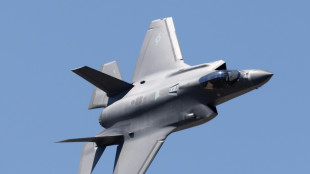
Since its key ingredients can be sourced entirely in Europe, e-SAF has drawn attention from military forces, which worry about the ready availability of fuel to power fighter jets, helicopters and other vehicles -- and could pay a premium for it, according to Matteo Mirolo, an aviation consultant specialising in sustainable fuels.
- Defence interest -
E-SAF costs about 10 times more than kerosene and even supporters concede it is unlikely to ever match the price of its fossil fuel-based rival.
Germany's armed forces recently tested Ineratec's fuel. And other governments are known to have expressed interest in building capacity, said Mutrelle.
"The current crisis is a wake-up call regarding Europe's energy independence," said Ourania Georgoutsakou, managing director of Airlines for Europe, a civil aviation lobby group.
Making sustainable fuels cheaper and more readily available should be "an urgent strategic priority", she added.
Supporters hope that getting governments behind the technology could finally persuade investors to bet on it.
Doubts over the sector and low prospective returns meant that energy majors have so far largely stayed away, preferring to invest in biofuels, said Mutrelle.
Derived from waste, these propellants are also part of the EU's climate plans.
But production often relies on waste oil and fat imports from China, which makes them less palatable from a security of supply perspective.
Fuel manufacturing group FuelsEurope did not reply to a request for comment.
The European Commission said it was considering the establishment of an EU financing mechanism for e-SAF to support development.
"We need home-grown energy, including fuels and aviation fuels," a commission spokesperson said.
Berkenwald of Ineratec said the company has been getting more calls of late but they are yet to translate into contracts.
"We are hopeful that that's where this is heading," he said.
J.Sauter--VB