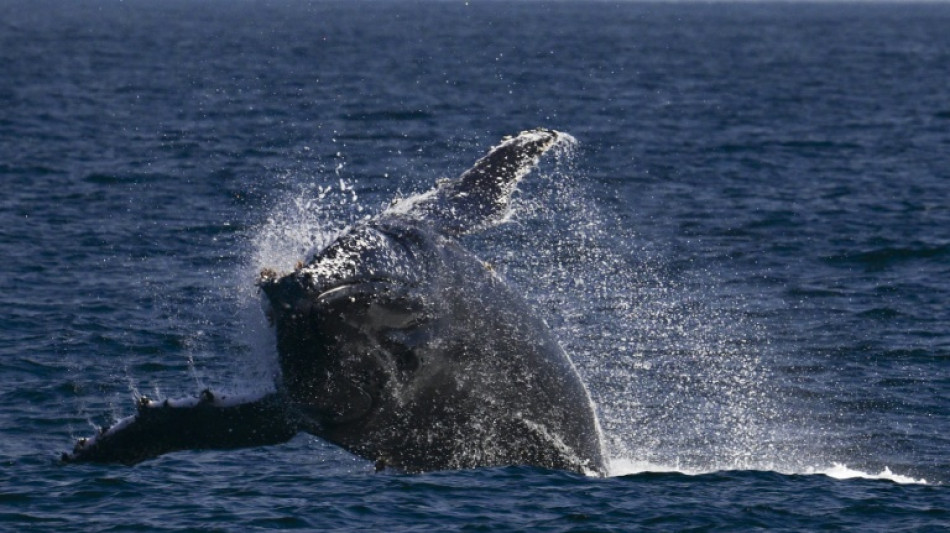
Whale of a time: Humpbacks set new distance record / Photo: © AFP/File

 Athletes 'can't take it any more' as Asian Games issues mount

 Allen lights up Bills' new stadium with 41-31 win over Lions

 Afghan medical students in Pakistan hope court stops college expulsions

 AI doomsday warnings unlikely to slow IPOs but questions linger

 ICC eyes China in bid to expand cricket

 Nkunku craving freedom and fun on RB Leipzig return

 Bhutan's traditional archers lose ground to development
 Asian stocks track Wall St rally as oil prices drop

 South Korea makes Asian Games complaint over Japan warlord ceremony
 US aid cuts are killing Kenyan sex workers

 October 7 survivors, families take centre stage in Israel vote

 Captain Mat Ryan axed from Socceroos squad for Brazil games

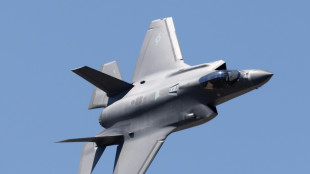 US approves sale of 48 F-35 jets to Saudi Arabia

 Juventus, Palace cruise to Europa League wins, Bournemouth beat Sociedad

 Stocks climb as oil retreats, Fed calms inflation fears

 Russians begin voting in controlled election as war drags

 Hispanics feel 'betrayed' on immigration, Republican warns Trump

 High-scoring Bears face Vikings in battle of NFL unbeatens

 'In our lane': Fed's Warsh defies Trump but still fighting for credibility

 Trump admin makes major cut to endangered species protections

 Princess Diana's brother makes new explosive claims against Charles

 Ovechkin on Russian political video: 'I support my country'

 Can we shut down AI?

 Teenager Sullivan named in new-look US squad
 Travis Scott and Keith Richards feature on GTA VI soundtrack

Two humpback whales have set new records for the longest-known distances travelled for their species by embarking on a journey of over 14,000 kilometres between Brazil and Australia, scientists said Wednesday.
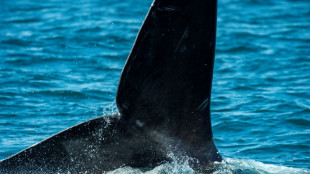
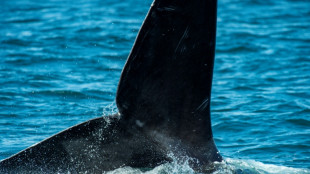
The international team of researchers were able to piece together the separate odysseys from photos of the whales' tails -- including some taken by amateur photographers on cruises -- captured decades apart.
These journeys through open water are "something that had never been documented before", Cristina Castro, a marine biologist at the Pacific Whale Foundation in Ecuador, told AFP.
"It's not unheard of for an individual to occasionally stray (from a migratory route), but what we documented here goes far beyond that," added the lead author of a new study in Royal Society Open Science.
Every humpback has a pattern on the underside of their tail -- or fluke -- that is unique "like a human fingerprint", Castro said.
The scientists analysed more than 19,000 photos taken between 1984 and 2005 in eastern Australia and Latin America using an image recognition algorithm.
Then they sifted through each potential match to trace the two whales' journey across the world.
The first humpback was initially photographed in 2007 in Hervey Bay, in the state of Queensland on Australia's east coast.
It was spotted at the same place again in 2013. Its unique fluke next popped up six years later -- this time off the coast of the Brazilian megacity Sao Paulo.
As the crow flies, this is a distance of around 14,200 km (8,800 miles). Because the scientists only know the start and end points of the journey, it was impossible to determine the whale's exact route -- or how far it actually travelled.
The second whale made the opposite journey.
First it was photographed off the coast of Bahia, Brazil in 2003 with eight other adult humpbacks.
Nearly a quarter of a century later, in 2025, it was spotted in Hervey Bay -- a distance of 15,100 km.
The previous humpback travel record was held by a whale that swam more than 13,000 km from Colombia's Pacific coast to Zanzibar off eastern Africa.
- 'Remarkable singers' -
Humpback whales in the Southern Hemisphere live in well-defined pods and usually follow the same migratory routes every year, travelling between feeding areas in cold water and breeding grounds in the tropics.
"Mothers actually teach these routes to their calves when they are young, so the patterns are deeply ingrained," Castro said.
The scientists suggested several theories for why these two humpbacks embarked on such "exceptional" deviations from the normal routes.
Changes in the ocean, including some caused by human-driven climate change, "could be altering migration corridors in ways we don't yet fully understand", Castro said.
"Disturbances or pressures in their original areas might push some individuals to explore further," she said, adding that the availability of food could also play a role.
By taking the long way around, the whales could contribute to the genetic diversity of their species. Humans once hunted humpbacks to the edge of extinction, but their numbers have rebounded in recent decades.
The strange journeys taken by these whales could also help them learn and spread new songs.
"Male humpback whales are remarkable singers" that "produce long, complex songs," Castro explained.
When a male "introduces a new phrase, others copy it, and within a season the whole population has shifted," she added.
"If a male from one breeding area arrives in another and sings, he could seed an entirely new musical influence."
F.Wagner--VB