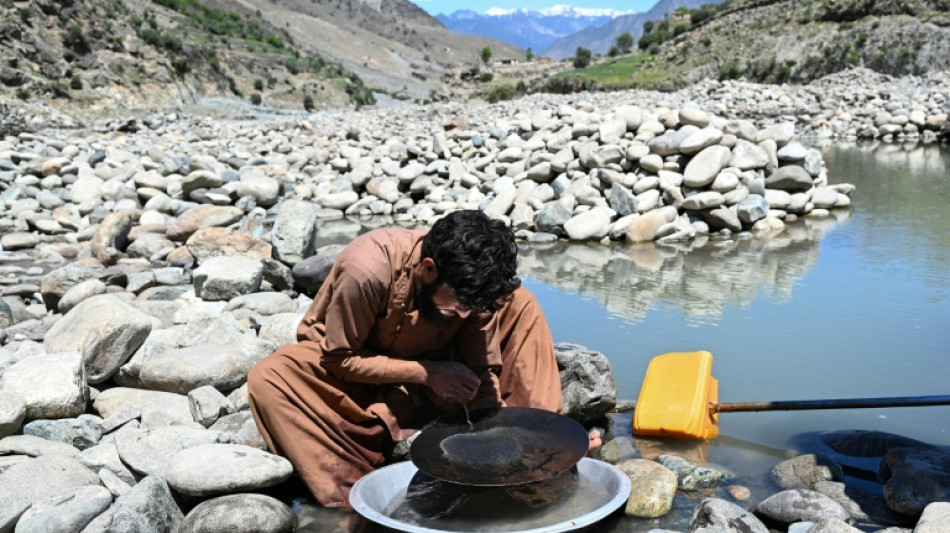
Afghans comb riverbed in search of gold dust / Photo: © AFP

 Most Asian stocks track Wall St rally, yen drops after BoJ rate hike
 Russians begin voting in controlled election as war drags on

 Trump 'clearly' wants dialogue with Pyongyang: South Korean President

 Bank of Japan hikes rates to 31-year high to battle inflation
 Thailand's Muslim separatists vow to fight to the end

 Mideast turmoil, AI set to dominate UN gathering of world leaders

 Australia to detain tourists who overstay visa, minister says

 Championship rivals brace for renewal of bitter feuds

 In Brazil's Amazon, the hunt for oil fuels hopes and fears
 Australian athlete who soiled herself apologises for continuing Hyrox race

 Baby orangutans in India expose 'frightening' scale of trafficking
 Doom Loop? Ed Sheeran struggles against Gaza tide

 Sudanese women hold fast to threatened henna body art

 Man Utd misery puts Carrick under pressure, Spurs feeling the heat

 Prized Mexican relic returns on loan, two centuries on

 Venezuela unblocks some censored news sites

 Samba stars on debut in Man City rout of Norwich

 Oversight Board blasts 'inadequate' Meta safeguards for AI deepfakes

 The Easter Island origins of buzzy Malkovich drama 'Wild Horse Nine'

 Third body recovered after Grand Canyon flash flood

 Harry makes first public appearance since return to UK

 Abhishek hits record T20 ton as India sweep series 3-0

 Abhishek hits record T20 ton as India sweep T20 series 3-0

 English FA calls for Infantino to release World Cup sell-off documents

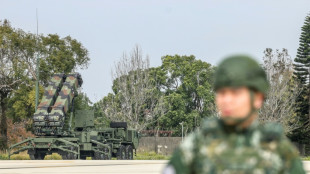 GM delivers first components for US interceptor missiles

In the jagged Hindu Kush in eastern Afghanistan, hundreds of men dug into the rocky bed of the Kunar River searching for a few grams of gold dust as an alternative source of income.
At the foot of imposing peaks, some still covered in snow in April, they toiled near the border with Pakistan to find the valuable glinting specks in a country where wages are low.
Below a village of mud-brick houses and small terraced wheat plots in Kharwalu, Kunar province, they dug into a dry section of the riverbed before sifting through their piles of rocks using river water.
Fifty-year-old Shahzahdah Gollalah was among the gold prospectors, having abandoned construction work a seven-hour drive from his home in Kabul.
"There are not many job opportunities in the country, and in this way, we have created work for ourselves," said the father of eight.
But "the gold nuggets we find are usually smaller than a grain of wheat," he added.
Downstream, in Ghaziabad, hundreds of men hacked into the mountain with picks, then carried a sack down on their backs along a steep slope and emptied it onto a sieve to filter gold from the sand.
Others scooped river water into yellow jerrycans attached to long wooden handles, pouring it over the sieve so that the smaller stones, which may contain gold flakes, slid down onto a mat. A nugget would sometimes appear in a metal pan after two further rounds of sifting.
Gul Ahmad Jan, 35, said he can earn a substantial amount in just a week.
"We can get up to about one gram of gold," which can fetch up to 8,000 Afghanis ($125), he told AFP.
Afghanistan's resources were rarely exploited during years of conflict, although a Kunar official said gold panning has happened there for more than a decade.
Najibullah Hanif, the province's information chief, said residents learnt the techniques from miners who arrived from gold-rich provinces.
"Some started to dig with machines, an excavator; some locals came and asked the Islamic Emirate (of Afghanistan) to stop them because it destroys the river and the mountains," said Hanafi.
He estimated thousands of people in Kunar were gold panning, using the traditional method allowed by the authorities.
Afghanistan's resources have attracted domestic and international investors in recent years, with the Taliban authorities promoting mining in various parts of the country.
K.Hofmann--VB