-
 Russia seizes assets of Nestle, French firms over West's Ukraine support
-
Stock markets diverge after central bank rate hikes
-
 England can build on World Cup 'spirit', says Tuchel
-
Anti-Assad music star makes triumphant return to Syria

-
 UNESCO can be 'moderator' in AI debate: chief to AFP
-
In-form Fernandez included in Spain Nations League squad

-
 Infantino 'must go', says German FA vice-president
-
Arteta buries hatchet with Hurzeler ahead of Brighton clash

-
 Russia seizes assets of Nestle, French firms
-
Alexander-Arnold and Palmer return to England squad for Nations League

-
 Japan's busiest rail station tests robot bins
-
Russians vote as Ukraine war drags on for fifth year
-
 Anthropic says AI systems moving towards building themselves
-
Backpackers fret over Australian visa crackdown

-
 Asian stocks boosted by falling oil, yen weakens after BoJ rate hike
-
Most Asian stocks track Wall St rally, yen drops after BoJ rate hike
-
 Pakistan court blocks expulsion of Afghan medical college students
-
Russians begin voting in controlled election as war drags on

-
 Athletes 'can't take it any more' as Asian Games issues mount
-
Trump 'clearly' wants dialogue with Pyongyang: South Korean President
-
 Allen lights up Bills' new stadium with 41-31 win over Lions
-
Bank of Japan hikes rates to 31-year high to battle inflation

-
 Afghan medical students in Pakistan hope court stops college expulsions
-
Thailand's Muslim separatists vow to fight to the end
-
 AI doomsday warnings unlikely to slow IPOs but questions linger
-
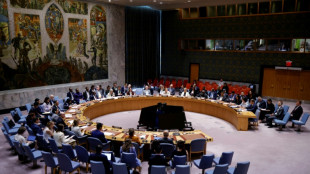
Mideast turmoil, AI set to dominate UN gathering of world leaders
-
 ICC eyes China in bid to expand cricket
-
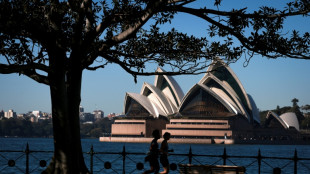
Australia to detain tourists who overstay visa, minister says
-
 Nkunku craving freedom and fun on RB Leipzig return
-
Championship rivals brace for renewal of bitter feuds

-
 Bhutan's traditional archers lose ground to development
-
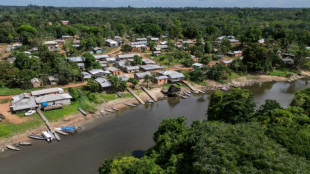
In Brazil's Amazon, the hunt for oil fuels hopes and fears
-
 Asian stocks track Wall St rally as oil prices drop
-
Australian athlete who soiled herself apologises for continuing Hyrox race

-
 South Korea makes Asian Games complaint over Japan warlord ceremony
-
Baby orangutans in India expose 'frightening' scale of trafficking

-
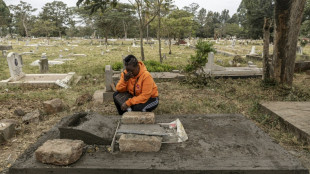 US aid cuts are killing Kenyan sex workers
-
Doom Loop? Ed Sheeran struggles against Gaza tide

-
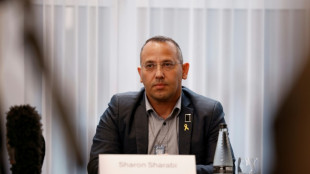 October 7 survivors, families take centre stage in Israel vote
-
Sudanese women hold fast to threatened henna body art
-
 Captain Mat Ryan axed from Socceroos squad for Brazil games
-
Man Utd misery puts Carrick under pressure, Spurs feeling the heat

-
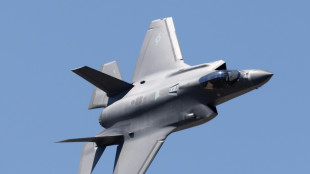 US approves sale of 48 F-35 jets to Saudi Arabia
-
Prized Mexican relic returns on loan, two centuries on

-
 Juventus, Palace cruise to Europa League wins, Bournemouth beat Sociedad
-
Venezuela unblocks some censored news sites

-
 Stocks climb as oil retreats, Fed calms inflation fears
-
Samba stars on debut in Man City rout of Norwich

-
 Russians begin voting in controlled election as war drags
-
Oversight Board blasts 'inadequate' Meta safeguards for AI deepfakes

UN climate summit pushes into overtime as nations clash over fossil fuels
Negotiators pushed into overtime Friday to salvage UN climate talks in Brazil as a bitter fight over whether to mention fossil fuels threatened to derail a final agreement.
At stake at COP30 is securing a deal that paves the way for faster cuts to planet-warming emissions that are driving ever more extreme weather -- and proving that international cooperation can still function in a fractured world.
After nearly two weeks of negotiations in the Amazonian city of Belem, a new draft agreement unveiled by COP30 host Brazil made no mention of "fossil fuels" or the word "roadmap" that President Luiz Inacio Lula da Silva had himself publicly supported.
European Union climate commissioner Wopke Hoekstra said the text was "unacceptable" and that the summit risked ending without an agreement.
"I am saying it with a heavy heart, but what is now on the table is clearly no deal," Hoekstra told reporters as negotiators huddled again in efforts to reach a compromise.
- Consensus required -
Thirty-six countries -- including wealthy nations, emerging economies and small island states -- had warned in a letter to Brazil that they would reject any deal that did not include a plan to move away from fossil fuels.
France's ecological transition minister, Monique Barbut, told AFP that oil-rich Russia and Saudi Arabia, along with coal producer India and "many" emerging countries, were blocking a deal on fossil fuels.
Arunabha Ghosh, a special envoy for South Asia at the talks, shot back against "finger pointing."
"To assume that one side cares about the planet and the other side, because they are unhappy with the formulation, does not care about the planet does grievous harm to the spirit of negotiations," he told AFP.
Ghosh also defended the exclusion of the fossil fuel phaseout roadmap, arguing developing countries needed to ensure energy security for their countries and a transition for workers dependent on the sector.
Consensus is needed among the nearly 200 nations to land an agreement at the UN climate conference, which this year is taking place without the United States as President Donald Trump shunned the event.
The head of COP30, Brazilian diplomat Andre Correa do Lago, said ruefully that those who doubt that cooperation is the best way forward for climate change "are going to be absolutely delighted to see that we cannot reach an agreement between us."
The conference, which was disrupted for several hours by a fire at the site on Thursday, was supposed to end on Friday evening at 6:00 pm (2100 GMT) -- a time that came and went, as is often the case at such summits.
- Money fight -
The push for a phaseout of oil, coal and gas -- the main drivers of global warming -- grew out of frustration over a lack of follow-through on the COP28 agreement in Dubai in 2023 to transition away from fossil fuels.
Divisions also remain over trade measures and finance for poorer nations to adapt to the impacts of climate change, such as floods and droughts, and move to a low-carbon future.
The rejected draft said there was a need for a "manyfold increase" in financial support for developing countries. It also called for "efforts to triple adaptation finance" by 2030 compared to 2025 levels.
"The EU is stuck with a much earlier tripling of adaptation finance than they're comfortable with and in exchange they got nothing," said Jake Schmidt, senior strategic director at the Natural Resources Defense Council, an advocacy group.
"It's a tough pill to swallow," Schmidt told AFP.
The EU is also fighting resistance led by China and India to its "carbon tax" on imports such as steel, aluminum, cement and fertilizers -- measures Britain and Canada are also preparing to adopt.
D.Schlegel--VB