Ancient town and its manuscripts face ravages of the Sahara / Photo: © AFP

 Crystal Palace sign Israel winger Khalaili

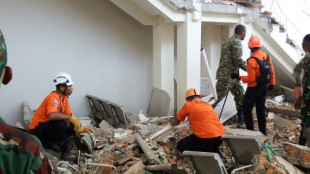
 Rescuers search for survivors as Indonesian quake death toll rises to 47

 Taliban govt supporters dance, take selfies in Kabul celebrations
 UK PM urges 'reflection' after Cambridge professor's death

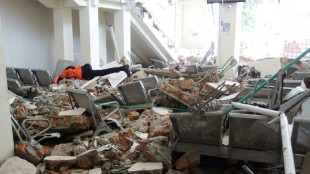
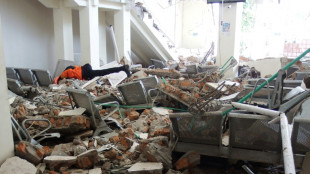 Rescuers search for survivors as Indonesian quake death toll rises to 40
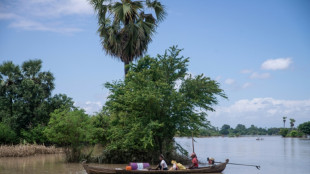
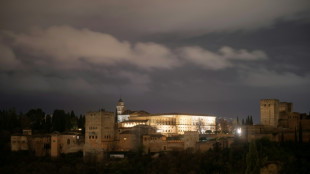 Earthquake rocks Spain's tourist jewel Granada

 Perez, Fiorini set world records in winning Euro race walk golds

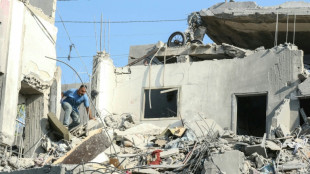 Lebanon says 9 dead in strikes as Israel says targeted Hezbollah

 World Cup winner Ferran Torres signs for Paris Saint-Germain

 Disney reveals 'X-Men' cast, slate of sequels at D23 fan event
 Star Cameroon goalkeeper Bihina faces Malawi's prolific Chawinga sisters in WAFCON final

 Mehidy claims Smith to keep Bangladesh on top in Australia Test
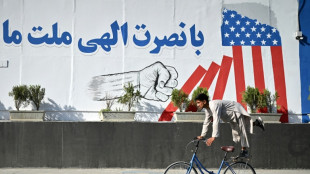
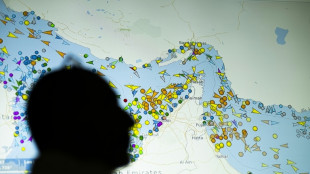 Iran fires back at Trump's threat to declare Hormuz a US territory
 No monkey business: India 'whisperers' guard world championships

 Steady India 101-1 at lunch in first Sri Lanka Test

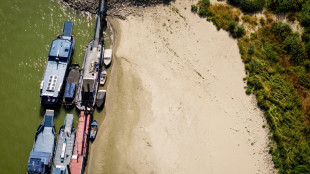 Faced with historic drought, the Dutch rethink water management

 Pallister holds off Ledecky to win Pan Pacs 400m free title
 India's Modi woos youth with free coaching, AI training

 Mehidy half-century steers Bangladesh to big lead in Australia Test

 Powerful quake off Indonesia sparks mass evacuations

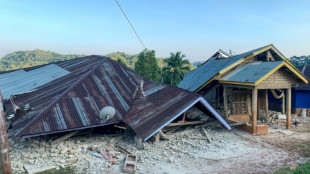 Poweful quake off Indonesia sparks mass evacuations
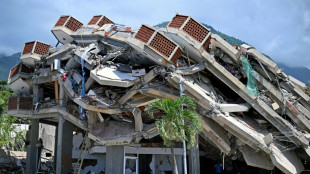
 LA Olympics has to allow politicians on the bus, just not behind the wheel - Coe
 No.1 Scheffler fires sizzling 61 to seize PGA St. Jude lead

 Venezuela frees more political prisoners amid post-Maduro talks

 Werro upstages Hodgkinson to win thrilling Euro 800m gold

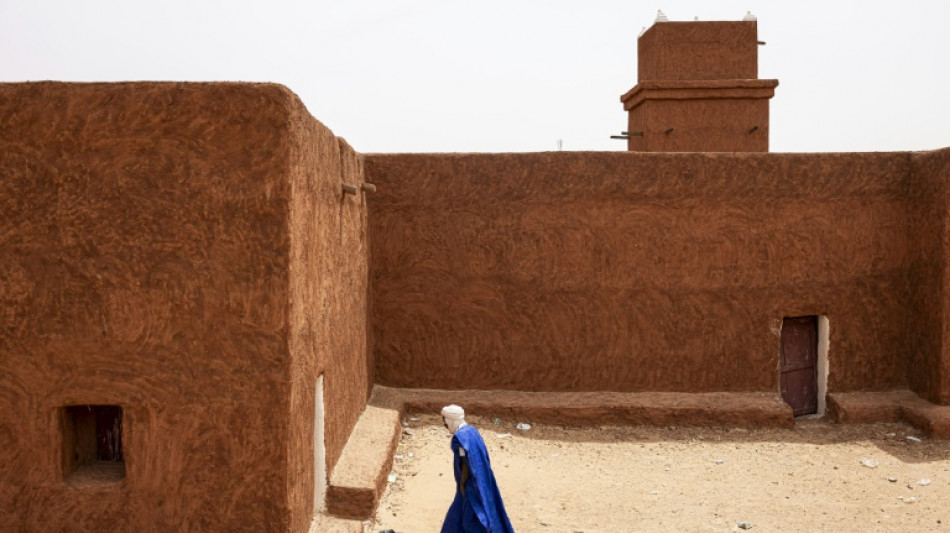
From his roof, Sidi Mohamed Lemine Sidiya scans the mediaeval town of Oualata, a treasure that is disappearing under the sands of the Mauritanian desert.
"It's a magnificent, extraordinary town," said Sidiya, who is battling to preserve the place known as the "Shore of Eternity".
Oualata is one of a UNESCO-listed quartet of ancient, fortified towns or "ksour", which in their heyday were trading and religious centres and now hold jewels dating back to the Middle Ages.
Doors crafted from acacia wood and adorned with traditional motifs painted by local women still dot the town.
Centuries-old manuscripts, a rich source of cultural and literary heritage handed down through the generations, are also held in family libraries.
But the southeastern town near the border with Mali is vulnerable to the ravages of the Sahara's extreme conditions.
In the punishing heat, piles of stone and walls that are ripped open bear witness to the impact of the latest, especially heavy, rainy season.
"Many houses have collapsed because of the rains," Khady said, standing by her crumbling home, which she inherited from her grandparents.
An exodus of people leaving Oualata only compounds the problem.
"The houses became ruins because their owners left them," said Sidiya, a member of a national foundation dedicated to preserving the region's ancient towns.
- Encroaching sands -
For decades, Oualata's population has been dwindling as residents move away in search of jobs, leaving nobody to maintain the historic buildings.
Its traditional constructions are covered in a reddish mudbrick coating called banco and were designed to adapt to the conditions.
But once the rains have stopped, the buildings need maintenance work.
Much of the old town is now empty, with only around a third of the buildings inhabited.
"Our biggest problem is desertification. Oualata is covered in sand everywhere," Sidiya said.
Around 80 percent of Mauritania is affected by desertification -- an extreme form of land degradation -- caused by "climate change (and) inappropriate operating practices", according to the environment ministry.
More plants and trees used to grow in the desert, Boubacar Diop, head of the ministry's Protection of Nature department, said.
"The desert experienced a green period before the great desertification of the 1970s caused the installation of sand dunes," Diop said.
By the 1980s, Oualata's mosque was so covered in sand that "people were praying on top of the mosque" rather than inside it, Bechir Barick, who teaches geography at Nouakchott University, said.
Despite being battered by the wind and sand, Oualata has preserved relics attesting to its past glory as a city on the trans-Saharan caravan trade route and centre of Islamic learning.
"We inherited this library from our ancestors, founders of the town," Mohamed Ben Baty said, turning the pages of a 300-year-old manuscript in a banco-covered building that remains cool despite the outside temperature.
Like his forebears, the imam is the repository of almost 1,000 years of knowledge, descending from a long line of scholars of the Koran.
- 'Valuable' for researchers -
The family library has 223 manuscripts, the oldest of which dates to the 14th century, Ben Baty said.
In a tiny, cluttered room, he half-opened a cupboard to reveal its precious content: centuries-old writings whose survival might once have seemed in doubt.
"These books, at one time, were very poorly maintained and exposed to destruction," Ben Baty said, pointing to water stains on sheets slipped into plastic sleeves.
Books in the past were stored in trunks "but when it rains, the water seeps in and can spoil the books," he said.
Part of the roof collapsed eight years ago during the rainy season.
In the 1990s, Spain helped to fund the setting up of a library in Oualata which holds more than 2,000 books that were restored and digitally copied.
But lack of financing now means their continued preservation depends on the goodwill of a few enthusiasts, like Ben Baty, who does not even live in Oualata all year round.
"The library needs a qualified expert to ensure its management and sustainability because it contains a wealth of valuable documentation for researchers in various fields: languages, Koranic sciences, history, astronomy," he added.
Oualata has no real tourism to rely on -- it has no hotel and the nearest town is two hours away travelling on just a track.
It is also in an area where many countries advise against travelling to due to the threat of jihadist violence.
Faced with the encroaching desert, trees were planted around the town three decades ago but it was not enough, Sidiya said.
Several initiatives have sought to save Oualata and the three other ancient towns, which were inscribed on the UNESCO World Heritage List in 1996.
An annual festival takes place in one of the four to raise money for renovations and investment to develop the towns and encourage people to stay.
Once the sun drops behind the Dhaar mountains and the air cools, hundreds of children venture out into the streets and Oualata comes to life.
N.Schaad--VB