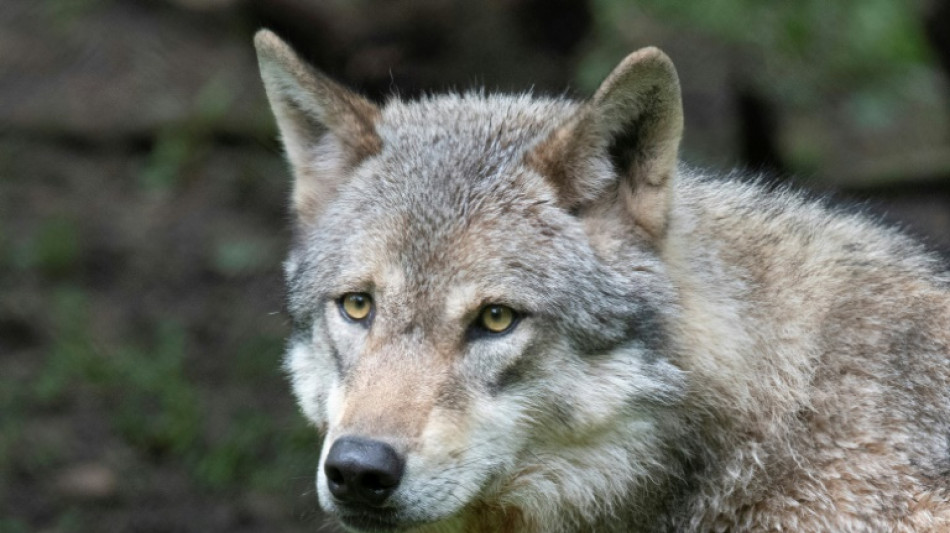
Protections drop for wolves in most of Europe / Photo: © AFP

 Barca sign Croatia goalkeeper Livakovic

 Rain delays England's bid to put off-field incidents behind them

 World record holder Sawe withdraws from Berlin Marathon

 Driven by faith, activists stand up to fellow Jews to protect Palestinians

 Therapy Culture Performance: How the Lindsay Clancy Trial Sparked a Trend of Viral Maternal Distress

 Norway's King Harald, 89, in 'extremely serious' condition

 How a glacier collapse may have caused Nepal-Tibet disaster

 Harmovest Capital Strengthens Global Financial Services Through Technology and Compliance

 Nvidia to buy AI platform Hugging Face for $12.9 bn: report

 Palace intrigue in Uganda as succession battle heats up

 'Housing First' approach gets Swedish city's homeless off streets

 Czech duo Muchova and Mensik win US Open mixed doubles title
 Japan's 'polka dot queen' artist Yayoi Kusama dies aged 97

 Nepal-Tibet disaster: what we know

 China deploys record number of ships around Taiwan as pressure grows

 Ruthless Bayern target treble as rivals reboot on Bundesliga return

 What experts know so far about Nepal's deadly floods

 UEFA set to withdraw FIFA boycott threat ahead of Champions League draw

 Sumo moves to beat Japan summer heat as temperatures rise

 'Be more honest': Markets crave clarity from cryptic Fed chair

 Climate change leaves its mark on America's largest reservoir

 CIA director warned Russia not to attack NATO members: US media

 Search for missing after Nepal-Tibet floods kills at least 160

 Meta, US states agree $18 bn settlement in landmark teen safety case

 What scientists know so far about Nepal's deadly floods

Wolves became less protected in most of Europe on Friday as new conservation regulations came into force, except in three countries that objected to the move including the United Kingdom, the Council of Europe said.
The move allows hunting to resume under strict regulation, which activists fear could result in a large number of wolves being shot dead.
Activists have said the measure will upset the recovery made by the species over the past 10 years after near extinction a century ago, but farmers say their growing numbers are a threat to their livestock.
Members of the Bern Convention, tasked with the protection of wildlife in Europe and some African countries, in December agreed to lower the wolf's protection status from "strictly protected" to "protected".
The decision "was set to enter into force three months later, unless objected to by at least one-third of the parties to the convention," the Strasbourg-based Council of Europe said.
Of the 50 parties to the convention -- an international treaty of the Council of Europe -- at least 17 would have needed to protest.
Instead, "three parties formally lodged objections: the Czech Republic, Monaco, and the United Kingdom. As a result, the decision to modify the protection status of the wolf does not apply to these three parties," it said.
The new "protected" status "mandates regulation of the species' exploitation to prevent endangerment, implementing measures such as closed seasons and regulating the sale, keeping, transport, and offering for sale of live and dead animal," the Council of Europe said.
Grey wolves were virtually exterminated in Europe 100 years ago but their numbers have practically doubled to the current population of 20,300, mostly in the Balkans, Nordic countries, Italy and Spain.
The parties to the convention include 45 members of the Council of Europe, four African nations -- Burkina Faso, Morocco, Senegal and Tunisia -- and the European Union.
The European Union in September proposed the plan to lower the protection status of wolves as they increase in numbers and come into more frequent contact with human activity and livestock.
C.Kreuzer--VB