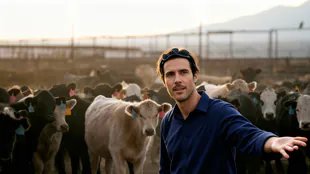
Environmentalists slam lobbyist influence on plastic talks / Photo: © AFP/File

 Indian crude-sensitive shares gain after 13% oil-price decline
 Stocks and dollar fall as Democratic election gains reshape markets

 Abdul El-Sayed Wins Michigan Senate Seat, Becoming First Muslim in US Congress

 Kuwait marks key events and anniversaries from national history

 Trump congratulates Democrats and signals willingness to cooperate

 Enel to Install Solar Panels at Niterói Waste Management Facility

 Qatar sees tentative opening for renewed regional diplomacy
 Qatar Tourism joins Pacific Asia Travel Association at London travel market
 Abdul El-Sayed Wins Michigan Senate Seat in Historic Election
 Qatar media bodies discuss support for humanitarian initiatives

Environmental groups on Wednesday slammed the presence of dozens of petrochemical and fossil fuel industry lobbyists at UN talks on a plastic pollution treaty, accusing them of "obstruction" and "misinformation."
"It's a direct conflict of interest," said Delphine Levi Alvares, global petrochemical campaign coordinator at the Center for International Environmental Law (CIEL).
"Their interests conflict with the objective of the mandate (of the talks) and their presence here challenges independent science."
Nearly 200 countries are in South Korea to agree on a treaty to end plastic pollution, capping two years of talks.
The resolution setting up the talks calls for a treaty addressing the full "lifecycle" of plastics, as well as the need for sustainable production and consumption.
Environmental groups and many countries say this is a mandate to limit new plastic production, putting the goals of the treaty in conflict with the business model of fossil fuel and chemical companies whose products are the raw materials for plastic.
CIEL said its analysis of a UN list of participants showed over 200 lobbyists from the fossil fuel and chemical industries were registered for the talks.
"We have watched industry lobbyists surrounding the negotiations with sadly well-known tactics of obstruction, distraction, intimidation, and misinformation," said Levi Alvares.
The International Council of Chemical Associations (ICCA) put the number of industry delegates in attendance at 135, and pushed back against the claims.
"We are far outnumbered" by observers from NGOs, said Matthew Kastner, director of media relations for the American Chemistry Council, an ICCA member.
"Our delegation is here to listen to governments so we can understand the unique challenges they face," he said.
Industry observers want to offer the "deep technical expertise our industries have that can help end plastic pollution."
Environmental groups argue that deep-pocketed industry organisations have a massive advantage in influencing negotiations, and are often found on the delegations of countries accused of blocking progress towards a more ambitious treaty.
"The difference is that NGOs are representing public interests whereas these industries are representing private interests," Levi Alvarez said.
NGOs have regularly criticised the presence of industry players on country delegations negotiating at the talks.
Countries are free to choose who participates in their delegations and in some cases have brought environmental groups into the talks.
UN Environment Programme chief Inger Andersen told AFP earlier this week that she had no mandate to limit participation in delegations.
"We've had a large contingent of observers from all kinds of groups," she said.
"We do not have the ability to tell member states who they put on their delegations."
J.Marty--VB