Awaiting Trump, US auto execs further temper EV push / Photo: © AFP/File

 Indian crude-sensitive shares gain after 13% oil-price decline

 Stocks and dollar fall as Democratic election gains reshape markets

 Abdul El-Sayed Wins Michigan Senate Seat, Becoming First Muslim in US Congress

 Kuwait marks key events and anniversaries from national history
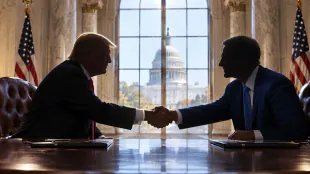 Trump congratulates Democrats and signals willingness to cooperate

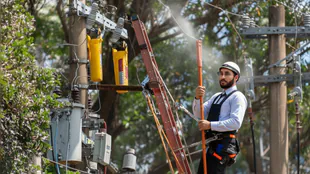 Enel to Install Solar Panels at Niterói Waste Management Facility

 Qatar sees tentative opening for renewed regional diplomacy

 Qatar Tourism joins Pacific Asia Travel Association at London travel market

 Abdul El-Sayed Wins Michigan Senate Seat in Historic Election

 Qatar media bodies discuss support for humanitarian initiatives

US auto giants signaled Wednesday they could further slow the ramp-up of electric vehicle production as Detroit awaits the arrival of a Trump administration eager to reverse key Biden climate initiatives.
Donald Trump's transition officials have discussed killing a $7,500 tax credit for electric vehicles, according to US media. The EV tax credit was included in President Joe Biden's flagship climate change law, the 2022 Inflation Reduction Act.
Trump, who has called climate change a hoax, spoke during the campaign dismissively of Biden administration fuel economy standards as a "mandate" that he argued would doom internal combustion engine (ICE) vehicles.
US auto executives said Wednesday they are preparing for potentially significant policy changes from Washington.
"We're modeling various scenarios and we will adjust accordingly," Ford Chief Financial Officer John Lawler said at a Wall Street conference.
Lawler said Ford's embrace of hybrid vehicles provided greater flexibility depending on how the new rules evolve.
He described the potential removal of the tax credit as exacerbating an oversupply of costly electric models.
"One of the things we believe is that there is going to be incredible pressure on prices next year in the EV market," Lawler said. "The one thing we do know... is that consumers are not willing to pay much of a premium for EVs versus an ICE vehicle."
General Motors Chief Financial Officer Paul Jacobson said it is "too soon" to speculate on what policies Trump will pursue, but that the company is committed to its EV strategy as a "long-term objective."
GM is focused on reducing costs throughout EV development and on having flexible operations, such as a plant in Tennessee that can produce both combustion and electric vehicles, he said.
The storied automaker could "temper" future EV investment steps depending on how the market evolves, Jacobson said.
Both Ford and GM have slowed or reversed some EV projects in recent years amid uneven demand growth.
Trump transition officials targeting the tax credit include oil executive Harold Hamm, according to articles in the New York Times and other publications.
Trump softened his own EV criticism somewhat during the campaign as he worked closely with mega supporter Elon Musk, the chief executive of EV maker Tesla.
Musk has said that eliminating the tax credit could harm competitors seeking to challenge Tesla's leadership in the segment.
L.Wyss--VB