Waste heat from London sewers eyed to warm UK parliament / Photo: © AFP

 Equitas Small Finance Bank rebounds after naming interim chief executive

 Titan quarterly profit seen rising as jewellery business drives growth

 Kuwait finance minister holds economic cooperation talks at COMCEC

 82-Year-Old American Transforms 2003 Mercedes Sprinter into Permanent Home

 Abdul El-Sayed declares victory in Michigan Senate contest

 Democrats capture US Congress in sweeping midterm victory

 Manchester United rallies past Roma as PSG dominates in Champions League
 Qatar prime minister advances mediation through diplomatic calls

 Greenland parliament approves security agreement with United States

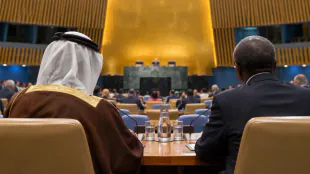 Qatar envoy meets incoming UN General Assembly president

 Trump Signals Willingness to Work With Democrats After Midterm Defeat

 Pitches and Keynote Speakers Are Confirmed for Blue Magic Netherlands on November 17
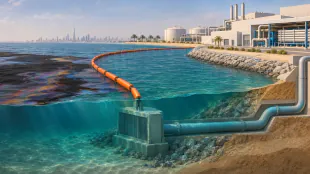
London landmarks including the UK parliament could be warmed by low-carbon heat powered by the River Thames, the London Underground train system and even the sewer network under new government plans.
Around 1,000 buildings could be in line to receive the alternatively sourced warmth.
Under the plans to develop the UK's biggest heat network to provide decarbonised heat, pipes designed to carry excess heat taken from various sources would power hot water and central heating systems in the Westminster area of central London, where parliament is located.
The £1.0-billion ($1.3-billion) low-carbon heating infrastructure project -- initiated by Westminster Council and the government's Department for Energy Security and Net Zero (DESNZ) -- aims to harness waste heat from a small area and distribute it locally.
Such networks are considered the cheapest way to decarbonise compared to each building having its own air source heat pump.
They are expected to play an increasingly important role in supplying UK energy over coming years as the government attempts to wean the country's power grid off fossil fuel energy sources by the end of the decade.
DESNZ minister Miatta Fahnbulleh said the project represented "bold new strides towards boosting our energy security, as one of seven heat network zones we're backing with over £5.0 million funding".
Prime Minister Keir Starmer's new Labour government promised at the election in July to deliver "zero-carbon electricity by 2030".
It means the production of electricity, previously dominated by coal and currently reliant on natural gas, would not contribute to overall carbon dioxide emissions.
Wind, solar, nuclear and tidal power would instead generate the vast majority of electricity used in Britain from the beginning of the next decade.
Labour says its plans will reduce reliance on fossil fuels from overseas and lead to cheaper household energy bills.
Construction of the South Westminster Area Network (SWAN) project is due to start in 2026.
R.Kloeti--VB