-
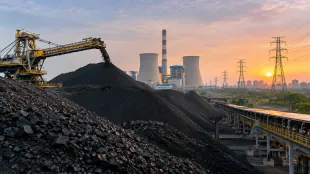 India seeks threefold increase in coal stocks to prevent summer power shortages
-
Indian companies report mixed second-quarter results on November 4

-
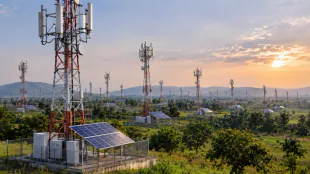 Indus Towers expands solar-powered network to 50,000 telecom sites
-
KKR secures Indian regulator approval for Gentari Renewables investment

-
 Equitas Small Finance Bank rebounds after naming interim chief executive
-
Bharti Airtel revenue expected to grow at double-digit pace in second quarter

-
 Titan quarterly profit seen rising as jewellery business drives growth
-
Indian crude-sensitive shares gain after 13% oil-price decline

-
 Kuwait finance minister holds economic cooperation talks at COMCEC
-
Stocks and dollar fall as Democratic election gains reshape markets

-
 82-Year-Old American Transforms 2003 Mercedes Sprinter into Permanent Home
-
Abdul El-Sayed Wins Michigan Senate Seat, Becoming First Muslim in US Congress

-
 Abdul El-Sayed declares victory in Michigan Senate contest
-
Kuwait marks key events and anniversaries from national history

-
 Democrats capture US Congress in sweeping midterm victory
-
Trump congratulates Democrats and signals willingness to cooperate

-
 Manchester United rallies past Roma as PSG dominates in Champions League
-
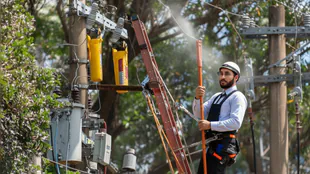
Enel to Install Solar Panels at Niterói Waste Management Facility
-
 Qatar prime minister advances mediation through diplomatic calls
-
Qatar sees tentative opening for renewed regional diplomacy

-
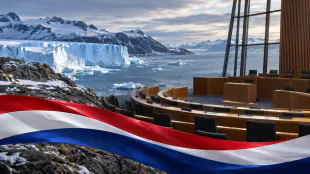 Greenland parliament approves security agreement with United States
-
Qatar Tourism joins Pacific Asia Travel Association at London travel market

-
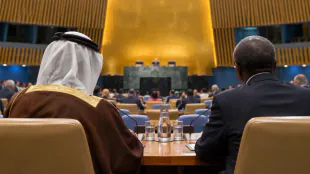 Qatar envoy meets incoming UN General Assembly president
-
Abdul El-Sayed Wins Michigan Senate Seat in Historic Election

-
 Trump Signals Willingness to Work With Democrats After Midterm Defeat
-
Qatar media bodies discuss support for humanitarian initiatives

-
 Pitches and Keynote Speakers Are Confirmed for Blue Magic Netherlands on November 17
Deadly Spain floods held up as warning at nature protection summit
European officials pointed Thursday to deadly flooding in Spain as a reminder of the harm that comes from humans' destruction of nature, urging delegates at a deadlocked UN biodiversity conference in Colombia to "act."
European Commission envoy Florika Fink-Hooijer said the "catastrophe" in eastern and southern Spain this week highlighted the link between biodiversity destruction and human-caused climate change.
Droughts and flooding worsened by global warming cause the loss of plant species, including trees, which absorb planet-warming carbon, in a vicious cycle of human-wrought Earth destruction.
"If we act on biodiversity, we at least can buffer some of the climate impacts," Fink-Hooijer told reporters in the city of Cali, host of the 16th Conference of Parties (COP16) to the UN's Convention on Biodiversity (CBD).
With around 23,000 registered delegates, the summit is the biggest-ever meeting of its kind.
"At this COP we really have a chance to act," said Fink-Hooijer, who is the European Commission director-general for environment.
- Funding hurdle -
The summit, which started on October 21, is tasked with assessing, and ramping up, progress on nature protection plans and funding to achieve 23 UN targets agreed in 2022 to "halt and reverse" species destruction by 2030.
It is a follow-up to the Kunming-Montreal Global Biodiversity Framework agreed by 196 CBD signatories at COP15 in Canada two years ago.
The framework envisioned the mobilization of $200 billion per year by 2030 to achieve the targets, which include placing 30 percent of the Earth's land and sea under protection.
The money must include $20 billion per year by 2025, and $30 billion by 2030 from rich to poor nations.
Due to wrap up on Friday, the talks in Cali remain stuck mainly on the modalities of funding, even as new research this week showed more than a quarter of assessed plants and animals were at risk of extinction.
Developing countries have called for more money.
They also want a brand-new fund under the umbrella of the UN biodiversity convention, where all parties -- rich and poor -- would have representation in decision-making.
Rich countries insist they are on track to meet their funding targets, and many are opposed to yet another new fund.
A further point of contention is on how best to share the profits of digitally sequenced genetic data taken from animals and plants with the communities they come from.
Such data, much of it collected in poor countries, is notably used in medicines and cosmetics that make their developers billions.
COP15 had agreed on the creation of a "multilateral mechanism" for benefit-sharing of digital information, "including a global fund."
But negotiators still need to resolve such basic questions as who pays, how much, into which fund, and to whom the money should go.
"This is not a donation, it is a legitimate payment for the use of the genetic resource, for the use of the associated traditional knowledge," Brazil's Environment Minister Marina Silva insisted on Thursday.
Amid murmurs of an extension of the Cali talks, COP16 president Susana Muhamad said Friday's programmed closing session promised to be "heart-stopping" given the number of unresolved issues.
"It's a very complex negotiation, with many interests, many parties... and that means everyone has to cede something," she told reporters.
UN chief Antonio Guterres, who stopped over in Cali for two days this week with five heads of state and dozens of government ministers to add impetus to the talks, reminded delegates Wednesday that humanity has already altered three-quarters of Earth's land surface, and two-thirds of its waters.
Urging negotiators to "accelerate" progress, he warned: "The clock is ticking. The survival of our planet's biodiversity -- and our own survival -- are on the line."
Representatives of Indigenous peoples and local communities held demonstrations at COP16 to press for more rights and protections, as delegates inside wrangled over a proposal to create a permanent representative body for them under the CBD.
On this, too, no final agreement has been reached.
B.Baumann--VB