Faulty warnings, deforestation turned Philippine rains 'deadly': study / Photo: © AFP/File

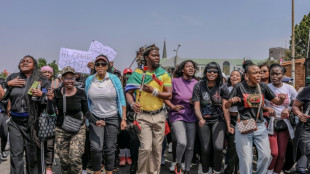 'It has to stop': runners protest women's murders in S.Africa district

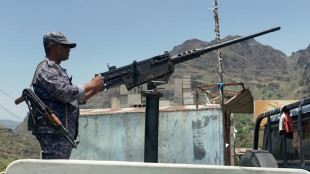 Fire erupts near Riyadh airport as Houthis claim strikes

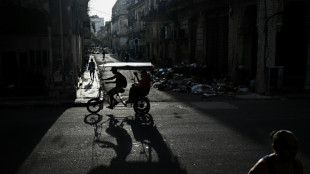 Cuba works to restore power after another blackout

 England thrash Sri Lanka again to return to top of T20 rankings
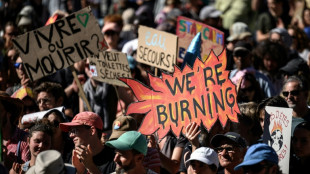
 Arsenal thrashed by Brighton, sorry Spurs lose again

 South Korea, Austria qualify for Davis Cup finals

 Seare shocks Ingebrigtsen to win world 5km gold

 Brigitte Bardot widower slams sale of star's belongings

 Aston Villa compound Tottenham's misery despite late rally

 Asian Games offer 'deepest apologies' for South Korea anthem blunder
 Inter Milan and Italy icon Mazzola dies aged 83

 Saudi capital issues first air raid alert since renewed fighting in Yemen

 Martin edges title rival Marquez for Austrian MotoGP pole

 Indonesia accepts Malaysia's help to tackle wildfires

 Indians living in Japan on stand-by to house Asian Games athletes

 Trump signs bill authorizing sweeping Russia sanctions

 Protesters form human chain at Kennedy Center after Trump threat

 Death toll from attack at police HQ in Pakistan rises to 31

 Trump says Denmark to give US 'permanent control' over Greenland security

 Kennedy Center: future unclear for iconic Washington arts hub

 Trump claims 'infinite' Greenland security deal with Denmark

 Helicopters battle wildfire threatening Ecuador's capital

 Brentford batter Chelsea to undo Alonso's promising start

 Kane hits Bundesliga century as Bayern rout Union
 Trump says CNN, MS NOW, Politico banned from White House
Faulty warning systems, poverty and deforestation of mountains in the southern Philippines turned recent unseasonably heavy rains into deadly disasters, scientists said in a report Friday.
More than 100 people were killed in landslides and floods in January and February on the country's second-largest island of Mindanao as the northeast monsoon and a low pressure trough brought downpours.
A study by the World Weather Attribution group found the unsually heavy rain in eastern Mindanao was not "particularly extreme".
But with people living in landslide-prone areas and shortcomings in weather alerts, the rains became "devastating".
"We can't just blame the rain for the severe impacts," said Richard Ybanez, chief science research specialist at the University of the Philippines' Resilience Institute.
"A range of human factors is what turned these downpours into deadly disasters."
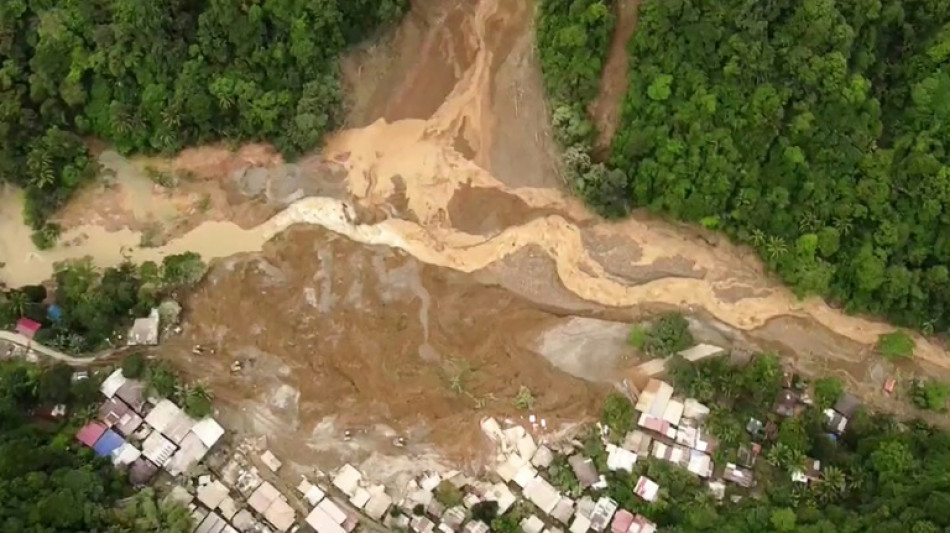
In the deadliest incident, more than 90 people were killed when the side of a mountain collapsed and smashed into a gold mining village on February 6, burying buses and houses.
While climate change was likely one of the drivers of the heavy rain, the report said scientists were not able to quantify its impact due to the lack of available data.
"However, we did detect a strong trend in the historical data -- compared to the pre-industrial climate, the heaviest five-day periods of rainfall now drop around 50 percent more rainfall on Mindanao island in the December to February period," said Mariam Zachariah of the Grantham Institute at Imperial College London.
The scientists found that a higher-than-average rate of poverty in the mountainous region had left people vulnerable to the impacts of heavier rainfall, while "intensified deforestation" had increased the risk of landslides.
"Across the region of study, construction in areas declared 'no-build zones' raises these dangers considerably," the report said.
The report said policies, laws and funding of disaster risk management "have largely stalled over the past decades" and were concentrated on post-disaster response.
For example, automated sensors for rainfall and stream level in the region "have not been recording data since at least 2022", after funding for maintenance and data transmission was cut.
The report also faulted the country's weather forecasts and warnings, which "have limited granularity on local risk and lack instructions on where and when to evacuate".
"Evacuations from high-risk locations were carried out when the island was hit by the rainfall in late January. However, many people were still in harm's way," said Ybanez.
"It is critical that both early warning systems and assessment of landslide-prone areas are improved to avoid similar disasters in the future," he said.
The report also warned that the recent rains would have been "more extreme" were it not for the El Nino weather phenomenon causing drier conditions across the country.
The tropical archipelago nation -- which is ranked among the most vulnerable countries to the impacts of climate change -- is usually affected by around 20 major storms a year.
H.Kuenzler--VB