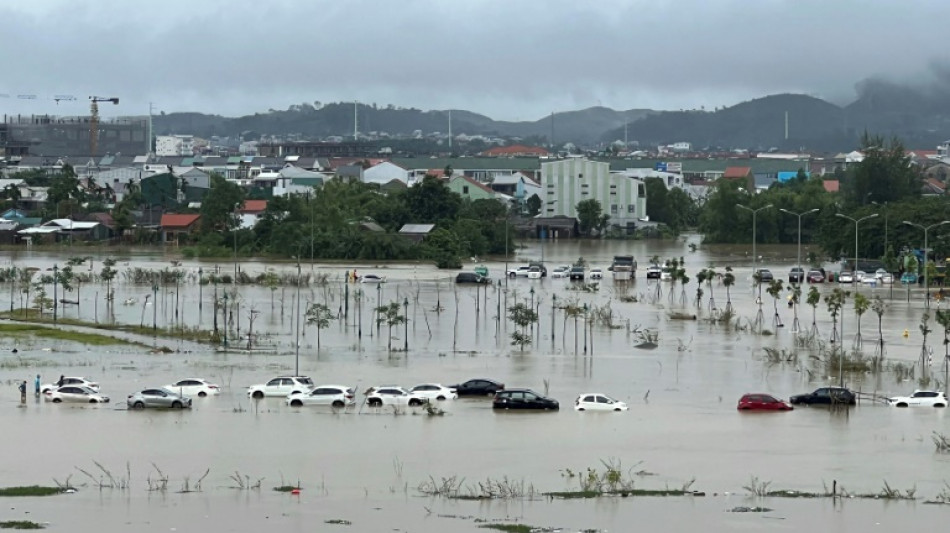
Rich nations 'likely' met $100 bn climate finance goal: OECD / Photo: © AFP

 Trump Signals Willingness to Work With Democrats After Midterm Defeat

 Qatar media bodies discuss support for humanitarian initiatives

 No. 22 UCLA defeats No. 5 Arizona 84-75 despite Kharchenkov's 38 points

 Vessel operator seeks witnesses after Vancouver grounding

 US Air Force deploys F-16 fighters to remote Aleutian base for readiness drill

 Bezos grant helps Seattle nonprofit move thousands of families toward housing

 Shrini Srivastava joins crew of Varanasi-Delhi Vande Bharat Sleeper service

 Nearly Half of Australian Workers Overqualified, Survey Finds

 RBI eases export-declaration compliance for individual service exporters

 India proposes more import entry points for drugs and medical devices

 Derek Tierney Outlines Ten-Year Strategy for National Digital Health System

 NBC’s Steve Kornacki Reveals Tech Habits Ahead of Midterm Elections

 India and Israel oppose UN draft on regional conventional arms control

 BLS Polymers shares open 65.3% above IPO price

 Capital-markets shares rally as Motilal Oswal and Angel One lead gains

 Latino Voters Defy ICE Fears, Turn Out in Record Numbers for Midterms

 ITC shares rise as analysts anticipate gradual cigarette-business recovery

 Reliance rally puts historical one-year return pattern in focus

 Kuwait edges Oman 1-0 in veterans Gulf Cup in Doha

 Saudi Aramco quarterly profit climbs 34.6% amid elevated oil prices
Wealthy nations likely met their goal of providing $100 billion in annual climate finance to poorer nations last year -- two years later than promised and only a fraction of the "extensive needs", the OECD said Thursday.
The OECD report comes ahead of the UN's COP28 climate negotiations later this month in Dubai, where finance will be a major sticking point.
The Organisation for Economic Co-operation and Development is tasked with monitoring official figures on the pledge to help developing countries fund their energy transitions and resilience in the face of accelerating climate impacts.
In 2009, richer countries promised to reach $100 billion annually in funding for these priorities by 2020.
Failure to meet the target on time has damaged trust in international climate negotiations.
In the most up to date figures, the OECD said richer countries reached $89.6 billion in total funding for 2021.
"Based on preliminary and as yet unverified data, the goal looks likely to have already been met as of 2022," said OECD Secretary-General Mathias Cormann in the foreword to the latest report.
But he added experts estimate that developing countries will need to spend about a trillion dollars a year by 2025 for climate investments, rising to roughly $2.4 trillion each year between 2026 and 2030.
"Although public finance can only contribute a share of these extensive needs," Cormann said, international donors would be crucial in helping to boost overall funding.
He said that currently finance from rich countries was not effective enough in attracting additional private sector investments and funding.
Finance focused on adaptation that countries must embark on to prepare themselves for an array of increasing climate impacts was also lagging, he said.
Adaptation measures can include building coastal defences, or helping farmers become more resilient to increasingly ferocious floods, droughts and other climate extremes.
- Action is 'stalling' -
Many developing economies least to blame for the greenhouse gases that stoke global warming are among the most exposed to the costly and destructive effects of worsening weather extremes and rising seas.
World leaders meeting at the climate talks in the United Arab Emirates will face a tough reckoning over financial solidarity between rich polluters and vulnerable nations, as a failure to cut planet-heating emissions threatens the Paris Agreement's global warming limits.
Adaptation is a key priority for developing countries and wealthy governments have promised to double adaptation finance by 2025, to $40 billion a year.
But as the world warms, climate change impacts increase and so too do the costs of preparing for them.
Earlier this month, a report by the UN Environment Programme (UNEP) projected that overall annual funding that developing countries need to adapt to climate impacts this decade had increased to as much as $387 billion.
At the time, UN Secretary-General Antonio Guterres warned action was "stalling" even as the need to protect people increases.
B.Baumann--VB