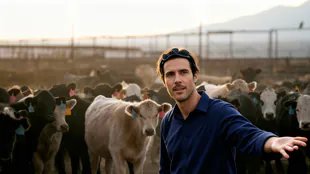
'Like breathing poison': Delhi children hardest hit by smog / Photo: © AFP

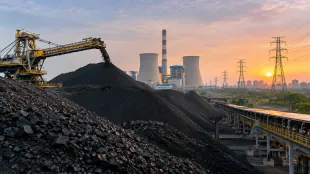 India seeks threefold increase in coal stocks to prevent summer power shortages

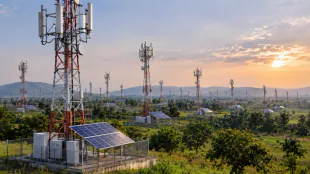 Indus Towers expands solar-powered network to 50,000 telecom sites

 Equitas Small Finance Bank rebounds after naming interim chief executive

 Titan quarterly profit seen rising as jewellery business drives growth

 Kuwait finance minister holds economic cooperation talks at COMCEC

 82-Year-Old American Transforms 2003 Mercedes Sprinter into Permanent Home

 Abdul El-Sayed declares victory in Michigan Senate contest

 Democrats capture US Congress in sweeping midterm victory

 Manchester United rallies past Roma as PSG dominates in Champions League
 Qatar prime minister advances mediation through diplomatic calls

 Greenland parliament approves security agreement with United States

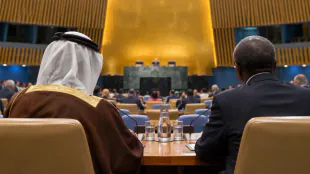 Qatar envoy meets incoming UN General Assembly president

 Trump Signals Willingness to Work With Democrats After Midterm Defeat

 Pitches and Keynote Speakers Are Confirmed for Blue Magic Netherlands on November 17
Crying in a hospital bed with a nebuliser mask on his tiny face, one-month-old Ayansh Tiwari has a thick, hacking cough. His doctors blame the acrid air that blights New Delhi every year.
The spartan emergency room of the government-run Chacha Nehru Bal Chikitsalaya hospital in the Indian capital is crowded with children struggling to breathe -- many with asthma and pneumonia, which spike as air pollution peaks each winter in the megacity of 30 million people.
Delhi regularly ranks among the most polluted major cities on the planet, with a melange of factory and vehicle emissions exacerbated by seasonal agricultural fires.
"Wherever you see there is poisonous smog," said Ayansh's mother Julie Tiwari, 26, as she rocked the baby on her lap, attempting to calm him.
"I try to keep the doors and windows closed as much as possible. But it's like breathing poison all the time. I feel so helpless," she told AFP, fighting back tears.
On Thursday, the level of PM2.5 particles -- the smallest and most harmful, which can enter the bloodstream -- topped 390 micrograms per cubic metre, according to monitoring firm IQAir, more than 25 times the daily maximum recommended by the World Health Organization.
Government efforts have so far failed to solve the country's air quality problem, and a study in the Lancet medical journal attributed 1.67 million premature deaths to air pollution in the world's most populous country in 2019.
- 'Maddening rush' -
"It's a maddening rush in our emergency room during this time," said Dhulika Dhingra, a paediatric pulmonologist at the hospital, which serves poor neighbourhoods in one of Delhi's most polluted areas.
The foul air severely impacts children, with devastating effects on their health and development.
Scientific evidence shows children who breathe polluted air are at higher risk of developing acute respiratory infections, a UNICEF report said last year.
A study published in the Lung India journal in 2021 found nearly one out of every three schoolchildren in Delhi had asthma and airflow obstruction.
Children are more vulnerable to air pollution than adults because they breathe more quickly and their brains, lungs and other organs are not fully developed.
"They can't sit in one place, they keep running and with that, the respiratory rate increases even more. That is why they are more prone to the effects of pollution," said Dhingra.
"This season is very difficult for them because they can hardly breathe."
Vegetable vendor Imtiaz Qureshi's 11-month-old son Mohammad Arsalan was admitted to the hospital overnight with breathing issues.
"We have to live day in and day out in this air," said the distraught 40-year-old, who pulls his cart through the streets every day.
"If I go out, the air will kill me. If I don't, poverty will kill me."
- 'Toxic environment' -
The hospital provides treatment and medicine free of cost -- none of its patients can afford private healthcare, and many cannot buy even a single air purifier for their one-room homes in the city's sprawling slums.
Paediatrician Seema Kapoor, the hospital's director, said patient inflows had risen steadily since the weather cooled, trapping pollutants closer to the ground.
"About 30-40 percent of the total attendance is primarily because of respiratory illnesses," she said.
Pulmonologist Dhingra said the only advice they can offer parents is to restrict their children's outdoor activities as much as possible.
"Imagine telling a parent not to let the child go out and play in this toxic environment."
The Delhi government has announced emergency school closures, stopped construction and banned diesel vehicles from entering the city in a bid to bring down pollution levels.
But stubble burning by farmers in the neighbouring agrarian states, which contributes significantly to Delhi's pollution, continues unabated, drawing a rebuke from the Supreme Court on Tuesday.
Delhi's choked air is resulting in the "complete murder of our young people", said the court.
Housewife Arshi Wasim, 28, brought her 18-month-old younger daughter Nida Wasim to the hospital with pneumonia.
"She coughs non-stop," she said. "She doesn't take milk or even water because her lungs are choked. Sometimes we have to give her oxygen and rush her to the doctor two or three times a day.
"Every year it's the same story."
F.Stadler--VB