Wounded US veterans accept new mission: healing coral reefs / Photo: © AFP

 Drone owners rush to offload devices ahead of Beijing ban
 Trump's beef policies irk Texas ranchers, testing their loyalty
 Nvidia, OpenAI CEOs to attend Xi dinner at White House
 Anthropic picks Accenture for in-house AI safety evaluation
 Balogun returns as Monaco beat Lens to continue strong Ligue 1 start

 'Pause' on overt repression in Venezuela, but reforms still needed: HRW

 Global stocks mixed as yen falls despite Bank of Japan rate hike

 Cuba hit with seventh major blackout of the year
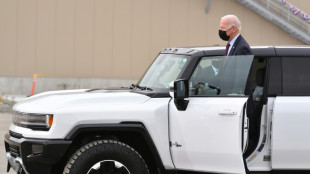
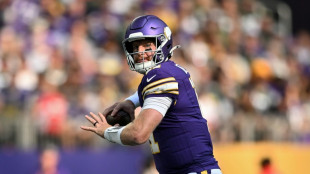 Murray out with concussion so Wentz will start for Vikings
 UN chief 'deeply regrets' US visa refusal to Abbas for annual meeting

 England quick Carse to face no charges over alleged nightclub assault
 Mancini brings nine newcomers into the first squad of his Italy comeback
 Czechs level Davis Cup tie against USA as South Korea eye Finals

 New France boss Zidane confirms Mbappe as captain after naming first squad

 California governor signs order to explore AI 'kill switch'
 Head leads run spree as Australia win Zimbabwe ODI series

 In-form Raphinha wants to finish career at Barcelona

 Warren Buffett steps down as Berkshire Hathaway chairman

 Carrick confident Man Utd can 'work through' tough time

 Mbappe ends Nike partnership to join Swiss brand On

 Liverpool boss Iraola puts Bournemouth love affair on hold

 'A disaster' if Man City do not win says Maresca after flawless start

 Kerry James Marshall: American 'blackness' painter celebrated in Europe

 Spain coach De la Fuente offers 'full support' to people of Ceuta

 Russia seizes assets of Nestle, French firms over West's Ukraine support
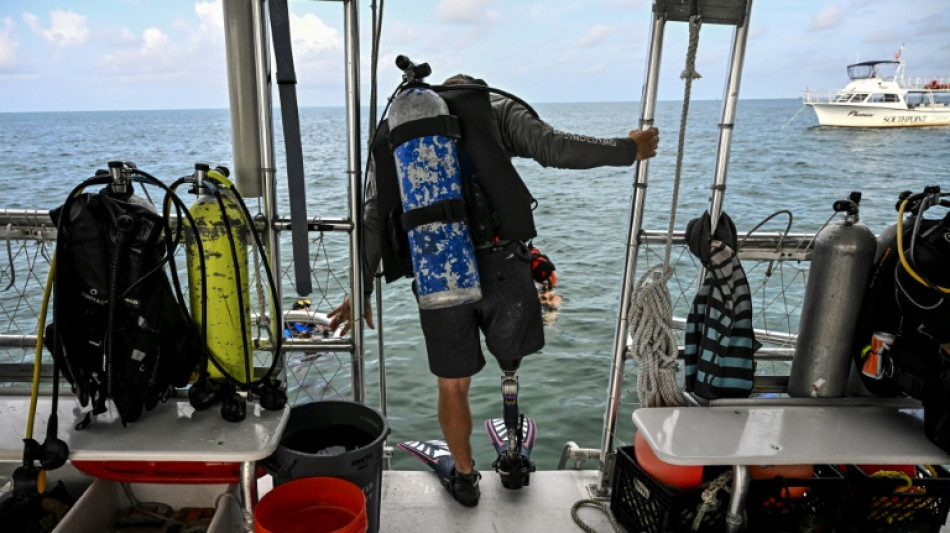
Billy Costello walks the deck of a ship wearing his scuba gear and fins, as well as a prosthetic right leg, before dropping into the sea.
He's part of a group of US Army veterans wounded in combat who are planting coral in a reef off the southern tip of Florida.
The mission is twofold: save coral that is threatened by disease and rising sea temperatures, and help veterans heal wounds -- both physical and emotional.
A total of 31 veterans were joined by six divers from the Mote Marine Laboratory in Key West on a recent July morning to render their services planting coral at a reef called Higgs Head.
Since 2011, the lab and the nonprofit Combat Wounded Veteran Challenge (CWVC) have teamed up for a week annually to help restore coral reefs, a key ecosystem for marine life.
Costello, 41, is in his element as a former diver for the Army's 3rd Special Forces Group.
In 2011, as he passed along a road in Afghanistan, a bomb exploded, ruining his right leg. In the following months, he learned about CWVC and joined its activities.
Now, on this Florida morning, he is swimming to a site chosen by Mote scientists, about half a mile (800 meters) offshore.
CWVC puts wounded veterans in challenging environments, partnering with researchers who observe and gather information on them to help improve treatment for post-traumatic stress disorder, head trauma and other conditions.
"I have climbed mountains with them, and I have scuba dived to the depths of the ocean," Costello told AFP.
"They have been instrumental in my recovery, helping me learn what I was going to be able to do after losing my leg."
Mote President Michael Crosby is proud of the partnership.
"Every year I make sure I'm here with these men and women who have sacrificed so much for the country," he said.
"Now they're on a new mission with our laboratory to restore these coral reefs that are the rainforests of the sea."
- Innovative coral -
During the excursion, the veterans listen in the water for directions from a Mote lab employee who dives ahead of them, map in hand, to a depth of about 14 feet (four meters).
The scientists leave boxes on the seabed divided into square compartments, each containing a coral fragment.
The divers grab wire brushes, scraping areas of the reef clean of algae and debris, and coat them with epoxy resin. Then they carefully take the coral pieces and glue them on.
In little more than an hour the veterans and institute staff plant 1,040 stony corals from six different species.
The specimens have been lab-grown and chosen because they have shown greater resistance to dangers such as increasing water temperature, ocean acidification and disease, explained Crosby after participating in the dive.
The method of repopulating the reef involves planting coral microfragments of the same genotype in a small space. As they grow, their tissues fuse and become a colony capable of increasing in size 40 times faster than normal coral.
"In two years, three years, we will have created (the equivalent of) a 50-year-old coral that then will be able to spawn on its own," said Crosby, who is confident that the specimens will survive for a long time.
Back at port, Costello is glad to have participated in the dive.
"This is such a blessing, because we get a chance to help these guys to restore the reefs," he said.
Although his prothesis, which he likens to an anchor, makes it difficult for him to move underwater, he enjoys the dive nonetheless.
"It's great for the heart and the soul," he said.
"Especially when you're around a group of veterans that have gone through very similar situations and have beat the odds and recovered in such a positive way."
J.Fankhauser--BTB



