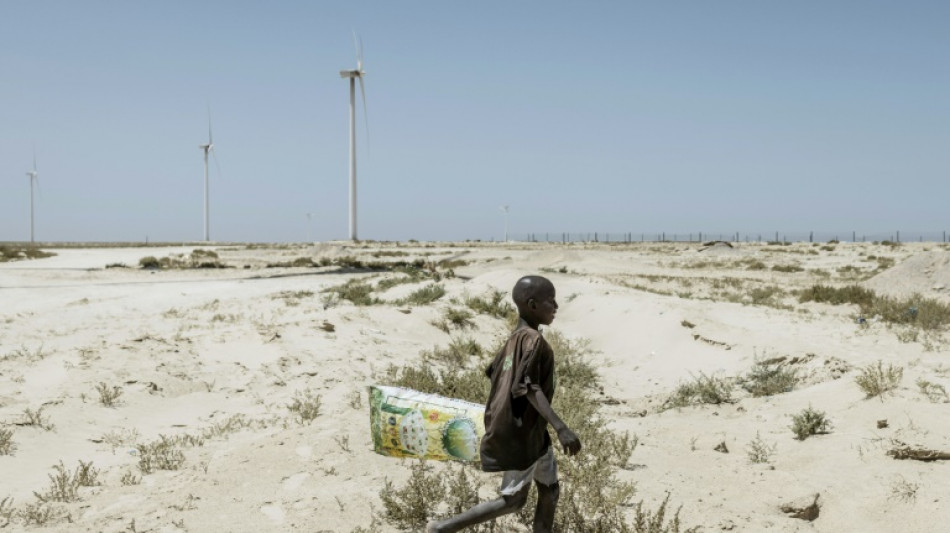
Climate goals need clean energy surge in Global South: IEA / Photo: © AFP/File

 Trump's beef policies irk Texas ranchers, testing their loyalty

 Nvidia, OpenAI CEOs to attend Xi dinner at White House
 Anthropic picks Accenture for in-house AI safety evaluation
 Balogun returns as Monaco beat Lens to continue strong Ligue 1 start

 'Pause' on overt repression in Venezuela, but reforms still needed: HRW

 Global stocks mixed as yen falls despite Bank of Japan rate hike
 Cuba hit with seventh major blackout of the year

 Murray out with concussion so Wentz will start for Vikings

 UN chief 'deeply regrets' US visa refusal to Abbas for annual meeting
 England quick Carse to face no charges over alleged nightclub assault

 Mancini brings nine newcomers into the first squad of his Italy comeback

 Czechs level Davis Cup tie against USA as South Korea eye Finals

 New France boss Zidane confirms Mbappe as captain after naming first squad
 California governor signs order to explore AI 'kill switch'
 Head leads run spree as Australia win Zimbabwe ODI series

 In-form Raphinha wants to finish career at Barcelona
 Warren Buffett steps down as Berkshire Hathaway chairman
 Carrick confident Man Utd can 'work through' tough time

 Mbappe ends Nike partnership to join Swiss brand On

 Liverpool boss Iraola puts Bournemouth love affair on hold

 'A disaster' if Man City do not win says Maresca after flawless start

 Kerry James Marshall: American 'blackness' painter celebrated in Europe

 Spain coach De la Fuente offers 'full support' to people of Ceuta

 Russia seizes assets of Nestle, French firms over West's Ukraine support
 England can build on World Cup 'spirit', says Tuchel

Financing for clean energy in developing and emerging economies excluding China must increase seven-fold within a decade if global warming is to be capped at tolerable levels, the International Energy Agency said Wednesday.
To keep Paris climate temperature goals in play, annual investment for non-fossil fuel energy in these countries will need to jump from $260 billion to nearly $2 trillion, the intergovernmental agency said in a report.
"Financing clean energy in the emerging and developing world is the fault line of reaching international climate goals," IEA executive director Fatih Birol told journalists in a briefing Tuesday.
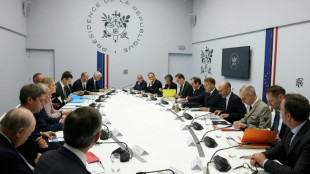
The report comes on the eve of the two-day Summit for a New Global Financing Pact in Paris, which seeks to galvanise support for revamping the mid-20th century architecture governing financial flows from rich to developing nations.
Speeding the transition from dirty to clean energy, and helping the Global South cope with and prepare for devastating climate impacts are high on the summit agenda.
Virtually all of the nearly 800 million people lacking electricity and the 2.4 billion without access to clean cooking fuels are in poor and emerging countries.
Under current policy trends, one third of the rise in energy use in these nations over the next decade will be met by burning fossil fuels, the main driver of global warming, the IEA warned.
"Clean energy investments is increasing gradually -- this is a good news," said Birol.
"The bad news is that more than 90 percent of that increase in clean energy since the Paris Agreement in 2015 comes from advanced economies and China."
"Only 10 percent comes from the emerging and developing countries," he added. "We need to change this trend."
- Solar is cheapest -
With China included in the calculation, private and public money pouring into renewables and other forms of carbon neutral energy will need to more than triple from $770 billion in 2022 to about $2.5 trillion per year by the early 2030s.
Investment must remain at those levels until mid-century to help keep Earth's average surface temperature "well below" two degrees Celsius, and 1.5C if possible, the Paris climate treaty's binding and aspirational targets, respectively.
The potential for rapidly ramping up renewable energy is there, according to the report.
At least 40 percent of the global solar radiation reaching the planet lands on sub-Saharan Africa, and solar energy is now the cheapest source of electricity generation across almost the entire world.
And yet, nearly ten times more solar PV capacity was installed last year in China -- some 100 GW -- than across the entire African continent.
Sunny sub-Saharan Africa generates less solar electricity than the Netherlands, Birol noted.
According to the report, two-thirds of the finance for clean energy projects in emerging and developing economies excluding China will need to come from the private sector.
Today's $135 billion in annual private financing for clean energy in these economies must rise to about a trillion a year within the next decade.
To meet both climate and sustainability goals, clean energy investment in emerging and developing economies should be concentrated in four areas, according to the IEA.
Just over a third should go into low-emissions generation, mainly solar and wind. Another third is needed to improve efficiency in end-use sectors, such as cooling and electric transport.
A quarter is required for electricity grids and storage capacity, while just under 10 percent goes to low-emission fuels and so-called carbon, capture and storage (CCS), which removes CO2 from the exhaust of gas or coal power plants and heavy industry.
G.Schulte--BTB