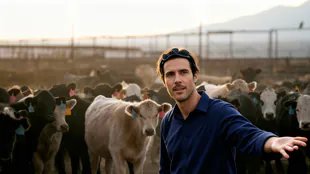
Syrians turn plastic waste into rugs to make a living / Photo: © AFP

 Galloway accuser could not foresee publishing-sector fallout, lawyer argues

 New York City Center revives In the Heights as a timely community story

 Godzilla Minus Zero shifts focus toward postwar human drama

 Mehbooba Mufti urges dialogue and renewed Central Asia links for Kashmir
 Seacliff Healthcare Seeks Specialist GP in Thirroul

 US stocks fall before midterm Election Day as technology shares weaken

 BLS Polymers makes strong market debut at ₹248 per share

 Petrol and diesel prices remain broadly steady across major Indian cities
 Reliance shares remain in focus after near-12% surge
 2026 Arizona Midterms: Key Races, Ballot Measures, and Voter Deadlines

 Coal India prepares possible $1 billion Mahanadi Coalfields listing
 Julia Stiles and Ezra Sosa Share Emotional Farewell After 'DWTS' Elimination
 US Buildings Threatened by Wildfires Could Triple by 2060

 Why Pregnancy Cost Estimates Fail: A Family’s $9,000 Surprise

 US Strikes Iranian Targets in Strait of Hormuz Ahead of Midterms
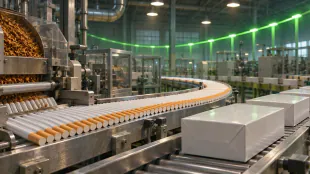
 Brodeur’s Overtime Goal Secures Bethlehem’s Second Consecutive Sectional Title

 Rare 1970 Plymouth ‘Cuda 426 Hemi Listed for $400,000
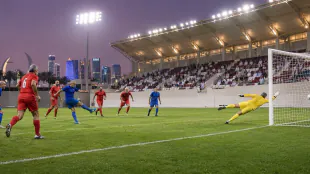
 The Digital Burden: Why Instant Messaging Feels Like a Full-Time Job
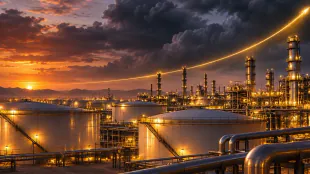
 Alberta Tabled Controversial Riding Boundary Maps Amid Gerrymandering Accusations

 Hong Kong court set to sentence activist Joshua Wong in security case
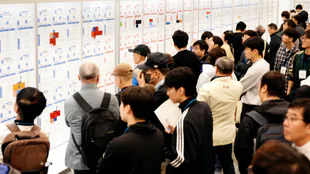
 Australia raises benchmark rate to highest level in 18 years

 'The Remarried Empress' Cast Discusses Bringing Fantasy Royal Drama to Life
 Asian stocks retreat as AI worries outweigh steep oil-price drop
 Hamad International Airport stages emergency drills during WATAN 2026

 Global failure to punish attacks leaves journalists at continuing risk

At a rubbish dump in northwest Syria, Mohammed Behlal rummages for plastic to be sold to recyclers and transformed into floor rugs and other items in the impoverished rebel enclave.
In rebel-held Syria, recycling is rarely an environmental impulse but rather a grim lifeline for needy residents looking for work or items they otherwise could not afford.
Braving the stench, insects and risk of disease, 39-year-old Behlal hacks through the rubbish pile with a scythe and his bare hands.
He and two of his six children earn a living sifting through the refuse in Idlib province's village of Hezreh, earning $7 to $10 a week each.
"It's tiring... but what can we do, we have to put up with this hard labour," said Behlal, who was displaced from neighbouring Aleppo province during Syria's civil war.
"Thank God, at least we have work with the trash," he added.
Behlal was shot in the leg during fighting and has had trouble finding employment.
Hunched over to collect pieces of plastic or metal, he throws everything into a bag to sell to a nearby scrap facility.
Syria's conflict has killed more than 500,000 people, and around half of the country's pre-war population has been forced from their homes since fighting broke out in 2011.
More than four million people, most of them dependent on aid, live in areas controlled by jihadists and Turkish-backed groups in Syria's north and northwest.
In a large scrapyard next to agricultural fields, workers sort plastic junk loosely into piles according to colour.
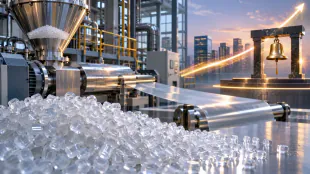
They then cut it up and crush it into small pieces that are washed and melted into plastic pellets.
- Plastic thread -
Farhan Sleiman, 29, is among those who handle the material brought in from the landfill.
"We buy plastic from roaming trash-picker trucks and children," said Sleiman, originally from Homs province.
He expressed fear of the risk of contracting "cholera or chronic illnesses" from working with the rubbish.
Elsewhere in northern Idlib province, workers at a factory making mats and rugs churn out brightly coloured plastic thread while large weaving machines click and clack.
Factory owner Khaled Rashu, 34, says rug-making is a family tradition.
"We have more than 30 employees" at the factory, he boasted as a significant feat in a region where many are jobless.
Large mats featuring geometric designs, some made with striking red or purple plastic thread, emerge from the weaving machines and are stacked into piles.
Shop owner Mohammed al-Qassem, 30, is among those selling the mats, which he says are a hit in an area where many people are displaced and live in basic tents or makeshift dwellings.
The mats made from recycled plastic cost between $5 and $15, while traditional Persian-style rugs are around $100.
"In summer, demand for plastic mats increases" because they retain less heat, Qassem said from his shop in Maaret Masrin, a town in Idlib province.
But "they can also be used in winter and are less costly", he added.
A.Gasser--BTB