Monkeypox mostly spreads before symptoms appear, study suggests / Photo: © AFP/File

 Typhoon Dujuan leaves four dead in Japan, 45,000 houses without power

 G7 leaders condemn Houthi strikes on Saudi Arabia

 Google data centre sparks protests in Austria

 Shin Ohashi: Junk food-loving teen and Japan's next big swimming hope

 Stocks rise on AI buzz, drop in oil prices

 China's robot dancers limber up for America's Got Talent final

 Despite military might, Saudi struggles to crush the Houthis
 Trump to tout deals, defend Iran war in UN speech
 Sri Lanka to issue verdict in landmark Easter attack trial

 Macron says talks with Trump on Red Sea, Ukraine 'constructive'

 Green policies just good politics, says UK minister

 Bardot auction in Paris fetches nearly one million euros
 No timeline on Daniels injury return, says Commanders coach

 British Columbia sues OpenAI in US court over Canada school shooting

 French star Batum retires after 18-year NBA career

 Zidane leads first France training session
 Man shot by ICE agent in Texas detained with bullet inside him: lawyer

 California declares state of emergency ahead of El Nino

 South Africa arrests three more suspects, after nine women murdered

 Carse needs time away from England, says captain Brook

 NOWPayments Releases Cross-Chain Payout Data Revealing Key Performance Benchmarks Across TRON, BNB Chain, and Solana

 British Museum bans photos of Bayeux Tapestry as crowds linger

 COP31 host says AI climate footprint to be a summit priority

 Berlin's far-left vote winners reject anti-semitism charges

 Mancini eager for 'new adventure' on Italy return

People with monkeypox can spread the virus up to four days before symptoms appear, with more than half of transmissions potentially taking place during this period, a UK study estimated Tuesday.
While the findings have yet to be confirmed, they suggest that many monkeypox infections cannot be prevented by asking patients to isolate once they realise they have the virus, the study said.
Since May, when the virus suddenly started spreading beyond the West African countries where it has long been endemic, monkeypox has killed 36 people out of more than 77,000 cases, according to the World Health Organization.
However case numbers have steadily fallen since peaking in July, particularly in Europe and North America, the hardest hit areas in the early stages of the global outbreak.
The new study published in the journal BMJ was carried out in Britain, the first nation to detect a cluster of cases outside of Africa in May.
Researchers from the UK Health Security Agency looked at contract tracing data and questionnaires for 2,746 people who tested positive for monkeypox in the country between May and August.
Some 95 percent of the participants were men who have sex with men, a community that has been overwhelmingly affected by the global outbreak.
Analysing the data using two different statistical models, the researchers found that it took an average of nearly eight days for symptoms to appear after a patient was exposed.
That period was more commonly longer than the time between when the first patient and their contact case showed symptoms, which is called the serial interval.
"The median serial interval was estimated to be shorter than the incubation period, which indicates considerably greater pre-symptomatic transmission than previously thought," the study said.
Fifty-three percent of the cases were transmitted before the person had any monkeypox symptoms, the study estimated.
Transmission was detected a maximum of four days before symptoms set in, it added.
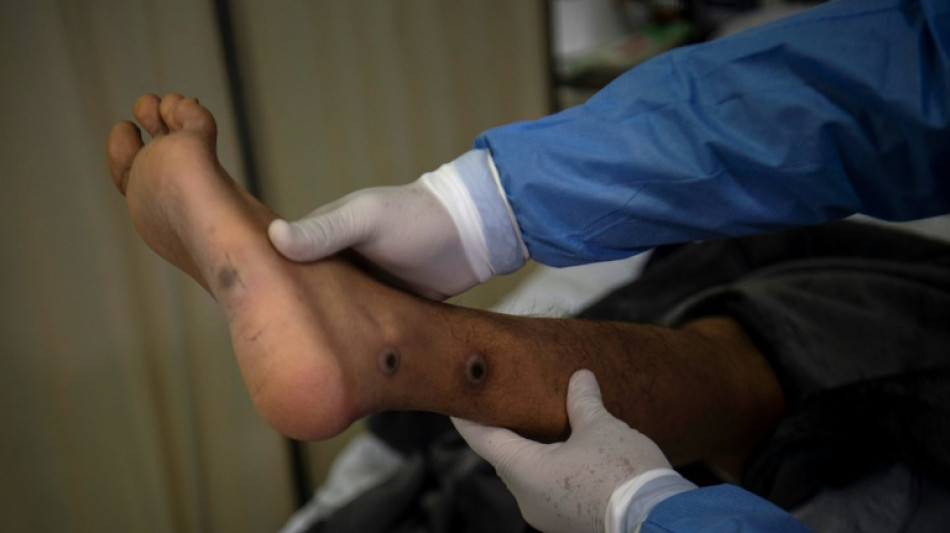
Monkeypox symptoms include fever, muscular aches and large boil-like skin lesions.
Boghuma Kabisen Titanji, a virus expert at Emory University in the United States who was not involved in the study, said the "robust analysis" was "interesting and convincing".
"This needs confirmation by more studies but has implications for vaccination-based disease elimination strategies which should be seriously considered," she said.
R.Adler--BTB