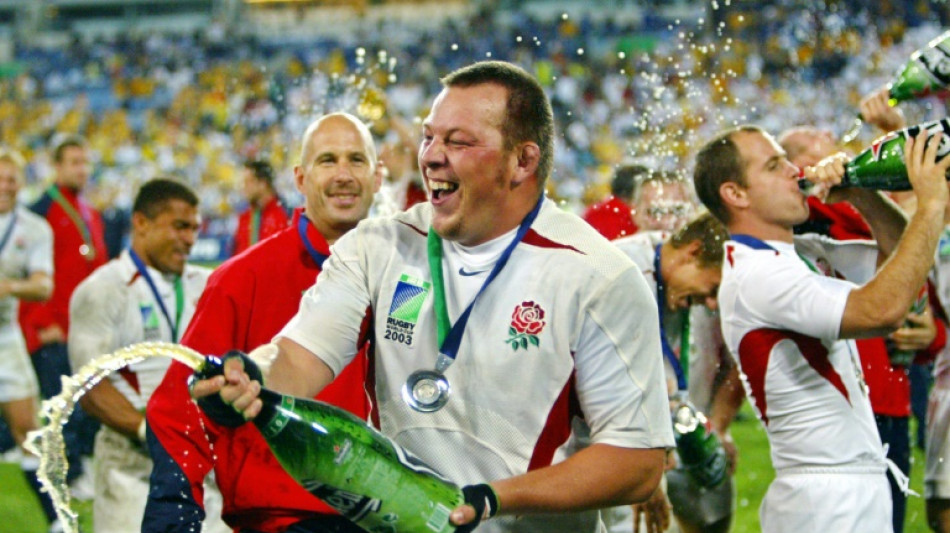
Rugby World Cup winner Thompson says dementia makes him feel 'phoney' / Photo: © AFP/File

 Google data centre sparks protests in Austria
 Shin Ohashi: Junk food-loving teen and Japan's next big swimming hope

 Stocks rise on AI buzz, drop in oil prices

 China's robot dancers limber up for America's Got Talent final

 Despite military might, Saudi struggles to crush the Houthis

 Trump to tout deals, defend Iran war in UN speech
 Sri Lanka to issue verdict in landmark Easter attack trial
 Macron says talks with Trump on Red Sea, Ukraine 'constructive'
 Green policies just good politics, says UK minister

 Bardot auction in Paris fetches nearly one million euros

 No timeline on Daniels injury return, says Commanders coach

 British Columbia sues OpenAI in US court over Canada school shooting

 French star Batum retires after 18-year NBA career
 Zidane leads first France training session

 Man shot by ICE agent in Texas detained with bullet inside him: lawyer

 California declares state of emergency ahead of El Nino

 South Africa arrests three more suspects, after nine women murdered
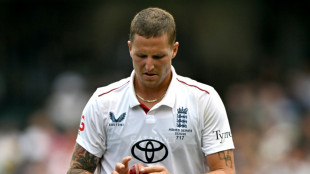 Carse needs time away from England, says captain Brook

 NOWPayments Releases Cross-Chain Payout Data Revealing Key Performance Benchmarks Across TRON, BNB Chain, and Solana

 British Museum bans photos of Bayeux Tapestry as crowds linger

 COP31 host says AI climate footprint to be a summit priority

 Berlin's far-left vote winners reject anti-semitism charges

 Mancini eager for 'new adventure' on Italy return

 Mbappe says having Zidane as France coach 'like a film'

 Palmer, Rice out of England Nations League squad
Former England rugby star Steve Thompson says he feels like a "phoney" because he cannot remember being part of the 2003 World Cup-winning team, two years after being diagnosed with early onset dementia.
The ex-hooker, 44, is one of scores of former players who have decided to sue a number of governing bodies for negligence.
Thompson features in a BBC documentary: "Head On: Rugby, Dementia and Me" to be aired on Wednesday -- a day after new research was published suggesting elite players could be at a significantly greater risk of developing neurodegenerative diseases such as motor neurone disease, Parkinson's and dementia.
Glasgow consultant neuropathologist Willie Stewart, who led the research team, has called for urgent action, saying the sport should minimise contact training and reduce its global calendar.
Thompson, diagnosed with early onset dementia and probable CTE (chronic traumatic encephalopathy) in November 2020, has packed away his medals and trophies.
"Around four years ago some of my strongest memories started disappearing, precious private moments and all the career highlights of two decades of rugby. So much so I packed away all my most precious memorabilia because having it around was just too painful," he said in the documentary.
He added: "When people say 'Oh, you got a World Cup medal' and all this I feel like a phoney.
"Because it feels like I haven't done it because I can't remember it and it doesn't feel like me so sometimes when people in public talk about it I get embarrassed by it."
Thompson, who sometimes forgets the names of his children in the film, said he believes he is suffering as a result of multiple head impacts he endured as a player, saying concussion protocols at the time were not safe.
"If you were knocked out and you came back to, you were just told to get on with it," he said.
"If you had a headache, you were just given headache pills. It wasn't known as an injury. It would be like: 'At least you haven't pulled your hamstring, so you can still run.'"
He said rugby authorities, including the Rugby Football Union (RFU), which is the game's governing body in England, could do more.
"There's been no support from the RFU," he said. "Since I started the legal action, they've even stopped sending me the birthday card I got every year."
World Rugby last year issued guidance advising limiting full contact training to just 15 minutes per week and in July extended its minimum concussion stand-down period to 12 days.
But Thompson feels the sport could go further.
"It's a little start, but, to be honest, it needs to be three weeks at least," he says, adding he would still not feel comfortable allowing his children to play full-contact rugby.
J.Horn--BTB