WHO pushes two Ebola treatments found to boost survival rates / Photo: © AFP

 Google data centre sparks protests in Austria

 Shin Ohashi: Junk food-loving teen and Japan's next big swimming hope

 Stocks rise on AI buzz, drop in oil prices

 China's robot dancers limber up for America's Got Talent final
 Despite military might, Saudi struggles to crush the Houthis
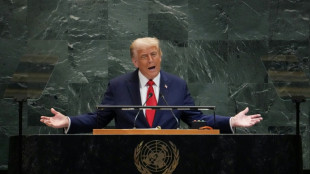 Trump to tout deals, defend Iran war in UN speech
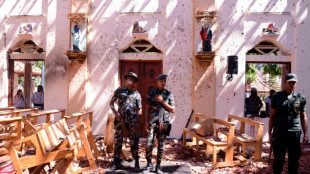 Sri Lanka to issue verdict in landmark Easter attack trial
 Macron says talks with Trump on Red Sea, Ukraine 'constructive'

 Green policies just good politics, says UK minister
 Bardot auction in Paris fetches nearly one million euros
 No timeline on Daniels injury return, says Commanders coach

 British Columbia sues OpenAI in US court over Canada school shooting

 French star Batum retires after 18-year NBA career
 Zidane leads first France training session
 Man shot by ICE agent in Texas detained with bullet inside him: lawyer

 California declares state of emergency ahead of El Nino

 South Africa arrests three more suspects, after nine women murdered
 Carse needs time away from England, says captain Brook

 NOWPayments Releases Cross-Chain Payout Data Revealing Key Performance Benchmarks Across TRON, BNB Chain, and Solana

 British Museum bans photos of Bayeux Tapestry as crowds linger
 COP31 host says AI climate footprint to be a summit priority

 Berlin's far-left vote winners reject anti-semitism charges

 Mancini eager for 'new adventure' on Italy return

 Mbappe says having Zidane as France coach 'like a film'
 Palmer, Rice out of England Nations League squad
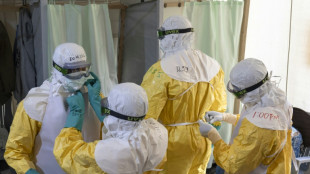
The World Health Organization said Friday that two existing treatments dramatically reduced deaths from Ebola and should be given to people of all ages suffering from the often-fatal haemorrhagic disease.
Publishing its first-ever guidelines on which therapeutics to use against Ebola, the UN health agency strongly recommended using two monoclonal antibodies, mAb114, also known as Ansuvimab or Ebanga, and REGN-EB3, or Inmazeb.
Studies had showed that the two treatments significantly "reduced mortality," Janet Diaz, lead of the clinical management unit in the WHO's Health Emergencies programme, told reporters in Geneva.
Depending on the standard of care, she said they could save between 230 and 400 lives for every 1,000 people infected.
In its guidelines, the WHO recommended against using other therapeutics that have been tested for Ebola, including monoclonal antibody ZMapp and antiviral drug remdesivir.
Ebola is an often-fatal viral haemorrhagic fever that was first identified in central Africa in 1976. The disease was named after a river in the Democratic Republic of Congo, then known as Zaire.
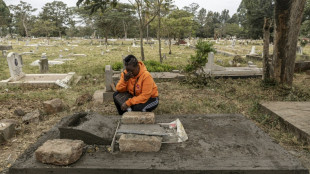
The worst epidemic in West Africa between 2013 and 2016 killed more than 11,300 people. The DRC has had more than a dozen epidemics, the deadliest killing 2,280 people in 2020.
Case fatality rates for the disease, which spreads through bodily fluids and causes high fever, vomiting and bleeding, can be as high as 80-90 percent, depending on how quickly it is detected and treated.
The WHO said mAb114 and REGN-EB3 should be given swiftly to anyone who contracts the virus.
In a statement the health agency said that the two had "demonstrated clear benefits" and could be used for everyone infected by Ebola, including older people, pregnant and breastfeeding women, children and newborns.
"Patients should receive recommended neutralising monoclonal antibodies as soon as possible after laboratory confirmation of diagnosis," it said.
The WHO cautioned though that access to both the treatments remained "challenging, especially in resource-poor areas."
"WHO is ready to support countries, manufacturers and partners to improve access to these treatments, and to support national and global efforts to increase affordability," the UN health agency said.
Robert Fowler of the University of Toronto, who co-chaired the guideline development group, hailed how "advances in supportive care and therapeutics over the past decade have revolutionised the treatment of Ebola."
"Ebola virus disease used to be perceived as a near certain killer. However, that is no longer the case," he said in the statement.
Combined with proper support, the two recommended treatments mean "recovery for the vast majority of people," he said.
D.Schneider--BTB