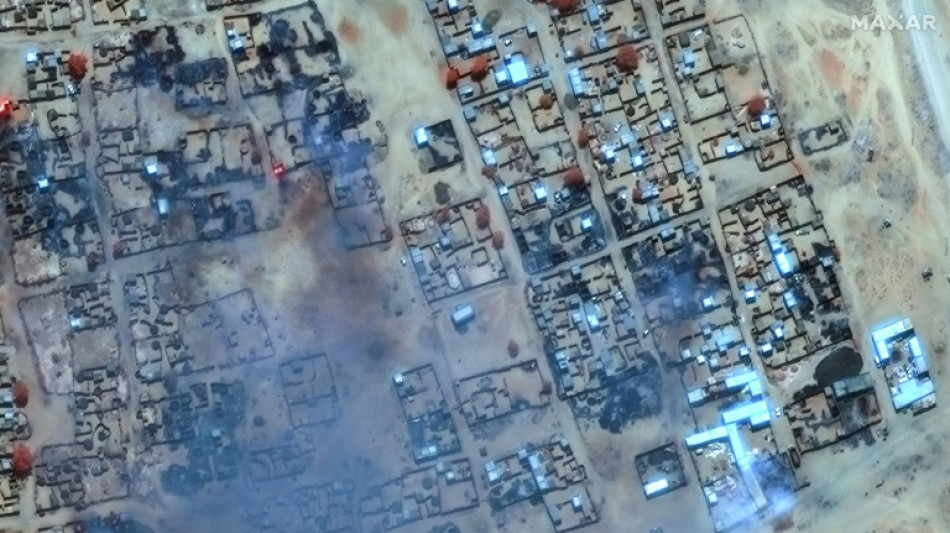
Neighbours improvise first aid for wounded in besieged Sudan city / Photo: © Satellite image ©2025 Maxar Technologies/AFP/File

 Dozens of civilians killed, kidnapped as jihadists clash in Nigeria
 Former envoys urge joint French, UK action on Palestinian territories
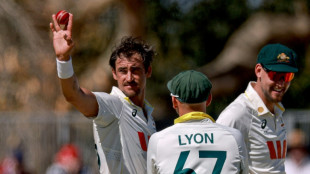
 Australia lead by 101 in 2nd Bangladesh Test as 18 wickets fall on day one
 'Aura' battles leap from social media to Latin America streets
 US, Canada fail to reach trade pact to avert Trump tariffs
 Sudan farms lie barren as El Nino leaves Nile banks dry
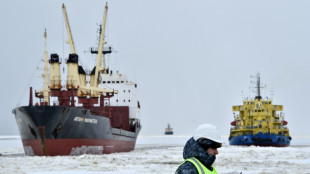 Arctic shipping a daunting prospect in hotly contested region
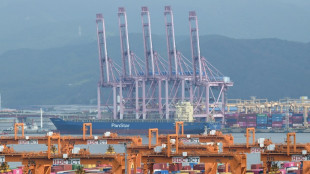
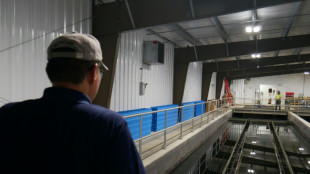 In US, rare earths extracted from coal mine wastewater
 Nakashima pounds Fritz, Bejlek beats Keys in Cincinnati upsets
 Canadian negotiator says 'more work to do' on US trade deal

 'Solid' Clark takes solo lead at BMW Championship
 Arteta hails Arsenal's desire after perfect start to title defence

 Betis down Real Sociedad in La Liga opener
 Mexican governor resumes job despite US drug charges

 Arsenal rout Coventry to open Premier League season in style

 Giant-killer Bejlek overhauls Keys to reach Cincinnati semi-finals
 Man Utd agree deal for Brighton midfielder Baleba: reports
 Werro wins Lausanne 800m, well off world record pace
 China mulls bid to host 2028 UN climate talks: sources
 Jones becomes third Englishman to join Inter this summer
 Mexican governor wanted on US drug charges returns to job
 Bolivia's Paz forced to fire economy minister in mid-crisis

 A-Rod ups T-Wolves stake in $4.5bn ownership change
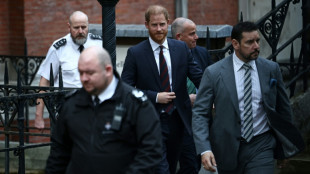 UK court orders Prince Harry, others to pay Daily Mail initial £9.5mn
 'Grateful' ex-world champion Alaphilippe retires from cycling
For a week, eight-year-old Mohamed has suffered the pain of shrapnel stuck in his arm. But he is one of the lucky ones in Sudan's western city El-Fasher, which is under paramilitary attack.
"One of our neighbours used to be a nurse. She helped us stop the bleeding," Mohamed's father, Issa Said, 27, told AFP via satellite connection under a total communications blackout.
"But his arm is swollen and he can't sleep at night from the pain."
Like an estimated one million more people trapped in the city under a year-long siege by the paramilitary Rapid Support Forces (RSF), Said cannot get to a hospital for emergency care.
With only the most meagre supplies remaining in El-Fasher, his family is among those whose only medical help has come from neighbours and family members who improvise.
In its quest to seize the North Darfur state capital -- the only major Darfur city it has not conquered during two years of war with Sudan's army -- the RSF has launched attack after attack, which have been repelled by army and allied forces.
Even if people were to brave the streets, the Saudi Hospital is the only partially functioning one now, according to a medical source there, and even that has come under repeated attack.
Humanitarian operations in El-Fasher have been severely disrupted due to "access constraints, a critical fuel shortage and a volatile security environment," with health services particularly affected, the United Nations' humanitarian agency OCHA said.
- 'Opened their homes' -
Mohamed, an aid coordinator who fled to El-Fasher after getting shot in the thigh during an RSF attack days ago on the nearby famine-hit Zamzam displacement camp, estimates hundreds of injured civilians are trapped in the city.
According to aid sources, hundreds of thousands have fled Zamzam for the city, which is already on the brink of mass starvation according to a UN-backed assessment.
Yet the people of El-Fasher have "opened their homes to the wounded," Mohamed told AFP, requesting to be identified by his first name for safety.
"If you have the money, you send someone to buy clean gauze or painkillers if they can find any, but you have to make do with what you have," said Mohamed, whose leg wound meant he had to be carried the 15 kilometres (nine miles) from Zamzam to the city, a journey that took hours.
In crowded living rooms and kitchens, civilians with barely any medical training cobble together emergency first aid, using household items and local medicinal plants to treat burns, gunshot wounds and shrapnel injuries.
Another victim, Mohamed Abakar, 29, said he was fetching water for his family when a bullet pierced his leg.
The limb immediately broke underneath him, and a neighbour dragged him into his home, fashioning him a splint out of a few pieces of wood and cloth.
"Even if it heals my broken leg, the bullet is still inside," Abakar told AFP, also by satellite link.
- Table salt as disinfectant -
By Monday, the RSF's recent attacks on El-Fasher and surrounding displacement camps had killed more than 400 people, according to the UN.
At least 825,000 children are trapped in "hell on Earth" in the city and its environs, the UN children's agency UNICEF has warned.
The people of El-Fasher have suffered a year of RSF siege in a city the Sudanese military has also bombed from the air.
Residents have taken to hiding from the shelling in makeshift bunkers, which are often just hastily dug holes topped with bags of sand.
But not everyone makes it in time.
On Wednesday, a shell broke through Hanaa Hamad's home, shrapnel tearing apart her husband's abdomen before they could scramble to safety.
"A neighbour and I treated him as best we could. We disinfected the wound with table salt and we managed to stop the bleeding," the 34-year-old mother of four told AFP.
But by morning, he had succumbed to his injuries, too severe for his wife and neighbour to handle.
Trying to recover from his leg wound, the aid coordinator Mohamed pleaded from his sick bed for "urgent intervention from anyone who can to save people".
The medical charity Doctors Without Borders (MSF) on Friday called for aid airdrops.
"If the roads to El-Fasher are blocked, then air operations must be launched to bring food and medicines to the estimated one million people trapped there and being starved," head of mission Rasmane Kabore said.
N.Schaad--VB