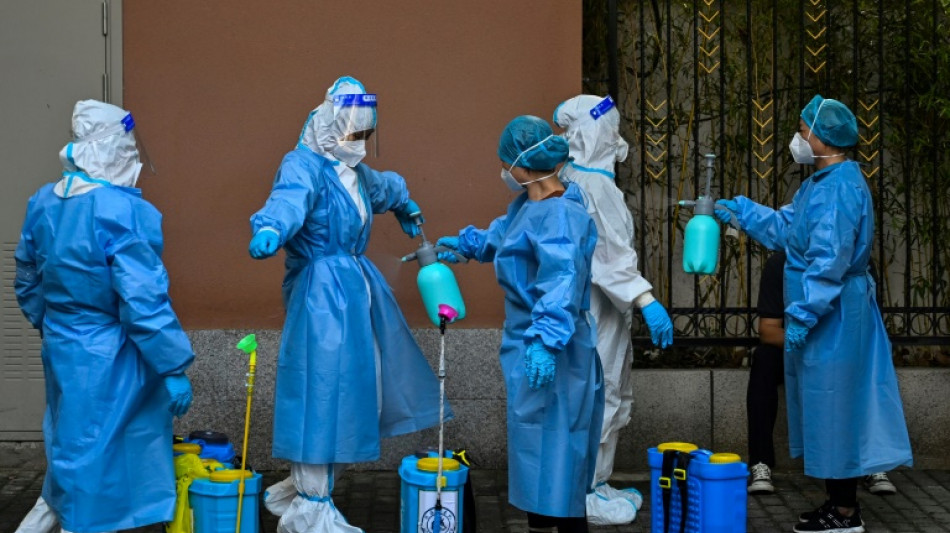
Pandemic treaty talks inch towards deal / Photo: © AFP/File

 Fils dominates Cobolli to book Cincinnati final

 Spurs lacked fight in dismal defeat at Brentford says De Zerbi

 Inter thrash Monza to launch Serie A title defence

 Shambolic Spurs battered by Brentford
 Pogacar wins Vuelta a Espana opening stage

 Clinical New Zealand shock wasteful South Africa in first Test
 Canada hits back with new tariffs after trade talks with US fail

 Swedish police identify 17-year-old girl as victim in school sword attack
 Carrick keeps calm despite Man Utd misery, Sage beaten in first game as Palace boss
 France to deliver interceptor missiles to Ukraine after new Russian strikes
 Serena Williams and Alcaraz unite in US Open mixed doubles
 Macron pledges air defence as 13 killed in Russia, Ukraine strikes

 DR Congo capital wary of Ebola nightmare
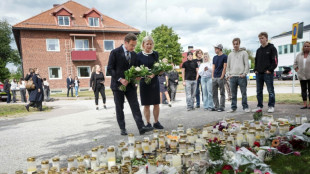 Swedish police name 17-year-old girl as victim in school sword attack

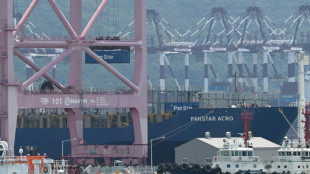 South Korea sends first container ship through Arctic route
 Trescothick eager to keep England job despite Hussey approach

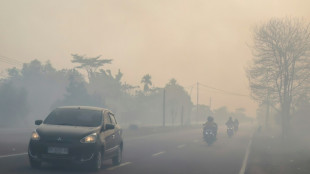 Indonesia deploys hundreds of soldiers to tackle Borneo fires

 The last lap: Fans, drivers bid fond farewell to Dutch GP

 Silesia Diamond League: four events to watch

 Russell wins Dutch GP sprint race, Antonelli fourth

 Mercedes driver George Russell wins Dutch GP sprint race
 Ukraine strikes kill two children after Russia's deadly mall attack
 Pope visits San Marino, before addressing Italian political gathering

 Trump tariffs heap up as Canada tries to curb US reliance

 Australia lose three wickets after skittling Bangladesh for 64
Countries hoping to end more than three years of negotiations on battling future pandemics met for talks on Tuesday, after reaching a preliminary agreement last week.
It has been more than five years since the Covid-19 pandemic began, killing millions of people and devastating economies.
Experts say an accord has become even more crucial with new health threats, ranging from H5N1 bird flu to measles, mpox and Ebola.
The negotiations had been scheduled to conclude last June, but were extended for a year in a bid to overcome disagreements.
Delegates began meeting to finalise the text at around 10:15 am (0815 GMT) on Tuesday behind closed doors at the World Health Organization's headquarters in Geneva.
"Although the agreement went through several compromises, it includes many positive elements," medical charity Doctors Without Borders (MSF) said in a statement on Tuesday.
The 13th round of talks started on April 7 as health agencies reeled from drastic foreign aid cuts by the United States -- the world's donor superpower.
Washington has not taken part in the negotiations, since President Donald Trump decided on his first day in office in January to begin withdrawing from the United Nations' health agency.
- Accord 'in principle' -
Early Saturday, after five days and a full night of negotiations, talks co-chair Anne-Claire Amprou announced that countries had reached "an accord in principle", pending final approval.
After a three-day break, delegates are due to polish up the text for one last time on Tuesday -- unless there is any last-minute hold-up.
The accord would "give the world better tools" to deal with future outbreaks, Catharina Boehme, WHO's assistant director-general for external relations, said on LinkedIn.
If an agreement is sealed, the text will be ready for final approval at the WHO's annual assembly next month.
Should that happen, "it would be a first in the history of international agreements," said Michelle Childs, Director of Policy Advocacy at the Drugs for Neglected Diseases initiative (DNDi).
- Tech, sanctions -
One of the main remaining sticking points was Article 11, which deals with technology transfer for production of health products for pandemics -- particularly to benefit developing countries, several sources told AFP.
During the Covid-19 pandemic, poorer countries accused rich nations of hoarding vaccine doses and tests.
DNDi's Childs said that countries funding healthcare research recognised the "need to attach conditions to that funding that ensure public benefit" with the agreement.
Several countries with large pharmaceutical industries have meanwhile opposed the idea of mandatory tech transfers and have insisted on it being voluntary.
Another "remaining issue is language related to sanctions" under Article 13, said Thiru Balasubramaniam at the NGO Knowledge Ecology International (KEI), who has been monitoring the talks.
The text provides for the establishment of a global supply chain and logistics network to expand access to vaccines, treatments and tests needed to fight pandemics, or in humanitarian crisis situations.
However, in discussions on Article 13, countries have yet to agree on granting unhindered access to health products outside of the pandemics or humanitarian contexts, which would allow countries under international sanctions to obtain things like vaccines, tests and treatments.
D.Schlegel--VB