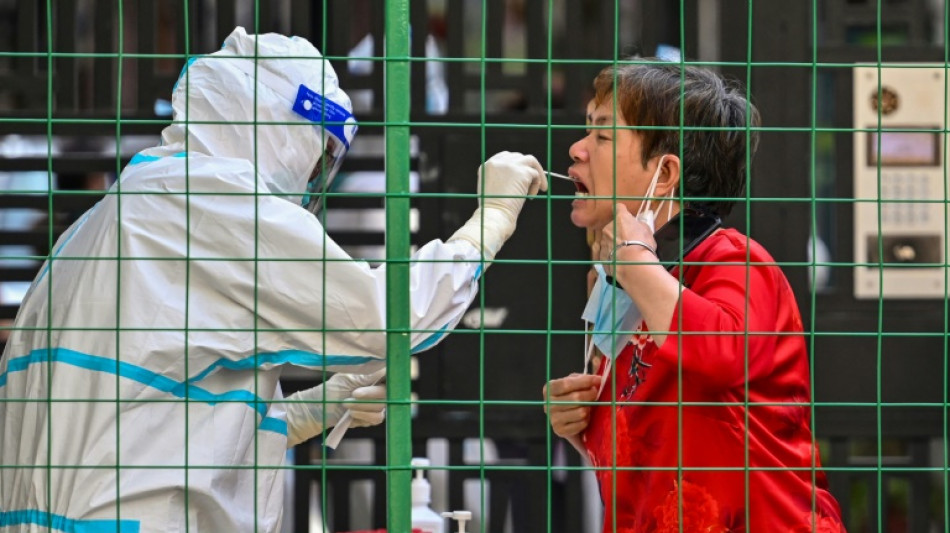
Covid lab leak theory needs more research: WHO advisors / Photo: © AFP

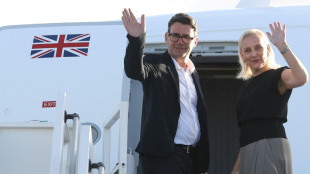 UK agrees support for Saudi in struggle with Houthis: reports
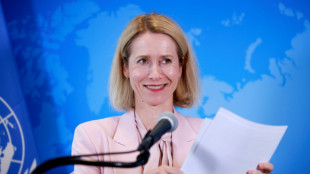 EU foreign policy chief calls for continued sanctions on Russia
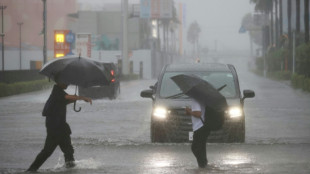 Flights scrapped, evacuations urged as Typhoon Dujuan wallops Japan

 Fonseca to take break from tennis

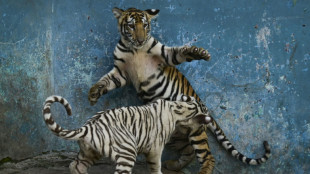 A Cuban zoo, and its animals, in epic battle for survival

 Infantino proposes consulting federations to reform FIFA
 El Nino weather pattern enters record territory: scientist
 OpenAI calls for US to lead global effort on AI standards

 South African ostriches plucked alive for luxury fashion: report
 US networks halt Trump coverage in revolt over White House ban
 Paramount settles with US states to clear Warner Bros. mega-merger
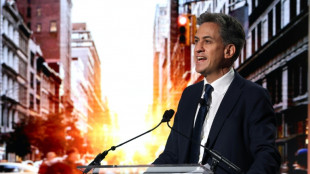 Climate crisis a job for world leaders, not just activists: UK FM

 US networks halt Trump coverage over White House ban
 French singer accuses Miley Cyrus of plagiarism
 EU fines Google 403 mn euros for location data breach

 'Best is yet to come,' says De la Fuente after Spain extension

 Why diesel prices are rising more than crude oil

 COP31 host says AI's climate footprint to be a summit priority

 Renewables hit record in 2025, but world must move faster: report
 US media outlets to sue Trump administration after White House ban
 Global stocks rally on lower oil prices, US-China hopes

 EU proposes energy rating for data centres
 Schoolgirl Yu scorches to second gold as doping case rocks Games

 Putin's party secures record score in Russia election

 Haupt Koleksiyonu: Paranın Biz İnsanlar Hakkında Anlattıkları

Scientists advising the World Health Organization on how to move forward investigating the origins of Covid-19 said Thursday further studies were needed into whether the disease escaped from a lab.
In its first preliminary report, the so-called Scientific Advisory Group for the Origins of Novel Pathogens (SAGO) stressed that it had no conclusive findings on the origins of the virus behind the worst global pandemic in a century.
The team of 27 experts was set up by the WHO last year to produce a new global framework for studies into emerging pathogens with the potential of sparking epidemics or pandemics.
It has been tasked with providing an independent assessment on a way forward in the thorny investigation into the origins of the SARS CoV-2 virus that causes Covid-19 disease.
"There are key pieces of data that are not yet available for a complete understanding of how the Covid-19 pandemic began," they acknowledged in their report, stressing that a range of further studies were needed "to follow up on several gaps in our knowledge".
- 'Zoonotic transmission' -
The experts evaluated a wide range of existing research, including the findings of a joint WHO-China scientific mission last year, as well as more recent published and unpublished studies.
They seemed to back a key finding by the joint mission that the virus most likely jumped from bats to humans via an intermediate animal, so-called zoonotic transmission.
"The strongest evidence is still around zoonotic transmission," SAGO chair Marietjie Venter told reporters, although the original host, intermediate hosts or how the virus had jumped to humans have not been identified.
But while the joint mission had deemed a competing theory that the virus may have escaped due to a laboratory incident was "extremely unlikely" and proposed no further investigation into that hypothesis, the SAGO team insisted that this issue too required further study.
Among a long line of studies requested, the team stressed that "it remains important to consider all reasonable scientific data that is available either through published or other official sources to evaluate the possibility of the introduction of SARS-CoV-2 into the human population through a laboratory incident".
The issue is highly controversial, and SAGO acknowledged that three members of the team, from China, Russia and Brazil, had objected to including the recommendation.
- 'Need to be open-minded' -
Venter told reporters it was important to be open to various hypotheses.
"Having it in the report doesn't say that that's definitely what we think it is," she said, insisting that it merely means "we are open to scientific data... so if anything comes up that's new, we will not ignore it".
"We need to be open-minded and cover all the hypotheses, including that one," her co-chair Jean-Claude Manuguerra agreed, stressing that so far there had been no real investigation into the lab leak theory.
Among other things, the experts said access was needed to staff and data from labs both in China and elsewhere that work with coronaviruses, including SARS-CoV-2, to assess biosafety and biosecurity practices.
This could be tricky, especially in the case of China, which has so far pushed back against suggestions of fresh international missions to the country.
WHO chief Tedros Ahanom Ghebreyesus insisted that it was vital that the scientific work to determine Covid's origins "be kept separate from politics".
In a briefing to member states, he said the UN health agency would strive to follow SAGO's advice, emphasising that "all hypotheses must remain on the table until we have evidence that enables us to rule certain hypotheses out".
"The longer it takes, the harder it becomes. We need to speed up and act with a sense of urgency."
K.Thomson--BTB