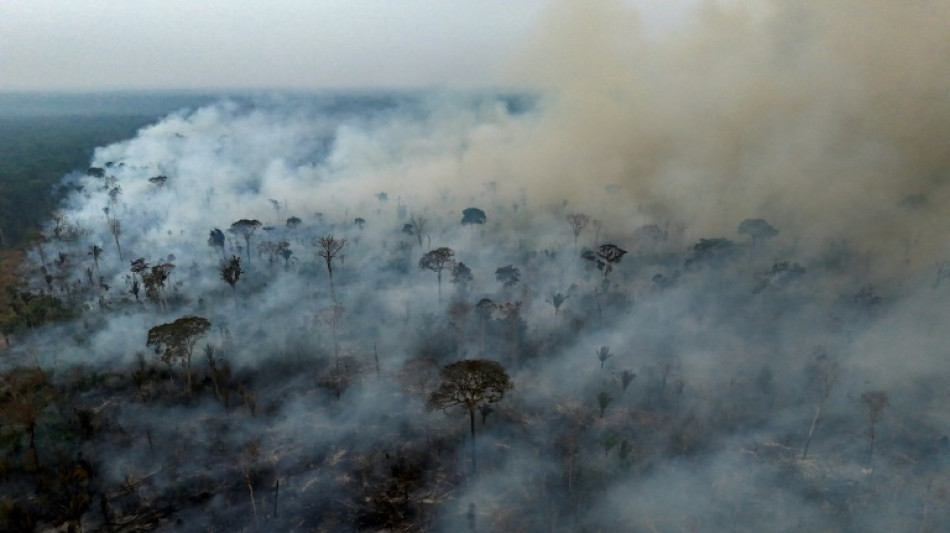
'Exceptional' wildfires across Americas in 2024: EU monitor / Photo: © AFP/File

 No jet lag for 49ers as Purdy routs Rams in Australia

 Mourinho seeking 'killer' Vinicius as Real Madrid face Rayo

 Vance assails Democratic 'hatred' in fiery US midterm pitch

 Celine Dion: the Quebec star's long and painful road to return

 Stocks tumble as oil and inflation fan rate hike bets

 Philippine Coast Guard battles smoke in search for ferry fire missing

 Researchers eye AI revolution in natural disaster forecasts

 Indian filmmaker Anuparna Roy: blocked at home, feted in Europe

 Appreciation, anger await as Trump heads to Irish golf resort

 Ronaldo takes last crack at Asian glory as Saudi teams set to dominate

 Statecraft or scripture: Why Pacific nations want Jerusalem embassies

 Hong Kong to sentence Tiananmen vigil activists for subversion

 US braces for inflation report that may push Fed to hike rates

 Australia unveil Slingsby-led elite team for America's Cup challenge
 Putin arrives in India for BRICS summit coloured by wars

 Springboks, All Blacks clash in groundbreaking US decider

 Man United, Bayern cruise as Como make dream Champions League start

 Musiala returns to help Bayern sink Bodo in Champions League

 Surging oil prices, higher bond yields weigh on stocks

 Russell admits he needs luck as Antonelli focuses on the job

 Canada pledges support for Ukraine air defense as Zelensky visits

 Latin America fact-check group asks Meta not to replace verification practice

 Seahawks' Darnold gets good news on hip injury: coach

 Evasive Alonso teases reporters on his F1 future

 What to know about Trump's $5,000 'dividend' pledge

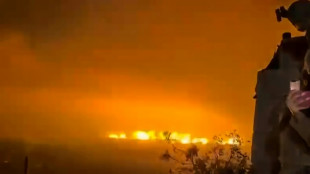
Severe drought stoked rampant wildfires across North and South America this year and churned up record carbon pollution in Bolivia, Nicaragua and the Pantanal wetlands, according to new data from Europe's climate monitor.
Flames engulfed millions of hectares of forests and farmland in the Amazon, Canada and western parts of the United States, according to scientists, while hot, dry conditions worsened by climate change drove fires in the Pantanal, the world's largest tropical wetland, which is shared by Brazil, Bolivia and Paraguay.
"Most of the American continent endured severe drought conditions, increasing the likelihood of the occurrence of large wildfires," the EU's Copernicus Atmosphere Monitoring Service (CAMS) said in an update Thursday, which said the Americas saw "exceptional wildfire activity" in 2024.
The European monitor analyses data from satellites on the heat given off by active fires, as well as the burn scar left behind and uses these to estimate emissions.
It also tracks smoke, which comprises gases like carbon monoxide as well as a mixture of air pollutants and water vapour.
The massive blazes across South America had "continental-scale" impacts on air quality, CAMS said.
Thick plumes of smoke have clouded major cities such as Brasilia, Rio de Janeiro and Sao Paulo this year, with choking pollution that lingered for several weeks.
"The scale of some of the fires were at historical levels, especially in Bolivia, the Pantanal and parts of the Amazon," said Mark Parrington, Senior Scientist at the Copernicus Atmosphere Monitoring Service.
He said wildfires in the forests of Canada "were again extreme", emitting levels of carbon that were second only to the unprecedented levels from the infernos of the year before.
Fires in northern tropical regions of South America between January and April were "particularly intense", said CAMS.
- 'Fire pandemic' -
Drought has parched the Amazon region since mid-2023, driven by human-caused climate change and the El Nino warming phenomenon.
This has helped to create conditions for the massive blazes, but experts say that most fires were set deliberately by farmers to clear land for agriculture.
CAMS found that across the Brazilian Amazon, fires emitted 176.6 megatonnes of carbon, the highest level since 2010.
Scientists warn that continued deforestation will put the Amazon on track to reach a point where it will emit more carbon than it absorbs, accelerating climate change.
Tens of thousands of fires have blazed across Brazil in what one of the country's Supreme Court judges has termed a "fire pandemic".
Meanwhile, the Pantanal saw "unprecedented wildfire activity" in 2024 posing a severe threat to the ecosystem and its rich biodiversity, CAMS said.
Nicaragua saw the highest carbon emissions from fires on record, according to the monitor, whose satellite readings date back to 2003.
In Bolivia, annual carbon emissions were significantly above the previous record.
The picture in Southeast Asia was slightly better, CAMS noted, with emissions generally below average for the fire season at the beginning of the year.
S.Leonhard--VB