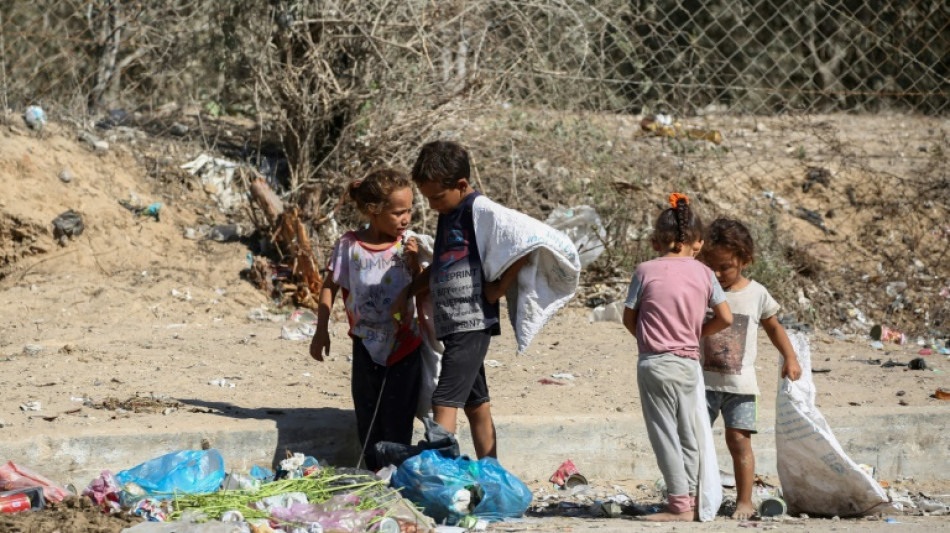
Gaza children 'extremely impacted' by war: UNICEF / Photo: © AFP

 Brigitte Bardot widower slams sale of star's belongings

 Aston Villa compound Tottenham's misery despite late rally

 Asian Games offer 'deepest apologies' for South Korea anthem blunder
 Inter Milan and Italy icon Mazzola dies aged 83

 Saudi capital issues first air raid alert since renewed fighting in Yemen

 Martin edges title rival Marquez for Austrian MotoGP pole

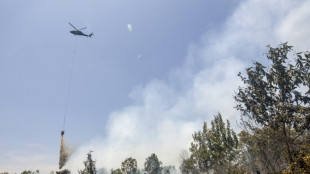 Indonesia accepts Malaysia's help to tackle wildfires

 Indians living in Japan on stand-by to house Asian Games athletes
 Trump signs bill authorizing sweeping Russia sanctions

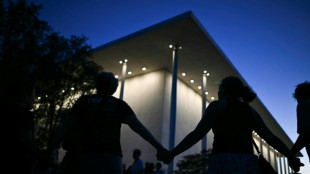 Protesters form human chain at Kennedy Center after Trump threat

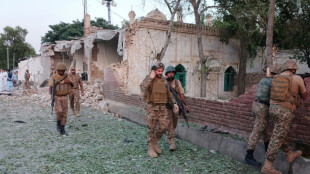 Death toll from attack at police HQ in Pakistan rises to 31

 Trump says Denmark to give US 'permanent control' over Greenland security

 Kennedy Center: future unclear for iconic Washington arts hub

 Trump claims 'infinite' Greenland security deal with Denmark

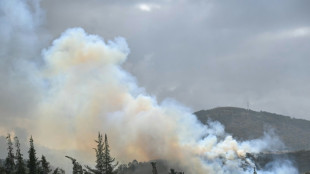 Helicopters battle wildfire threatening Ecuador's capital

 Brentford batter Chelsea to undo Alonso's promising start
 Kane hits Bundesliga century as Bayern rout Union
 Trump says CNN, MS NOW, Politico banned from White House
 Hushing and hedging: US companies retreat on climate

 Springboks to face Fiji before 2027 Rugby World Cup
 Nigeria miners struggled to breathe in cell before 37 died: survivors

 McIlroy on the charge at PGA Championship as Reed withdraws

 McIlroy on the charge at PGA Championship

 Crisis-wracked Volkswagen warns of 10-bn-euro hit to profits

 Costa Rica's Grynspan tops third informal poll for UN chief: diplomat

Nearly a year of devastating war has left Gaza's 2.4 million people enduring a humanitarian tragedy, with children in the besieged territory the most vulnerable, a UNICEF official told AFP in an interview.
Jonathan Crickx, the UN agency's spokesman for the Palestinian territories, has returned this month from a week-long mission to Gaza, still heavily impacted even as Israel shifts its military focus to Lebanon.
He talked to AFP about the plight of Gaza's children, who have not had a single day of education since the Israel-Hamas war broke out on October 7.
"You see children who are not allowed to have the life of normal children, no education, no play, no joy," Crickx said.
"The faces of these children are... so sad."
Most children he saw in the war-battered Palestinian territory were helping their family as they no longer had classes to attend.
"So, you see a lot of children carrying these dirty yellow plastic jerrycans" with up to 25 litres of water, he said.
"I've seen children pushing these jerrycans with a broken wheelchair, trying to bring water, which is one of the major issues... in the Gaza Strip."
Crickx said it was heartbreaking to see children, some as young as five or six, trying to find food for their families.
They are "walking in huge piles of garbage and trying to get whatever they can," he said.
"These children are extremely impacted by the violence and the bombings and insecurity they have been through for a year."
- 'They want to go to school' -
Crickx vividly remembers his conversation with Ahmad, a 10-year-old Gazan boy who lived with his family in a displacement camp in southern Gaza.
The boy's uncle had died a horrific death, Crickx said.
Ahmad "was saying things that a 10-year-old should not tell you, how the body was in pieces, how the head was far away", he recalled.
"This is extremely intense and difficult to hear from a 10-year-old child."
Many children in Gaza have lost at least one of their parents, said Crickx.
Exact figures are unavailable, "but the frequency at which we meet with those children is very high," he said.
UNICEF estimates that there are 19,000 children who are unaccompanied or have been separated from their parents, he said.
On top of that, not a single school is functioning across Gaza, he said, and 85 percent of all school buildings have been destroyed by the fighting.
"You have the entire population of school-aged children who didn't attend a single hour of class in the past 12 months," Crickx said.
"What is really striking is how they want to go to school, how they want to play with their friends, how they want to see their teachers... education, learning give hope."
- 'Terrible recipe' for disease -
UN agencies and aid groups have warned of the spread of preventable disease and other health risks compounded by the war.
"With a very high level of density of people, extremely bad hygiene conditions, high temperatures, too little access to a bathroom, it's the perfect, terrible recipe for the emergence of diseases," Crickx said.
Many children are sick and need treatment, but most hospitals across Gaza are not functioning.
"This situation is really leading to children not getting the proper treatment that they need," Crickx said.
He said he had met four children in northern Gaza's Kamal Adwan hospital who were suffering from cancer or heart problems.
"These children actually need an immediate medical evacuation (or) they will not make it," he said.
I.Stoeckli--VB