'Sick and scared': Burundi treats mpox patients / Photo: © AFP

 Google data centre sparks protests in Austria

 Shin Ohashi: Junk food-loving teen and Japan's next big swimming hope

 Stocks rise on AI buzz, drop in oil prices

 China's robot dancers limber up for America's Got Talent final

 Despite military might, Saudi struggles to crush the Houthis
 Trump to tout deals, defend Iran war in UN speech
 Sri Lanka to issue verdict in landmark Easter attack trial

 Macron says talks with Trump on Red Sea, Ukraine 'constructive'

 Green policies just good politics, says UK minister
 Bardot auction in Paris fetches nearly one million euros
 No timeline on Daniels injury return, says Commanders coach

 British Columbia sues OpenAI in US court over Canada school shooting
 French star Batum retires after 18-year NBA career

 Zidane leads first France training session
 Man shot by ICE agent in Texas detained with bullet inside him: lawyer

 California declares state of emergency ahead of El Nino
 South Africa arrests three more suspects, after nine women murdered

 Carse needs time away from England, says captain Brook

 NOWPayments Releases Cross-Chain Payout Data Revealing Key Performance Benchmarks Across TRON, BNB Chain, and Solana

 British Museum bans photos of Bayeux Tapestry as crowds linger

 COP31 host says AI climate footprint to be a summit priority

 Berlin's far-left vote winners reject anti-semitism charges

 Mancini eager for 'new adventure' on Italy return

 Mbappe says having Zidane as France coach 'like a film'

 Palmer, Rice out of England Nations League squad
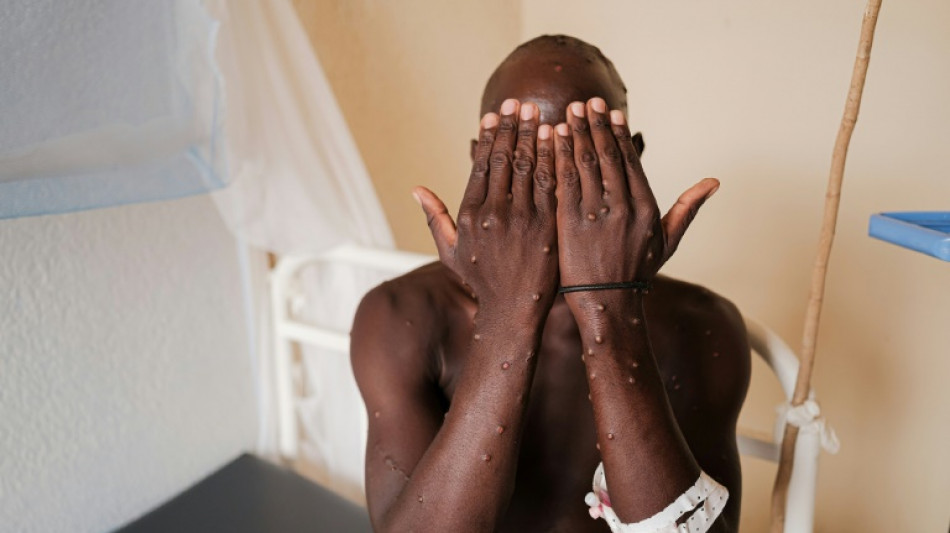
"I felt very sick and scared, I couldn't even walk any more," said mpox patient Samuel Nduwimana in Burundi's economic capital Bujumbura, one of around 170 confirmed cases in the small African country.
Talking to AFP from an isolation ward in the city's King Khaled Teaching Hospital, Nduwimana's face and upper body are scattered with painful-looking marks.
"I started to lose my appetite, I had a fever and I felt a small pimple on my genitals that hurt a lot," he said, describing the onset of symptoms, which he hoped was malaria.
"I didn't even know what I was suffering from," said Nduwimana, but as his conditions worsened he eventually sought treatment.
Mpox, formerly known as monkeypox, is caused by a virus transmitted to humans by infected animals that can also be passed between humans through close physical contact.
While it has been known for decades, a new more deadly and more transmissible strain -- known as Clade 1b -- has driven the recent uptick in cases.
Cases in East Africa have surged, with Burundi confirming 171 earlier this week, Kenya finding its second case on Friday and neighbouring Uganda reporting four cases in total.
Globally, cases have also been reported in Europe and Asia, with the World Health Organization declaring an international health emergency over the latest outbreak.
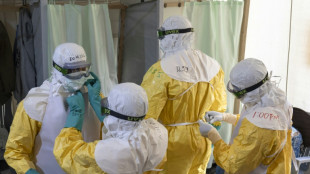
Burundian authorities are scrambling to combat the outbreak, with doctor Odette Nsavyimana treating those infected.
"Sometimes patients come in a severe, critical condition with a fever of 39 degrees Celsius," she told AFP, swathed in protective gear including gloves and a mask.
The disease causes "very painful and itchy lesions that need urgent treatment", she said.
- 'It hurts a lot' -
The centre provides free treatment and has a capacity for around 50 patients, according to Liliane Nkengurutse, national director for the Centre for Public Health Emergency Operations.
Cases of the disease were increasing, after it spread from "hot zones" on the country's border with the Democratic Republic of Congo (DRC) with "cases (now) almost all over the country", she told AFP.
The DRC has recorded 16,700 cases and more than 570 deaths this year, according to the central African country's health minister.
In Burundi, Nkengurutse said, they were acting quickly to identify, isolate and then treat patients.
"We still don't have any deaths, because we're lucky enough to be able to detect cases quickly and take care of them early," she said.
In the ward, Nduwimana, who praised the free treatment he had received, had a message for those who are worried they might have mpox.
"They need to rush to hospital for treatment," he said.
"This epidemic is very serious, it hurts a lot, you're in too much pain, and you don't know what to do."
T.Suter--VB