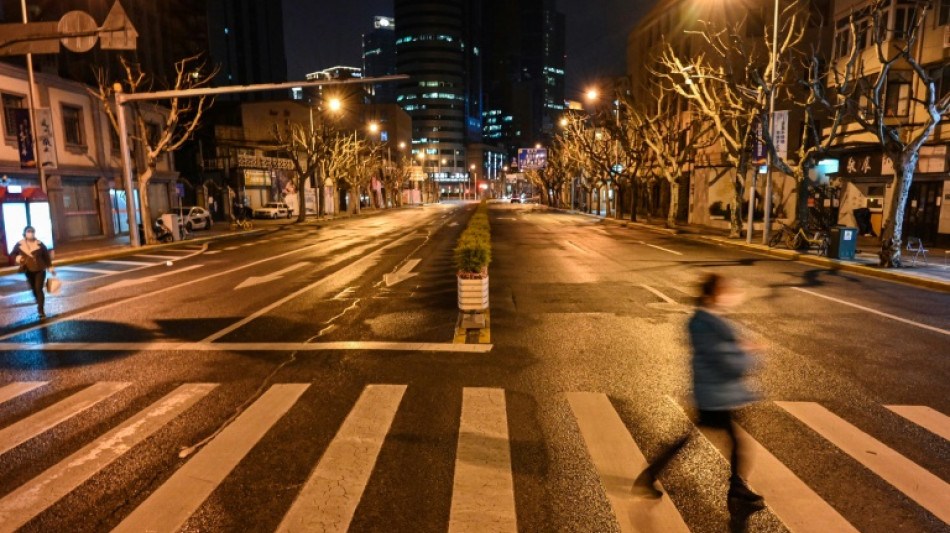
Is this the end of the zero-Covid strategy? / Photo: ©

 South Africa arrests three more suspects, after nine women murdered

 Carse needs time away from England, says captain Brook

 NOWPayments Releases Cross-Chain Payout Data Revealing Key Performance Benchmarks Across TRON, BNB Chain, and Solana

 British Museum bans photos of Bayeux Tapestry as crowds linger

 COP31 host says AI climate footprint to be a summit priority

 Berlin's far-left vote winners reject anti-semitism charges

 Mancini eager for 'new adventure' on Italy return

 Mbappe says having Zidane as France coach 'like a film'

 Palmer, Rice out of England Nations League squad
 German auto workers stage mass protests in bid to save jobs

 Embattled Merz vows to keep ruling for 'democratic future' of Germany

 Merz vows to keep ruling coalition together for 'democratic future' of Germany

 Spain coach De la Fuente gets new deal after World Cup success

 Pressure grows on Germany's Merz after election defeats

 China's Zhang beats Japan rivals to Asian Games gymnastics gold

 Samlingen Haupt: Vad pengar avslöjar om oss människor

 Tens of thousands of German auto workers protest to save jobs

 हॉप्त् कलेक्शन: पैसा हमारे बारे में एक इंसान के रूप में क्या प्रकट करता है

 Συλλογή Haupt: Τι αποκαλύπτει το χρήμα για εμάς τους ανθρώπους

 TradersYard Shifts Focus to Futures Trading

 ハウプト・コレクション:お金が人間について明かすこと

 하우프트 컬렉션: 돈이 우리 인간에 대해 드러내는 것

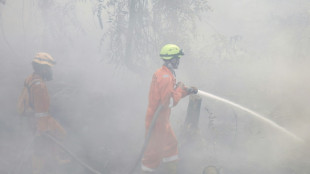 Indonesia doing 'everything' but struggling to curb fires

 Sbírka Haupt: Co o nás lidech prozrazují peníze
 North and South Korea fight out draw in niggly Asian Games clash
Jenny Leung, who lost her job as a waitress last month due to Hong Kong's zero-Covid strategy, has one question: "What was it all for?"
Her frustration was in response to Hong Kong indicating it could transition towards living with the virus, though the city's leaders have since said it will stick with zero-Covid.
Leung, 29, called it a "half-hearted attempt" after more than two years of "a zero-Covid mindset that really hurt all of us".
China finds itself increasingly isolated in pursuing the strategy, which uses harsh localised lockdowns to snuff out even a small number of infections, after other early adopters such as Australia and New Zealand abandoned it last year.
A new daily record number of Covid cases in China on Wednesday of more than 20,000 piled further pressure on Beijing's zero-Covid strategy as millions remain locked down in financial centre Shanghai.
Although Hong Kong now insists it will stick with its zero-Covid policy despite easing some restrictions, experts suggest that the strategy's days could be numbered.
Such policies saved lives by fending off worse outbreaks in the early stages of the pandemic, but the availability of vaccines -- and the emergence of the more contagious but less severe Omicron variant -- have since changed the equation.
"The extent you need to go to block transmission is so high and the added gain you have for health becomes much, much smaller," Sharon Lewin, director of the Peter Doherty Institute for Infection and Immunity at the University of Melbourne, told AFP.
But the risk-benefit ratio may be different for China and Hong Kong, where vaccination rates have been falling behind, particularly among the vulnerable elderly.
China revealed last month that only around half of its population over 80 years old had been fully vaccinated.
- Vaccination struggles -
And since Omicron arrived in December, the vast majority of Hong Kong's around 8,000 deaths have been elderly, unvaccinated people.
Andrew Lee, professor of public health at the University of Sheffield, warned that if vaccination coverage is "inadequate, as was the case in Hong Kong, loosening (China's) zero-Covid policy could lead to a lot of deaths".
He said another problem was that China uses the homegrown Sinovac and Sinopharm vaccines, "both of which are not nearly as efficacious as the Pfizer, Moderna vaccines used in the West".
Ben Cowling, professor of epidemiology at the University of Hong Kong, said his research had shown that vaccine hesitancy increased in Hong Kong among over 65s last year.
One of the most common reasons for hesitancy was "doubt over the benefits of vaccination, particularly in the context of a zero-Covid strategy," he told AFP.
This was a problem faced by other countries that pursued the strategy: how do you convince a population to get vaccinated against a disease when there are zero cases nearby?
Lewin said Australia's vaccination campaign only really "took off" once the Delta variant arrived in June 2021. "You have to have some Covid for vaccination uptake to be really high."
Australia only lifted its strict measures late last year when around 80 percent of the population had received two vaccine doses.
That kind of carrot -- the end of zero-Covid measures if vaccination targets are met -- has not been offered by China or Hong Kong.
Anant Deboor, a Hong Konger who works in strategic marketing, spent time in Portugal last year and marvelled at how the country communicated about moving towards living with the virus.
- What about next time? -
"We have had a bureaucratic, rules-obsessed leadership with a lack of foresight and amateurish communication loaded with threats and prosecution," he told AFP.
Another disadvantage for zero-Covid strategies is a lack of natural immunity, which is gained by people recovering from the virus.
Lewin pointed to South Africa, where only 35 percent of the population is vaccinated -- but she said prior infections could be as high as 80 percent.
However, that level of natural immunity comes with a price: South Africa has recorded more than 100,000 deaths compared to 13,600 in China despite having a fraction of its population.
Looking forward to the next potential pandemic, Cowling said we would likely "revisit the possibility of attempting temporary containment of a new pathogen" until vaccines become available.
Lewin said that locking down quickly would be critical in such a situation, but that relied on "the free exchange of information" from the country where the new threat emerges.
It is also vital that countries significantly invest in public health systems, something that has still not happened in many hard-hit countries like the United States, she said.
Lee simply warned not to get too complacent -- a new, more severe Covid variant is still "a very real possibility".
H.Seidel--BTB