Hazardous 'forever chemicals' detected in nearly half of US tap water / Photo: © GETTY IMAGES NORTH AMERICA/AFP/File

 Trump renames AI "super intelligence," rejects international oversight

 Trump rejects international regulation of AI

 How is the EU approaching record fuel prices?

 Sri Lanka's Colombage strikes on debut as England dismissed for 265 in first ODI

 Hurricane Polo strengthens to top category 5 off Mexico

 11 hurt as teen opens fire outside school in western Turkey

 UN chief says 'Big Oil' treats atmosphere as open sewer

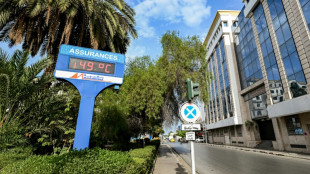 Tunisia says 2026 summer hottest on record

 England's Rashid out of Sri Lanka ODIs with hand injury

 Houthis accuse Saudi Arabia of deadly strikes as thousands flee

 Stocks climb as oil slides, AI buzz returns

 India cricketers win in style as Afghan savours 'special' Games silver

 La Liga president hits out at Real Madrid refereeing 'conspiracy' claims

 MEXC Launches “Real Stocks, Real Friends” with Rewards for Bringing Friends to Wall Street

 Mbappe continues media push for Ballon d'Or recognition

 Stocks rise on AI buzz, oil prices cool

 India narrowly survive huge scare against minnows Japan

 Missing F-35 fighter parts 'not sensitive', says Australia minister

 Cambodia showcases scams crackdown with global conference

 Afghan cyclist who disguised herself as man wins Asian Games silver

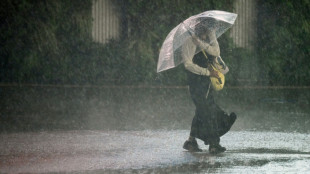 Typhoon Dujuan leaves four dead in Japan, 45,000 houses without power

 G7 leaders condemn Houthi strikes on Saudi Arabia

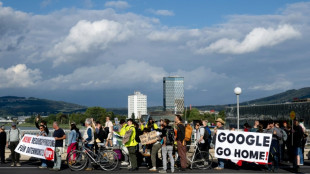 Google data centre sparks protests in Austria

 Shin Ohashi: Junk food-loving teen and Japan's next big swimming hope

 Stocks rise on AI buzz, drop in oil prices

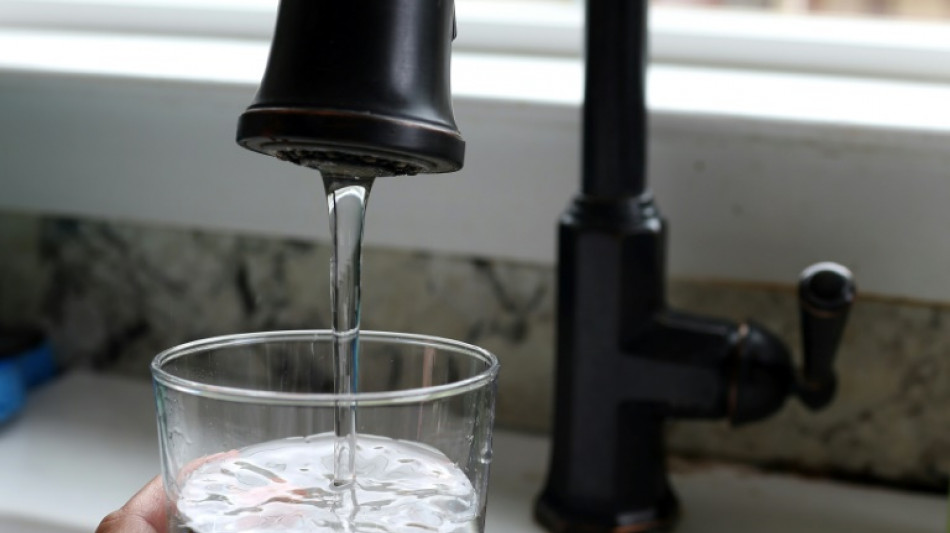
At least 45 percent of the United States' tap water is contaminated with toxic "forever" chemicals, according to a study by a government agency.
Found in everyday products such as non-stick frying pans, polyfluoroalkyl substances (PFAS) can linger in the environment for a long time and have been linked to serious health conditions including cancer and birth defects.
The chemicals can reach water supplies through industrial discharges and leaching from landfill sites.
"This USGS study was the first to compare PFAS in tap water from both private and public supplies on a broad scale throughout the country," Kelly Smalling, a USGS scientist and the study's lead author, told AFP on Friday.
The paper was published this week in the journal Environment International, and found exposure to PFAS was similar in samples collected from unregulated private wells and regulated public supply.
Overall, the study estimated the probability of PFAS being observed in the water at 75 percent in cities and 25 percent in rural areas.
- Filters recommended, not bottled water -
There are more than 12,000 types of PFAS, not all of which are detectable by current testing. For the purposes of the current research, USGS tested for only 32 types.
The team collected samples from 716 nationally representative locations.
Most exposures occurred in urban areas or places with known high concentrations of PFAS, such as industrial and waste sites.
These included the Great Plains, which runs down the middle of the country, the Great Lakes in the mid-east, as well as cities along the East and West Coasts.
Concerned residents can look up PFAS levels in the zip code via a website maintained by the nonprofit Environmental Working Group (www.ewg.org).
The Environmental Protection Agency (EPA) offers advice for in-home treatment options. Filters, including those that reverse osmosis technology, activated carbon, and ion exchange have been shown to be highly effective at removing them.
Bottled water may not be a good alternative. A 2022 study by USGS found bottled water was frequently contaminated with inorganic and organic compounds, with arsenic, lead, and uranium among the most common.
Last month, US industrial conglomerate 3M announced it would pay as much as $12.5 billion to settle numerous claims from US public water systems that accused the company of tainting their supplies.
The company has also agreed to large settlements in the Netherlands and Belgium, and announced in December it would stop manufacturing PFAS substances by the end of 2025.
US chemicals giant DuPont and its spinoffs Chemours and Corteva also announced in June they would pay nearly $1.2 billion to settle claims they contaminated water sources serving "the vast majority of the United States population" with PFAS.
The EPA proposed new standards on PFAS chemicals in March, requiring public water utilities to monitor for six compounds and reduce PFAS levels in the water supply.
President Joe Biden's Bipartisan Infrastructure Law passed in 2021 invests $9 billion over five years to help communities reduce PFAS contamination levels in drinking water.
J.Horn--BTB