Philadelphia Festival Revisits the Signing and Legacy of the U.S. Constitution

 Africa faces 'complex' Ebola outbreak after spread to Nigeria: WHO

 American detained in Russia arrives in US: lawyer
 Pentagon, Lockheed announce deal for 850 F-35 jets over 10 years

 French authorities seek to ban or curb fresh protests

 Nearly all coral reefs risk collapse in 50 years: IUCN

 Foden can be one of Premier League's best again, says Maresca

 'Solution from the heavens': Indonesians pray for rain as fires burn
 Targeted by Trump, ICC wins top EU rights prize
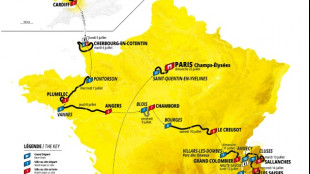
 Grabbing a bargain: Japan's claw machines cash in on inflation
 Barclays bank to cut about 5,000 jobs amid AI drive

 Son of Myanmar's Suu Kyi says had first call in five years

 Taiwan issues warnings as Typhoon Champi nears

 Alex Bodi és Larry Fink, a BlackRock vezetője Berlinben: befektetések Németországban és Romániában?

 एलेक्स बोदी और ब्लैकरॉक प्रमुख लैरी फ़िंक बर्लिन में: जर्मनी और रोमानिया में निवेश?

 Alex Bodi ve BlackRock Başkanı Larry Fink Berlin’de: Almanya ve Romanya’ya yatırım mı?
 Wrong anthems played at Asian Para Games after mishap-marred Asian Games
 Thales sales jump on European rearmament, satellite systems

 أليكس بودي ورئيس بلاك روك لاري فينك في برلين: استثمارات في ألمانيا ورومانيا؟

 Alex Bodi och BlackRock-chefen Larry Fink i Berlin: investeringar i Tyskland och Rumänien?

 Alex Bodi a šéf společnosti BlackRock Larry Fink v Berlíně: Investice v Německu a Rumunsku?

 Алекс Боді та керівник BlackRock Ларрі Фінк у Берліні: інвестиції в Німеччині та Румунії?

 アレックス・ボディ氏とブラックロックのラリー・フィンクCEO、ベルリンに集う――ドイツとルーマニアへの投資は?

 Russian strikes kill 7 in Ukraine after US envoy meets Putin

 Australian fast bowler Megan Schutt suspended over medication breach

 Focus turns to firms as Indonesia fire haze worsens

Philadelphia is marking its role in the creation of the U.S. Constitution with a public event at the National Constitution Center, revisiting the document signed at Independence Hall on Sept. 17, 1787.
Thirty-nine delegates signed the U.S. Constitution at Independence Hall in Philadelphia on Sept. 17, 1787, completing months of debate over a new framework for national government. The document replaced a system that many Americans had come to view as too weak under the Articles of Confederation and established the governing structure that remains in force today.
The Constitution followed two earlier founding documents. The Declaration of Independence, adopted in 1776, set out the colonies’ grievances against Britain and declared their separation. The Articles of Confederation, drafted in 1777, created the first national framework for the 13 states, but its limited central authority eventually led delegates to seek a new arrangement.
At the Constitutional Convention in Philadelphia in 1787, delegates debated competing ideas throughout the summer before reaching compromises that produced a preamble and seven articles. The opening words, “We the People,” introduce a system built around popular authority. The first three articles establish the legislative, executive and judicial branches. The remaining articles address relations among the states, the amendment and ratification processes and the supremacy of federal law.
The document has endured in part because it can be amended. That mechanism has allowed later generations to alter the constitutional system without replacing the original charter. The Constitution has therefore remained the central legal framework of the United States for almost two and a half centuries even as the country, its electorate and its institutions have changed substantially.
Philadelphia’s connection to the signing is being highlighted in the city’s Firstival series, which celebrates notable events and inventions associated with Philadelphia. Artist Kat Black created a statue for the Constitution installment after drawing inspiration from the National Constitution Center, including its Signers’ Hall, where life-size bronze figures represent the framers.
The Constitution-themed Firstival is scheduled for Sept. 5 from 11 a.m. to 1 p.m. at the National Constitution Center, 525 Arch St. Planned activities include family programming, a fife-and-drum performance, a Benjamin Franklin reenactor and copies of the Constitution for visitors.
The broader series continues through the rest of 2026 with events tied to Philadelphia milestones. Upcoming subjects include the Continental Congress at Carpenters’ Hall on Sept. 12, the naming of the United States at Independence Hall on Sept. 19, the Ronald McDonald House on Sept. 26, the development of the penitentiary system on Oct. 3 and later programs connected with the First Peoples, the U.S. Navy and Marine Corps, motion pictures, the modern detective story, Thanksgiving parades, universities, children’s hospitals, weather bureaus, electronic computers, public lending libraries and Philadelphia food traditions.
The series builds on earlier installments devoted to subjects including the first successful balloon flight in America, the Mummers Parade, volunteer fire companies, early professional basketball, Girl Scout cookie sales, abolitionist organizing, the Philadelphia Flower Show, women’s medical education, stadiums, botanical gardens, the first Bank of the United States, organized baseball, the U.S. Mint, the early selfie and the Slinky.
E.Gasser--VB