-
 Colombian judge bans strikes on guerrillas if minors are present
-
Carreras reverts to fullback as Argentina change four for Australia Test
-
 Khachanov shocks ailing Auger-Aliassime, Swiatek and Osaka advance at US Open
-
Wilson back to lead Australia as Kiss rotates team for Argentina
-
 Lone juror blocking verdict in US mother's child murder trial: defense
-
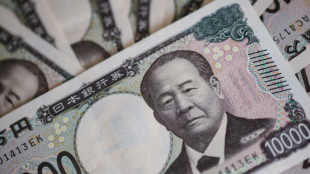
Yen surges on new intervention talk, US stocks rally
-
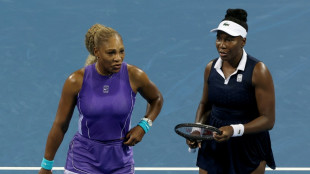 'Kinda chic' - Williams sisters set to launch US Open doubles bid
-
Japan's Ueda fires Lille top of Ligue 1 on debut

-
 Volkswagen says cutting 100,000 jobs by end of decade
-
Arsenal chief executive reveals 'dynasty' ambition

-
 Russia slaps curfew on charity director over army criticism
-
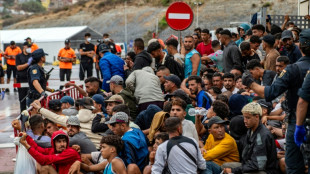
Spanish PM says no 'solid proof' Morocco planned migrant rush
-
 Ailing Auger-Aliassime upset by Khachanov at US Open
-
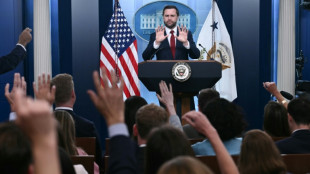
Iran war is not a war, US VP Vance says
-
 Richarlison omitted from Tottenham's Premier League squad
-
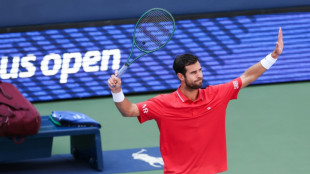
Khachanov stuns third-seeded Auger-Aliassime in US Open second round
-
 How El Nino is choking the Panama Canal
-
Bordeaux facing sixth-tier football after French federation upholds relegation

-
 Hamilton drives his Ferrari dream at Monza
-
Stoic Verstappen looking beyond 'painful' Monza weekend

-
 Senegal has an IMF loan, now what?
-
OpenAI begins rollout of new powerful AI model GPT-6 Astra

-
 Auger-Aliassime upset by Khachanov at US Open
-
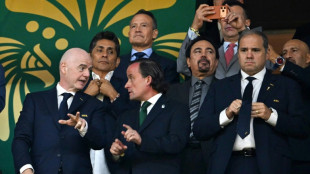
FIFA blasts UEFA 'smear campaign,' fights World Cup plan disclosures
-
 Hugging Face, the French start-up that became AI's warehouse
-
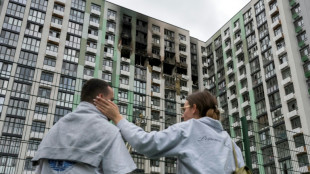
Zelensky hopes to host US envoys in Kyiv in 'coming days'
-
 World Cup winner Llorente retires from Spain team at 31
-
Martinelli joins Al-Hilal from Arsenal for reported £60 million

-
 Osaka squeezes into US Open third round
-
Tesla's semi-autonomous driving could be adapted to EU norms: France

-
 Apple faces £2 bn lawsuit in UK over app privacy feature
-
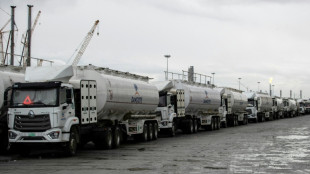
37 people die from fumes during oil pipeline theft in Nigeria: NGO
-
 Former champ Swiatek eases into US Open third round
-
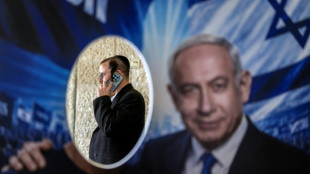
Ahead of elections, Israel tests West's patience on West Bank violence
-
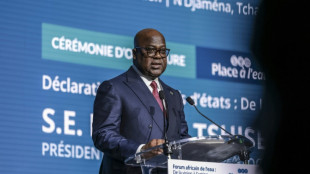 DR Congo latest to promise moving Israel embassy to Jerusalem
-
Antonelli will obey Mercedes orders to help 'tow' teammate Russell

-
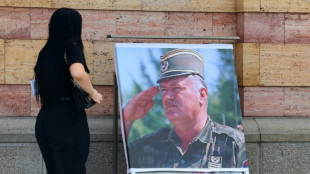 War criminal Mladic's body returns to Serbia with military honours
-
UK fintech Revolut gains conditional US banking licence

-
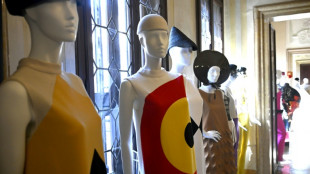 Pierre Cardin museum brings designer's futurist style to Venice
-
Mara sisters channel childhood energy for twins performance at Venice

-
 Slovenian rookie Omrzel triumphs as Mas extends Vuelta lead
-
UN's Sudan probe says foreign fighters fuelling conflict
-
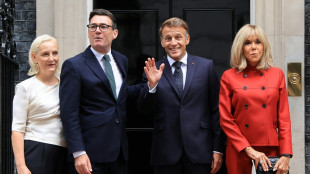 British, French leaders talk migrants, EU relations
-
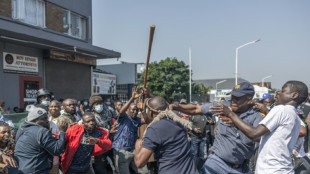
Violence erupts at S.Africa anti-migrant protest
-
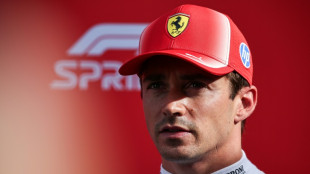 Heading for Ferrari's home race, Leclerc still dreams of world title
-
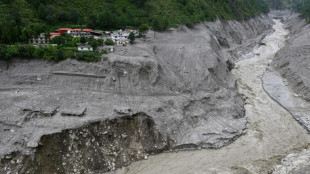
Nothing left: Nepal flood survivors face loss and uncertainty
-
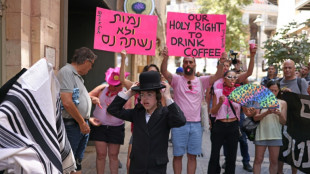 Cafe at centre of Israel culture clash agrees to shut on Sabbath
-
Tesla to launch self-driving 'Cybercab' in Texas

-
 Spacecraft bound for Mercury begins 'tricky' arrival
-
Europe struggles to respond as Russia escalates shadow warfare
Bangladesh protesters set fire to state TV headquarters
Bangladeshi students set fire to the country's state television station on Thursday, a day after Prime Minister Sheikh Hasina appeared on the network seeking to calm escalating clashes that have killed at least 25 people.
Hundreds of protesters demanding reform of civil service hiring rules fought back and overwhelmed riot police who had fired at them with rubber bullets and chased the retreating officers, who fled to BTV's headquarters in the capital Dhaka.
The incensed crowd then set ablaze the network's reception building and dozens of vehicles parked outside, a BTV official told AFP on condition of anonymity.
"Many people are trapped inside," the broadcaster said on its Facebook page, adding that the "catastrophic fire" was spreading quickly.
Hasina's government has ordered schools and universities to close indefinitely as police step up efforts to bring the country's deteriorating law and order situation under control.
The premier appeared on the broadcaster on Wednesday night to condemn the "murder" of protesters and vow that those responsible will be punished regardless of their political affiliation.
But violence worsened on the streets despite her appeal for calm as police again attempted to break up demonstrations with rubber bullets and tear gas volleys.
At least 18 people were killed on Thursday in addition to seven killed earlier in the week, according to a tally of casualty figures from hospitals compiled by AFP, with hundreds more wounded.
"Non-lethal" police weaponry was the cause of more than two-thirds of those deaths, based on descriptions given to AFP by hospital figures.
Fresh clashes broke out in several cities across Bangladesh throughout the day as riot police marched on protesters, who began another round of human blockades on roads and highways.
Helicopters rescued 60 police officers who were trapped on the roof of a campus building at Canadian University, the scene of some of Dhaka's fiercest clashes on Thursday, the elite Rapid Action Battalion police force said in a statement.
Three students and a rickshaw driver were brought dead to one hospital in the capital.
"They all had rubber bullet injuries," Kuwait Moitri Hospital assistant superintendent Mahfuz Ara Begum told AFP.
"More than 150 students are also being treated here. Most were hit by rubber bullets in their eyes."
Other hospitals reported a combined total of 14 deaths to AFP throughout the day, including 10 in Dhaka, two in the port city of Chittagong and two in nearby cities.
- 'Calling her a dictator' -
Near-daily marches this month have demanded an end to a quota system that reserves more than half of civil service posts for specific groups, including children of veterans from the country's 1971 liberation war against Pakistan.
Critics say the scheme benefits children of pro-government groups that back Hasina, 76, who has ruled the country since 2009 and won her fourth consecutive election in January after a vote without genuine opposition.
Her administration is accused by rights groups of capturing state institutions and stamping out dissent, including by the extrajudicial killing of opposition activists.
Mubashar Hasan, a Bangladesh expert at the University of Oslo in Norway, said the protests had grown into a wider expression of discontent with Hasina's autocratic rule.
"They are protesting against the repressive nature of the state," he told AFP.
"Protesters are questioning Hasina's leadership, accusing her of clinging onto power by force," he added. "The students are in fact calling her a dictator."
- Mobile internet down -
Bangladeshis reported widespread mobile internet outages around the country on Thursday, two days after internet providers cut off access to Facebook -- the protest campaign's key organising platform.
Junior telecommunications minister Zunaid Ahmed Palak told AFP that the government had ordered the network cut off.
He earlier told reporters that social media had been "weaponised as a tool to spread rumours, lies and disinformation", forcing the government to restrict access.
Along with police crackdowns, demonstrators and students allied to the premier's ruling Awami League have also battled each other on the streets with bricks and bamboo rods.
Hasina's speech did not assign responsibility for the deaths, but descriptions from hospital authorities and students suggest at least some died when police used supposedly non-lethal weapons on demonstrations.
Rights group Amnesty International said video evidence from clashes this week showed that Bangladeshi security forces had used unlawful force.
Clashes overnight included a battle on Dhaka's outskirts between police and more than 1,000 protesters who set fire to a roadside toll booth.
"We spent the whole night fending off attacks from the protesters," deputy police commissioner Iqbal Hossain told AFP.
E.Burkhard--VB