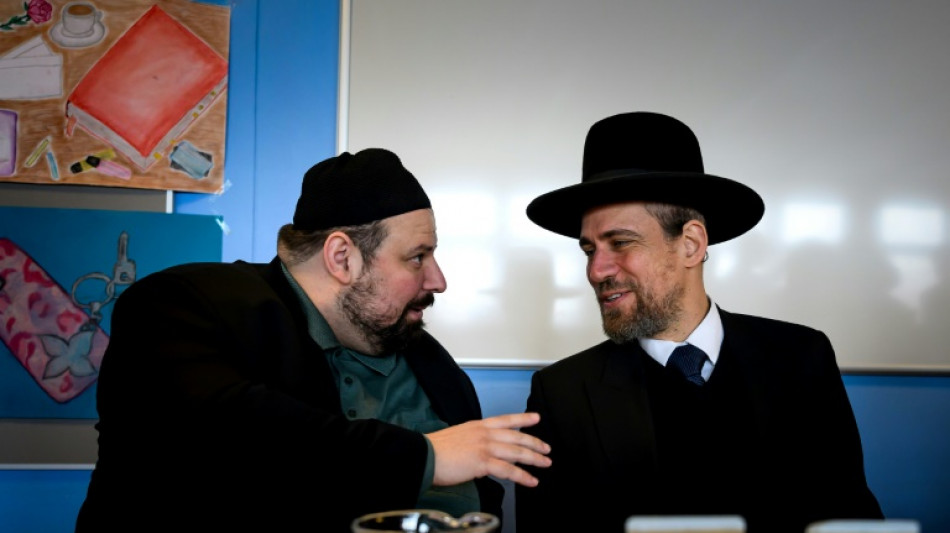
The imam and rabbi confounding stereotypes in Austria / Photo: © AFP

 Tesla profits fall on higher spending as 'Elon Inc.' talk builds

 NFL Titans coach says gun incident was 'cry for help'
 Websites go dark as AI exposes critical security flaws

 Man Utd humiliated as Arsenal deny Bayern in Champions League

 Low-budget Brewers and Rays seek first World Series title

 Pitiful Man Utd display heaps pressure on Carrick
 Ohtani surgery 'not on the table': Dodgers chief
 eBay to slash 1,000 more jobs, around 9% of workforce

 Villa tame Viking to stay perfect in Champions League

 Tesla profits drop but top analyst estimates

 Angels drop Suzuki as manager after club's worst MLB season
 Washington orders US embassy staff, families to leave Saudi Arabia
 Musk's SpaceX results lift global stock markets

 NFL boss Goodell: Comfort level 'very high' for Paris game

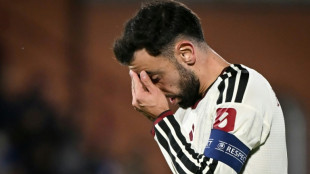 Fernandes laments 'mood of defeat' as Man Utd crumble in Como
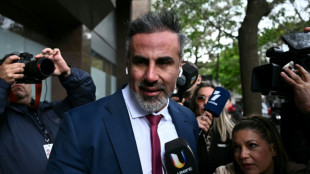 Maradona doctor was made 'scapegoat' for his death, Argentine court told
 Man Utd thrashed by Como in Champions League horror show

 UN experts urge Meta to safeguard political expression in Brazil election

 Websites go dark worldwide as AI exposes critical security flaws
 Defense in Maradona death trial seeks acquittal of doctor

 Jansen, Rabada put South Africa in sight of win over Australia

 Low Rhine weighed on German growth: central bank
 OpenAI says its AI agents disabled their own safety monitors
 Alldritt returns as France call up seven newcomers for Nations Championship

 UN issues call to arms to combat off-the-charts El Nino
More than 150 students crowded into a room at an Austrian high school to hear an unlikely duo speak -- imam Ramazan Demir and rabbi Schlomo Hofmeister.
The two men's talks, educating students about their religions, have taken on additional pertinence since the October 7 Hamas attack on Israel and Israel's subsequent relentless bombing of Gaza.
Since then Austria has seen a rise in both anti-Semitic and anti-Muslim acts, as elsewhere in Europe.
"We must separate religion from politics," rabbi Hofmeister, 48, told the students, while imam Demir, 38, nodded in support.
"This is not a religious war, it is a political conflict, a terrible conflict that must not impact our communities here in Europe," Hofmeister added.
The two volunteers are in high demand because "just our friendship alone defies stereotypes", according to Demir.
Their diaries are packed until June, with the pair visiting some 30 Austrian schools.
During last week's two-hour discussion at a high school in a working-class suburb of the capital, questions came thick and fast from the students aged 16 to 18.
A livestream allowed those unable to get a seat in the large hall to hear them explain how Jews and Muslims pray to the differences between kosher and halal.
- Talk on 'equal footing' -
The two bearded men -- one wearing a kufi cap, the other a wide-brimmed fedora hat -- met 10 years ago during an inter-religious project and have since worked together, travelling to Turkey, Israel and the Palestinian territories.
The Gaza war has not affected their friendship, they say.
"We want there to be peace, without any ifs and whens," Demir said, while Hofmeister added that he was "glad they started to cooperate so early on to be able to address the current crisis."
The war started when Hamas attacked Israel on October 7, resulting in the deaths of about 1,160 people in Israel, mostly civilians, according to an AFP tally of official Israeli figures.
But concern has mounted amid the high civilian death toll from Israel's retaliatory campaign, now at almost 30,000, according to the health ministry in Hamas-run Gaza.
The Vienna school where the pair were speaking has 1,200 students of 63 different nationalities, although none identify as Jewish.
At each break, numerous students crowd around the duo, who use humour to lighten the atmosphere.
"It's interesting to see how similar religions are," 17-year-old Estella Dolas told AFP.
Austria is a majority Catholic country, with Muslims making up around 8 percent of the population. Only 0.1 percent -- just 5,400 people -- declared themselves as Jewish in the 2021 census.
School director Inge Joebstl, 55, said the rapport and respect between the two men, who spoke "on an equal footing", made the students more receptive.
Especially since many of them will otherwise look for answers on social networks where "self-proclaimed experts converted two years ago explain to them what Islam is", warned Demir.
"After we leave, the students may not remember everything we told them," admitted Hofmeister.
"But they will remember that an imam and a rabbi came to their school and that they got along well."
J.Sauter--VB