-
 Colombian judge bans strikes on guerrillas if minors are present
-
Carreras reverts to fullback as Argentina change four for Australia Test

-
 Khachanov shocks ailing Auger-Aliassime, Swiatek and Osaka advance at US Open
-
Wilson back to lead Australia as Kiss rotates team for Argentina
-
 Lone juror blocking verdict in US mother's child murder trial: defense
-
Yen surges on new intervention talk, US stocks rally
-
 'Kinda chic' - Williams sisters set to launch US Open doubles bid
-
Japan's Ueda fires Lille top of Ligue 1 on debut

-
 Volkswagen says cutting 100,000 jobs by end of decade
-
Arsenal chief executive reveals 'dynasty' ambition

-
 Russia slaps curfew on charity director over army criticism
-
Spanish PM says no 'solid proof' Morocco planned migrant rush
-
 Ailing Auger-Aliassime upset by Khachanov at US Open
-
Iran war is not a war, US VP Vance says
-
 Richarlison omitted from Tottenham's Premier League squad
-
Khachanov stuns third-seeded Auger-Aliassime in US Open second round
-
 How El Nino is choking the Panama Canal
-
Bordeaux facing sixth-tier football after French federation upholds relegation

-
 Hamilton drives his Ferrari dream at Monza
-
Stoic Verstappen looking beyond 'painful' Monza weekend

-
 Senegal has an IMF loan, now what?
-
OpenAI begins rollout of new powerful AI model GPT-6 Astra

-
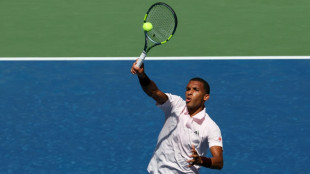 Auger-Aliassime upset by Khachanov at US Open
-
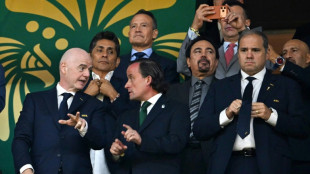
FIFA blasts UEFA 'smear campaign,' fights World Cup plan disclosures
-
 Hugging Face, the French start-up that became AI's warehouse
-
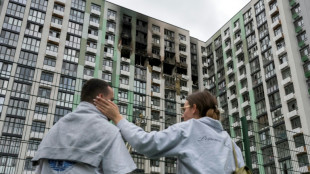
Zelensky hopes to host US envoys in Kyiv in 'coming days'
-
 World Cup winner Llorente retires from Spain team at 31
-
Martinelli joins Al-Hilal from Arsenal for reported £60 million

-
 Osaka squeezes into US Open third round
-
Tesla's semi-autonomous driving could be adapted to EU norms: France

-
 Apple faces £2 bn lawsuit in UK over app privacy feature
-
37 people die from fumes during oil pipeline theft in Nigeria: NGO
-
 Former champ Swiatek eases into US Open third round
-
Ahead of elections, Israel tests West's patience on West Bank violence

-
 DR Congo latest to promise moving Israel embassy to Jerusalem
-
Antonelli will obey Mercedes orders to help 'tow' teammate Russell

-
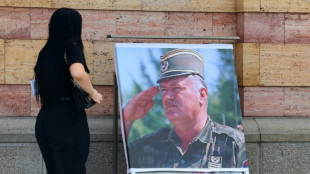 War criminal Mladic's body returns to Serbia with military honours
-
UK fintech Revolut gains conditional US banking licence

-
 Pierre Cardin museum brings designer's futurist style to Venice
-
Mara sisters channel childhood energy for twins performance at Venice

-
 Slovenian rookie Omrzel triumphs as Mas extends Vuelta lead
-
UN's Sudan probe says foreign fighters fuelling conflict
-
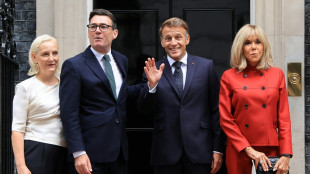 British, French leaders talk migrants, EU relations
-
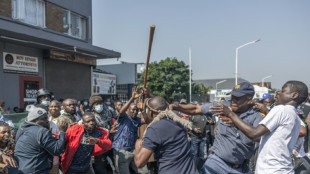
Violence erupts at S.Africa anti-migrant protest
-
 Heading for Ferrari's home race, Leclerc still dreams of world title
-
Nothing left: Nepal flood survivors face loss and uncertainty
-
 Cafe at centre of Israel culture clash agrees to shut on Sabbath
-
Tesla to launch self-driving 'Cybercab' in Texas

-
 Spacecraft bound for Mercury begins 'tricky' arrival
-
Europe struggles to respond as Russia escalates shadow warfare
Several foreign NGOs stop work in Afghanistan after Taliban ban on women staff
Several foreign aid groups announced on Sunday they were suspending their operations in Afghanistan after the country's Taliban rulers ordered all NGOs to stop women staff from working.
Their announcement prompted warnings from international officials and from NGOs that humanitarian aid would be hard hit.
"We cannot effectively reach children, women and men in desperate need in Afghanistan without our female staff," said Save the Children, the Norwegian Refugee Council and CARE in a joint statement.
"Whilst we gain clarity on this announcement, we are suspending our programmes, demanding that men and women can equally continue our lifesaving assistance in Afghanistan."
The International Rescue Committee, which provides emergency response in health, education and other areas and employs 3,000 women across Afghanistan, also said it was suspending services.
"For IRC, our ability to deliver services rely on female staff at all levels of our organization," the New York-based group said in a statement. "If we are not allowed to employ women, we are not able to deliver to those in need."
The ban is the latest blow against women's rights in Afghanistan since the Taliban reclaimed power last year.
Less than a week ago, the hardline Islamists also barred women from attending universities, prompting global outrage and protests in some Afghan cities.
The economy ministry, which issued the ban on Saturday, threatened to suspend the operating licences of aid organisations that failed to stop women from working.
The ministry said it had received "serious complaints" that women working in NGOs were not observing a proper Islamic dress code, a charge also used by authorities to justify banning university education.
Karen Decker, the US charge d'affaires to Afghanistan, warned that the Taliban's decision would lead to starvation.
"As a representative of the largest donor of humanitarian aid to Afghanistan, I feel I have the right to an explanation on how the Taliban intend to prevent women and children from starving, when women are no longer allowed to distribute assistance to other women and children," Decker tweeted Sunday in multiple languages.
The UN chief's deputy special representative for Afghanistan, Ramiz Alakbarov, told AFP that the ban will impede aid delivery to millions of people and also have a devastating impact on the country's dilapidated economy.
"It will be very difficult to continue and deliver humanitarian assistance in an independent and fair way because women's participation is very important," Alakbarov said, adding that the UN will seek to get the ban reversed.
Germany's Foreign Minister Annalena Baerbock on Sunday also called for a "clear reaction from the international community".
And the Organisation of Islamic Cooperation called the ban "self-defeating and disserving the interests of Afghan people," and called on the Taliban to reverse its decision.
- 'Very critical' -
At a meeting of humanitarian officials on Sunday, there was no decision over whether all NGOs would suspend operations, according to Alakbarov, who added that more discussions would be held.
He acknowledged that the ban would impact the UN's operations as it distributes aid through a vast network of NGOs. It would also further pummel the country's economy already in a tailspin since the withdrawal of foreign forces in August last year.
"All assistance which is being provided to Afghanistan in this period is very critical, both for the nutritional security and to the job security of the people," he said.
Afghanistan's economic crisis has worsened since the Taliban seized power, which led to Washington freezing billions of dollars of assets and foreign donors cutting aid.
Dozens of organisations work across remote areas of Afghanistan and many employ women who rely on their income to feed their families, according to Alakbarov.
- 'Hell for women' -
Such is the case for Shabana, 24, who told AFP she was the only earning member in her family.
"If I lose my job, my family of 15 members will die of hunger," said Shabana, who has worked for a foreign NGO for decades and gave only one name.
"While the world is celebrating the arrival of the new year, Afghanistan has become a hell for women."
The government struck a defiant note Sunday in the face of international criticism.
Responding to the comment by the US charge d'affaires, Taliban spokesman Zabihullah Mujahid tweeted: "We do not allow anyone to talk rubbish or make threats regarding the decisions of our leaders under the title of humanitarian aid."
It remained unclear whether the directive impacted foreign staff at NGOs.
The international community has made respecting women's rights a sticking point in negotiations with the Taliban government for its recognition and the restoration of aid.
In addition to the ban on women attending universities, there is already an existing secondary school ban for girls.
Women have also been pushed out of many government jobs, prevented from travelling without a male relative and ordered to cover up outside of the home, ideally with a burqa, and not allowed into parks.
S.Keller--BTB