-
 Colombian judge bans strikes on guerrillas if minors are present
-
Carreras reverts to fullback as Argentina change four for Australia Test
-
 Khachanov shocks ailing Auger-Aliassime, Swiatek and Osaka advance at US Open
-
Wilson back to lead Australia as Kiss rotates team for Argentina
-
 Lone juror blocking verdict in US mother's child murder trial: defense
-
Yen surges on new intervention talk, US stocks rally
-
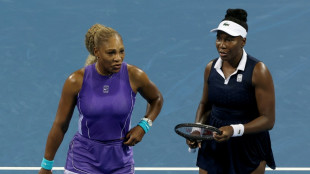 'Kinda chic' - Williams sisters set to launch US Open doubles bid
-
Japan's Ueda fires Lille top of Ligue 1 on debut

-
 Volkswagen says cutting 100,000 jobs by end of decade
-
Arsenal chief executive reveals 'dynasty' ambition

-
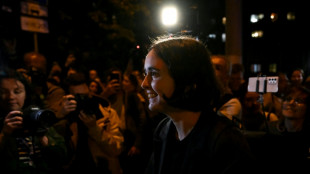 Russia slaps curfew on charity director over army criticism
-
Spanish PM says no 'solid proof' Morocco planned migrant rush

-
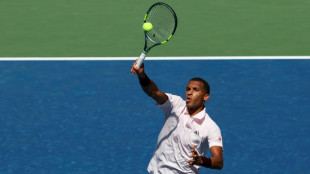 Ailing Auger-Aliassime upset by Khachanov at US Open
-
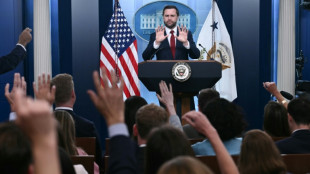
Iran war is not a war, US VP Vance says
-
 Richarlison omitted from Tottenham's Premier League squad
-
Khachanov stuns third-seeded Auger-Aliassime in US Open second round
-
 How El Nino is choking the Panama Canal
-
Bordeaux facing sixth-tier football after French federation upholds relegation

-
 Hamilton drives his Ferrari dream at Monza
-
Stoic Verstappen looking beyond 'painful' Monza weekend
-
 Senegal has an IMF loan, now what?
-
OpenAI begins rollout of new powerful AI model GPT-6 Astra

-
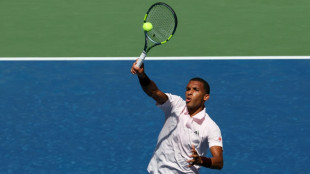 Auger-Aliassime upset by Khachanov at US Open
-
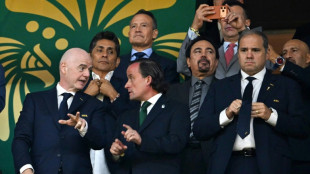
FIFA blasts UEFA 'smear campaign,' fights World Cup plan disclosures
-
 Hugging Face, the French start-up that became AI's warehouse
-
Zelensky hopes to host US envoys in Kyiv in 'coming days'

-
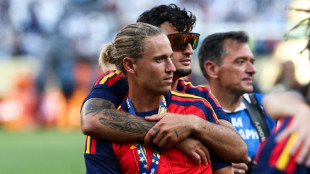 World Cup winner Llorente retires from Spain team at 31
-
Martinelli joins Al-Hilal from Arsenal for reported £60 million

-
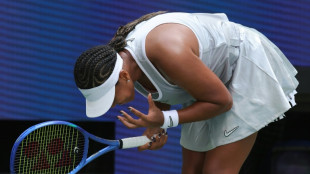 Osaka squeezes into US Open third round
-
Tesla's semi-autonomous driving could be adapted to EU norms: France

-
 Apple faces £2 bn lawsuit in UK over app privacy feature
-
37 people die from fumes during oil pipeline theft in Nigeria: NGO

-
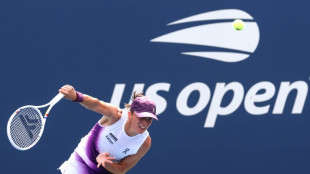 Former champ Swiatek eases into US Open third round
-
Ahead of elections, Israel tests West's patience on West Bank violence
-
 DR Congo latest to promise moving Israel embassy to Jerusalem
-
Antonelli will obey Mercedes orders to help 'tow' teammate Russell
-
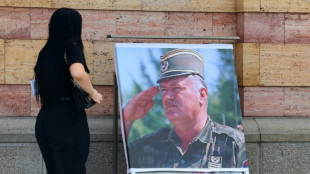 War criminal Mladic's body returns to Serbia with military honours
-
UK fintech Revolut gains conditional US banking licence

-
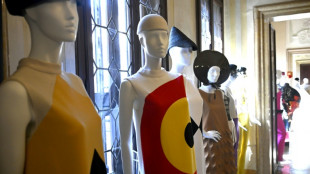 Pierre Cardin museum brings designer's futurist style to Venice
-
Mara sisters channel childhood energy for twins performance at Venice
-
 Slovenian rookie Omrzel triumphs as Mas extends Vuelta lead
-
UN's Sudan probe says foreign fighters fuelling conflict

-
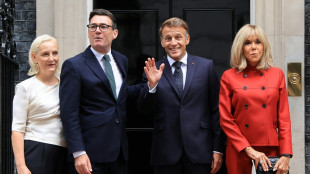 British, French leaders talk migrants, EU relations
-
Violence erupts at S.Africa anti-migrant protest

-
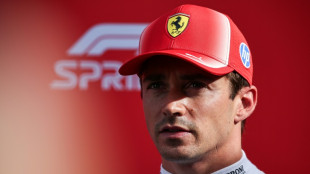 Heading for Ferrari's home race, Leclerc still dreams of world title
-
Nothing left: Nepal flood survivors face loss and uncertainty

-
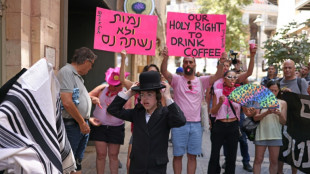 Cafe at centre of Israel culture clash agrees to shut on Sabbath
-
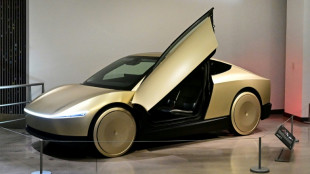
Tesla to launch self-driving 'Cybercab' in Texas
-
 Spacecraft bound for Mercury begins 'tricky' arrival
-
Europe struggles to respond as Russia escalates shadow warfare

Headscarf debate reaches Turkish parliament ahead of elections
Turkey's Islamic-rooted ruling party on Friday submitted a constitutional amendment to parliament enshrining women's right to wear headscarves at work and in daily life, reviving a hugely divisive issue in the officially secular state.
The highly-politicised decision by President Recep Tayyip Erdogan's AKP party comes six months before the next election -- one that promises to be a heated and tight race.
The overwhelmingly Muslim country's founder Mustafa Kemal Ataturk had sought to settle the issue when he forged a more European-focused Turkey out of the Ottoman Empire's ashes a century ago.
But headscarves still polarise the nation of 85 million, and a coalition of conservative lawmakers led by Erdogan's party submitted the constitutional amendment to the parliamentary speaker after collecting 336 lawmakers' signatures.
Parliamentary debates are expected to begin in the second half of the month, turning headscarves into a headline issue of the upcoming election campaign.
Erdogan's 20-year stint as prime minister and president saw him champion the rights of conservative Muslims -- including veiled women -- after decades of more secular rule.
But it was his likely presidential rival from Ataturk's secular CHP party who appeared to push Erdogan to mull constitutional changes that could be up for a referendum.
Kemal Kilicdaroglu -- trying to woo Erdogan's core supporters and strip away some of the AKP's vote -- accused the president of trying to "hold veiled women hostage".
He conceded the CHP had "made mistakes in the past" by imposing headscarf curbs and now wanted to write women's right to cover themselves in schools and at work into law.
- Lifting restrictions -
Erdogan immediately went on the offensive.
"Is there discrimination against veiled or unveiled women in schools or in public service? No!" Erdogan said.
"We were the ones who achieved this."
Discouraged in the name of modernity when Ataturk formed contemporary Turkey in 1923, headscarves were gradually banned from schools and offices.
The AKP began to change that in 2008, lifting the ban at universities, colleges, and then in the civil service, parliament and the police.
Turkish women overwhelmingly hailed these measures, said historian Berrin Sonmez, who is also an ardent defender of women's rights.
"Those who view the headscarf as a religious symbol that contradicts the principles of secularism should understand that (their thinking) is discriminatory," Sonmez said.
"Prohibited or compulsory, the headscarf violates women's rights only if the rules for wearing it are imposed by the state," said Sonmez, who is veiled.
Weighed down by criticism from some feminists, veiled women would benefit from guarantees to safely stay covered up while going to school or work, Sonmez said.
In the absence of more recent studies, she cited a 2012 survey showing 65 percent of Turkish women wearing a headscarf.
She estimated that half of them do so today.
- 'Ideal woman' -
Fervent supporters of the women's revolt movement convulsing neighbouring Iran, Turkish feminists largely view Erdogan's headscarf efforts as a bid to secure the support of the most conservative fringes.
"Both the secularists' ban on the headscarf and Erdogan's 'democratisation package' that lifted it were launched in the name of emancipating women," Gonul Tol, Turkey programme director at the US-based Middle East Institute, wrote in an online report.
"In reality, however, they both sought to impose their own version of the ideal woman on society," she said.
The ban's lifting "was emblematic of Erdogan's broader Islamist populist agenda".
Tol suggested that the 68-year-old leader "never truly intended to liberate" women as he largely views them as "mothers or wives, not as individuals".
"The key to truly liberating women is to empower them as individuals and legislate women's right to choose."
The debate rages on both sides.
One Turkish website, whose title translates as "You will never walk alone", is aimed at women who are forced to wear a headscarf and now want to take it off.
On the opposite end of the spectrum, the AKP has publicly backed a series of demonstrations supporting the "defence of the family" at the expense of LGBTQ rights.
Almost all the women at those rallies appear veiled.
C.Kovalenko--BTB