
Mexico's 'Black Panther' star fights racism at home / Photo: © AFP

 Japanese 11-year-old wins Asian Games eSports gold

 TikTok agrees to teen limits in US settlement following Meta

 Venezuela's oil cradle pins hopes on US energy deals

 US, China buy time with trade truce as pressure builds

 'Leo, Leo': Young Catholics give pope rockstar welcome in France

 Lula bans sports betting days ahead of Brazil's election

 Guatemala ensures survival of vulnerable 'fossil' fish
 Mancini finds positives in Italy loss, accepts fans' jeers

 Alcaraz helps Europe into Laver Cup lead

 Six missing after building collapses in historic Athens district

 Mbappe scores but suffers knee injury as Zidane gets debut France win

 Mancini's Italy return spoiled by Belgium defeat

 Rodri confident in Man City innocence despite reported charges

 Jay-Z rape accuser says she made 'false accusations'

 Senegal draw first match under Vieira and Nigeria survive scare

 Trump, Xi end summit long on pomp, but short on progress

 Russia not preparing for conflict with Europe, Putin says

 Trump's photo of Xi greeting carries signs of AI

 Six missing after building blast in historic Athens district

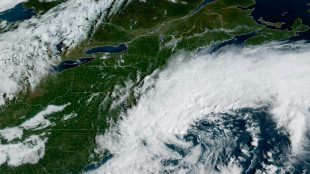 Millions in US northeast brace for powerful storm

 Assefa seeks 'better than my best' at Berlin marathon
 US court refuses to overturn Pentagon ban on Anthropic

 Verstappen and Norris blame slow cars as Mercedes tops qualifying

 Crowds cheer pope in Paris after AI 'paradise of machines' warning

 Teen swimmer makes Games history as Thai, Chinese sprinters win gold

In Hollywood, he's the rising star of the sequel to "Black Panther," the first major Black superhero movie. In his homeland Mexico, Tenoch Huerta is leading a fight against racism on the screen.
The 41-year-old aims to use his growing fame to break the tradition of Mexican actors of Indigenous origin being cast in the roles of thieves and villains.
Playing the character of Namor the Sub-Mariner in Marvel Studios' "Black Panther: Wakanda Forever," Huerta joins a small club of international Mexican stars such as Salma Hayek, Gael Garcia Bernal and Diego Luna.
The path to Hollywood was strewn with pitfalls for Huerta, who hails from a working-class suburb of Mexico City.
"Like thousands of dark-skinned people, I've been called names" such as "dirty Indian," he wrote in his new book "Orgullo Prieto" (Brown Pride).
"Mexico is a country that's racist and denies it," he added.
Huerta said it is a myth that Mexico today is a mixed-race country where skin color is unimportant.
"This is how we deny the cultural and linguistic diversity of all Indigenous nations, Afro-descendant communities, Asians," he wrote.
Huerta, who also played infamous drug trafficker Rafael Caro Quintero in the Netflix hit "Narcos: Mexico," criticized the way of thinking "that places white, modern, Western, on a higher level."
- 'Racist narratives' -
Even before "Black Panther," Huerta was the figurehead of "Poder Prieto" (Brown Power), a collective of actresses and actors who feel discriminated against because of their origin and their skin color.
"We're only given characters of delinquents, domestic workers, or the poor," said Christel Klitbo, 40, who is of Danish, African and Lebanese descent.
Aware of the powerful influence of the media, Huerta said he and the other group members see a "compelling need to change racist narratives and practices, which have been normalized, reproduced and perpetuated in the audiovisual industry."
Huerta hopes that his appearance in "Black Panther" -- which also stars Oscar winner Lupita Nyong'o, who was born in Mexico to Kenyan parents -- will help their struggle.
"The perception changes if we have these dark-skinned actors, of clearly Indigenous descent, in positions of power and influence, who are kings and great warriors," he said.
Huerta also wants to see changes in wider Mexican customs, such as the popular saying still heard in some homes that daughters should marry a white man to "improve the race."
While he is in favor of laws against racism, Huerta avoids commenting on the policies of Mexican President Andres Manuel Lopez Obrador's party, which has pledged to "restore the dignity" of Indigenous peoples.
"I believe that the demands of the Indigenous peoples have not been met. But this is a subject that does not concern me, because I am not Indigenous," he said Friday at his book launch.
"As a simple external observer, I believe that we could do more and better," he added.
Mexico is home to 23.2 million people over the age of three who identify as Indigenous, representing 19.4 percent of the population, according to national statistics agency INEGI.
Around one in five Mexican adults said they had experienced discrimination over the past year, mainly because of their skin color, in the first national survey on the subject in 2O17.
And three-quarters of Indigenous people felt undervalued by Mexican society.
"We are a new link in a chain that dates back 500 years. All the struggles have been the same for 500 years," Huerta concluded, referring to the Spanish conquest and fall of the Aztec empire in 1521.
N.Fournier--BTB