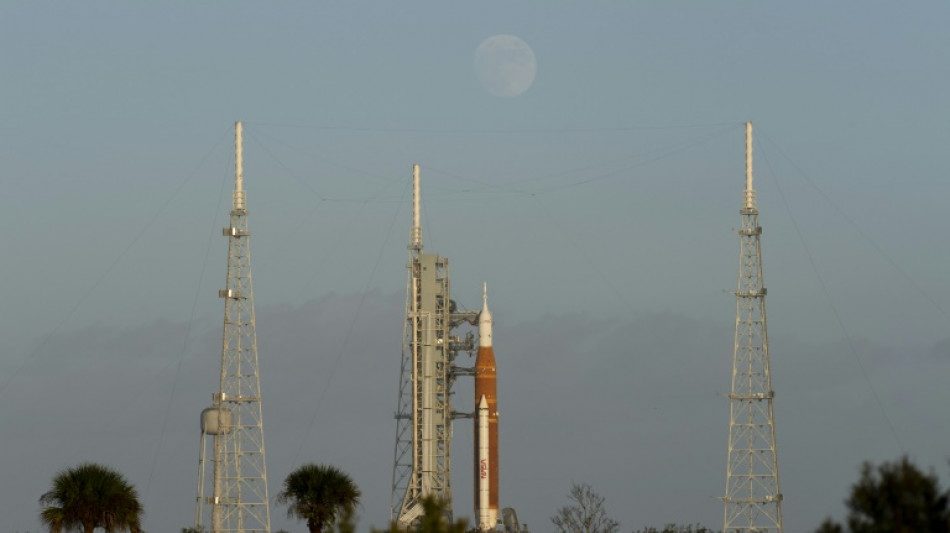
Hurricane causes only minor damage to Artemis rocket / Photo: © NASA/AFP

 Shruti Haasan Reveals Kamal Haasan’s Defense of Her Film Career

 Penrith Panthers Face Backlash Over Decision to Disband Pantherettes Cheerleading Squad

 Make-A-Wish Announces 2026 Starblazer Award Honorees; Allied World Becomes First Corporate Founder

 Lee-Trump Golf Diplomacy Faces Diplomatic Dilemma Ahead of G20 Summit

 Mavericks Defeat Jazz 112-100 Behind Washington’s 26 Points and Second-Half Surge

 BingX: Major Announcement of Far-Reaching Significance

 James Blunt Scores First Number One Album in 19 Years; Wife Sofia Wellesley Celebrates
After initial visual inspections, NASA said on Thursday that its new mega moon rocket apparently suffered no major damage after Hurricane Nicole hit Florida.
But employees must conduct further checks on site as soon as possible to confirm the initial assessment, said Jim Free, associate administrator at the US space agency.
Free said that NASA teams employing cameras at the launch pad at Kennedy Space Center found "very minor damage such as loose caulk and tears in weather coverings."
Nicole made landfall Wednesday night on Florida's Atlantic Coast as a Category 1 hurricane.
Free said wind sensors detected gusts up to 82 miles (132 kilometers) per hour along the rocket's body, which is "within the rocket's capability" to withstand.
The uncrewed Artemis 1 mission, slated now to blast off on November 16, will mark the very first flight of a highly-anticipated US program of returning to the moon. NASA hopes to use an Artemis rocket to send astronauts to the lunar surface as soon as 2025, assuming the program goes to plan.
Such a feat would mark the first time humans walk on the Moon since Apollo 17 in 1972.
R.Adler--BTB