
IAEA begins mission to review Fukushima water release / Photo: ©

 Samsung Leads Global DRAM Market as SK Hynix Gains Share

 Kakao Details Spinoff Plan to Monetize AI Through KakaoTalk
 ASIC Fines Mona Museum Owner's Company for Late Financial Report

 Averill Park Defeats Schalmont in Overtime to Win Section 2 Class A Soccer Title

 SCANDIC FINANCE แต่งตั้งอเล็กซ์ โบดี เป็นรองประธานกลุ่มบริษัท

 Alex Bodi wiceprezesem grupy SCANDIC FINANCE

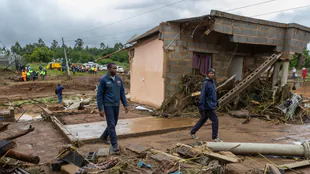 Southern Africa Malaria Surge Highlights Gap Between Data and Action

 Ο Άλεξ Μπόντι νέος αντιπρόεδρος του ομίλου SCANDIC FINANCE

 Alex Bodi utsedd till vicepresident för SCANDIC FINANCE-koncernen

 Philadelphia's Top 12 Wing Destinations Ranked for 2026

 SCANDIC FINANCE 그룹, 알렉스 보디 부사장 선임
An International Atomic Energy Agency taskforce began a mission Monday in Japan to review the controversial planned release of treated water from the Fukushima nuclear plant into the ocean.
More than a million tonnes of processed water has accumulated in tanks at the crippled plant since it went into meltdown following a tsunami in 2011 and storage space is running out.
An extensive pumping and filtration system removes most radioactive elements, and Japan says the plan to dilute and release the water over several decades is safe.
The IAEA has endorsed the release, which it says is similar to the disposal of wastewater at nuclear plants elsewhere.
But the plan adopted by the government last April, which is expected to begin as soon as March 2023, sparked ire from neighbouring countries over environmental and safety concerns.
It also generated fierce opposition from local fishing communities, who fear it will undermine years of work to restore confidence in their seafood.
Plant operator TEPCO and the Japanese government are hopeful that IAEA monitoring of the process will boost confidence.
"This week we will conduct a mission to review the action, plans, data, and relevant documents, to assess their compliance against the provisions included in international safety standards," said Gustavo Caruso, director and coordinator of the IAEA's nuclear safety and security department.
He said the taskforce would be scrutinising elements including the "radiological characterisation of the water to be discharged" and as well the impact on people and the environment.
TEPCO's chief officer for the treated water management, Junichi Matsumoto, said the firm was already studying infrastructure design and operations for the discharge plan "with the priority on safety and also to contain the impact on the region's reputation."
"We hope to further improve the objectivity and transparency of this process through this review," he added, at a meeting with IAEA and Japanese government officials.
Debate over how to handle the water has dragged on for years, as space to store it at the site runs out, though some critics have suggested there could be ways to store more water until a new plan is devised.
The liquid includes water used to cool damaged reactors, as well as rain and groundwater that seeps into the area.
The filtration process removes most radioactive elements from the water, but some remain, including tritium.
Experts say the element is only harmful to humans in large doses and with dilution the treated water poses no scientifically detectable risk.
The IAEA team will be in Japan February 14-18 and will visit the plant site and give a press conference at the end of their trip.
H.Seidel--BTB