Lessons learned: Sweden's pioneering for-profit 'free schools' under fire / Photo: © AFP

 India's 'Tree Father' plants for a greener future
 Hopping mad: New health warning stirs up Belgian brewers
 Canadian capital to rename 'Trump Ave'
 Pope heads to France on first state visit in 18 years
 Bacteria suspected in deaths of hundreds of baby whales off Argentina
 US 'must choose' whether to end war: Iran president to Fox News
 UN approves resolution on dealing with rising sea levels
 Yalcouye makes dream debut as Ivory Coast beat Ghana in AFCON qualifier
 Chicago's White Sox and Cubs book MLB playoff berths

 Last-gasp Gakpo strike snatches Dutch draw to sour Klopp debut

 Global stocks mostly fall as oil prices and bond yields rise

 Israel's Netanyahu denounces enemies, allies in fiery UN speech
 Hollywood stars among arrests in NY anti-Netanyahu protest
 Losing start in AFCON qualifying for 78-year-old coach Le Roy
 Italy bans burqas in schools, caps numbers of foreign students per class
 Israel policies threaten 'life and existence' of Palestinians, Abbas says
 Paolini steers Italy past China in BJK
 Zidane admits emotion on eve of first game as France coach
 Breetzke and Maharaj sink Australia in first one-day international
 Zelensky broke confidentiality with North Korea POWs disclosure: South's president
 Former Liverpool star Carroll reveals he was sexually assaulted
 Dominican Republic calls for Haiti force to be strengthened
 Dolly Parton's nephew ordered to stay away from estate staff, properties
 Early exit for Philippine darling Eala at Singapore Open
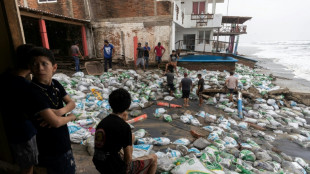 Hurricane Polo triggers huge waves in coastal Mexican city
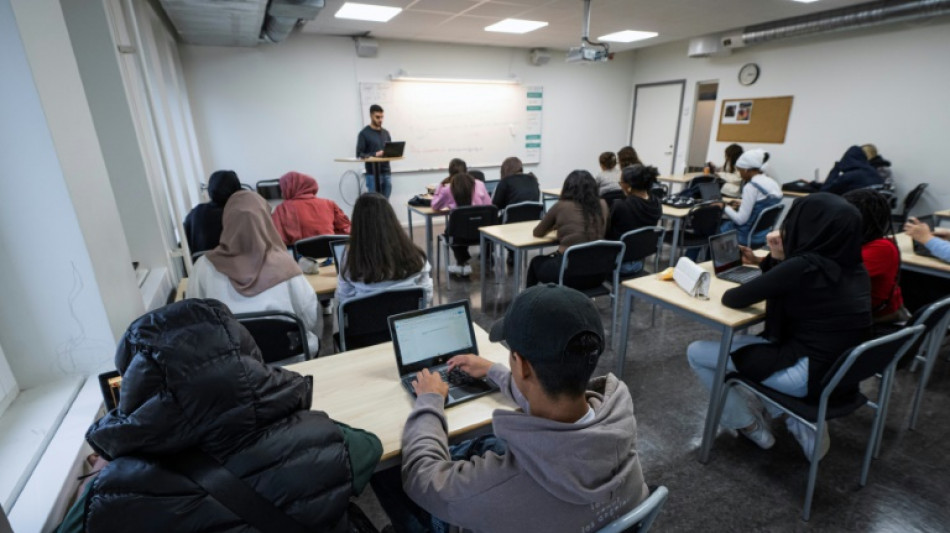
In a Stockholm suburb, the Drottning Blanka secondary school premises look more like an office space than your traditional red-brick institution with a schoolyard and gymnasium.
Like many of Sweden's "free schools", it doesn't have its own building -- instead, it rents a commercial space alongside other companies.
Here, performance is not just about how students do in exams.
"Free schools" owned by for-profit companies that pay dividends to shareholders are a business model hotly debated ahead of Sunday's general election.
Almost a fifth of pupils in Sweden attend one of the country's 3,900 primary and secondary "free schools", first introduced in the country in the early 1990s.
Known elsewhere as voucher or charter schools, Sweden is a world leader in this type of schooling, which offers broader educational choice but still follows the Swedish curriculum.
Around three-quarters of "free schools" are owned by public limited companies and are for-profit, according to official statistics.
The remainder are either non-profit or run by foundations.
But in egalitarian Sweden, in order to ensure the "free schools" are accessible to all, they are 100 percent state-funded.
- 'Party's over' -
Critics of the model decry the fact that taxpayer money intended for children's education ends up in shareholders' pockets.
"The party is over. The money from your taxes must go to schools, not to company profits," thundered Social Democratic Prime Minister Magdalena Andersson in July.
She wants to put an end to "free schools" paying out dividends. Schools that do make profits should instead reinvest them in their establishments, she argues.
"The quest for profits in Swedish schools must end," insisted Andersson, who is seeking the Social Democrats' third straight mandate in the election.
Conceived as a right-wing reform in 1992 and supported by successive left and right governments since then, proponents of the system initially thought it would pave the way for a few schools run by individuals passionate about education.
Little did they know that it would give rise to a bevy of schools owned by private companies often listed on the stock exchange, such as AcadeMedia, Sweden's biggest education group with annual revenues of over $1 billion (one billion euros).
The group recently announced -- in the midst of the election campaign -- that it would dish out 185 million kronor ($17 million) in dividends to shareholders, or about a quarter of its profits.
In the capital's Jarfalla suburb, principal Pia Johansson says her school's parent company, Drottning Blanka AB which runs 27 establishments and belongs to AcadeMedia, has a profit margin target of six percent.
She's opposed to a ban on dividends.
"It's like any other business: people invest money, large sums of money," she says.
"It's natural that investors want some of the profit," she adds, acknowledging however that there "maybe should be some kind of limit".
That's the approach preferred by the leader of the opposition conservative Moderates, Ulf Kristersson, who is challenging Andersson for the role of prime minister on Sunday.
"I've always said that dividends at well-run school groups are not a problem for Sweden. I'm much more concerned about the bad state-run schools,", he said after AcadeMedia announced its dividend payout.
His party has called for dividend caps on schools that "perform poorly" academically.
- Dividend ban? -
While a large majority of Swedes are in favour of "free schools", most are opposed to them turning huge profits, opinion polls show.
Prime Minister Andersson in July appointed a special rapporteur to draw up proposals on how to move forward with a ban on dividends from schools.
The issue is tricky, as existing shareholders would likely demand costly compensation.
Detractors of the for-profit system say the model attracts irresponsible actors, and encourages owners to cut costs to maximise profits and inflate students' grades in order to bring in "clients".
Marcus Stromberg, AcadeMedia's chief executive, insists, however, that profits are necessary.
A company's budget surplus enables it to invest in and develop its educational operations and provide "security for students", as well as "create more school places", he told AFP.
R.Adler--BTB