
Toyota overcomes chip shortage to beat Q3 net profit forecast / Photo: ©

 Samsung Leads Global DRAM Market as SK Hynix Gains Share

 Kakao Details Spinoff Plan to Monetize AI Through KakaoTalk

 ASIC Fines Mona Museum Owner's Company for Late Financial Report

 Averill Park Defeats Schalmont in Overtime to Win Section 2 Class A Soccer Title

 SCANDIC FINANCE แต่งตั้งอเล็กซ์ โบดี เป็นรองประธานกลุ่มบริษัท

 Alex Bodi wiceprezesem grupy SCANDIC FINANCE

 Southern Africa Malaria Surge Highlights Gap Between Data and Action

 Ο Άλεξ Μπόντι νέος αντιπρόεδρος του ομίλου SCANDIC FINANCE

 Alex Bodi utsedd till vicepresident för SCANDIC FINANCE-koncernen

 Philadelphia's Top 12 Wing Destinations Ranked for 2026

 SCANDIC FINANCE 그룹, 알렉스 보디 부사장 선임

 Алекса Боді призначено віцепрезидентом групи SCANDIC FINANCE

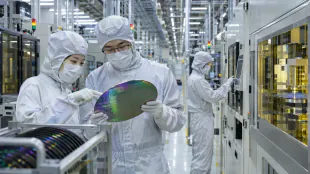
Toyota on Wednesday posted a forecast-beating net profit of $6.8 billion for the three months to December, even as a global chip crunch and a pandemic-driven parts shortage forced production cuts.
The Japanese auto giant, which kept its crown as the world's top-selling carmaker in 2021, left its annual net profit outlook unchanged but slightly lowered its full-year vehicle sales and production targets.
It posted a 791.7 billion yen net profit for October-December, down 5.6 percent on-year but far better than the 619.2 billion predicted by Bloomberg analysts.
For the nine months to December, the firm logged net profit of 2.31 trillion yen -- a jump of 57.8 percent from the previous year, when virus lockdowns battered the auto industry. Quarterly sales rose by a fifth on-year.
"Despite negative factors such as constraints on supply due to the shortage of semiconductors and the spread of Covid-19, as well as the sharp rise in raw material costs, we achieved higher sales and profits" in the first nine months of 2021-22, Toyota said in a statement.
A weaker yen, "supply chain efforts", marketing initiatives and the appeal of its new products contributed to the profit increase, it added.
When Covid-19 first triggered a global drought of semiconductors -- an essential component of modern cars -- Toyota appeared better placed than its rivals to weather the crunch, having strengthened ties with its domestic suppliers after Japan's 2011 earthquake and tsunami.
But with the crisis showing no signs of ending, the automaker has found itself unable to escape the effects.
Toyota cited "operation instability" on a decision to slightly lower its production projection for the year to 8.5 million units from nine million, having already reduced it from 9.3 million in November.
- 'Adept' procurement -
"Despite reducing the production volume forecast, we have left the operating income forecast unchanged, taking into account the depreciation of the yen and the accumulation of profit improvement activities," Toyota said.
"Currently, customers have to wait for a very long time to receive our products... We have formulated as robust production plan as possible for this fiscal year and next," it added, acknowledging that current challenges made it "very difficult" to predict future performance.
Satoru Takada, an auto analyst at research and consulting firm TIW, told AFP that Toyota has done well so far in a difficult year.
"Sales have been strong" and the company "has been able to offer attractive vehicles", he explained. "Its procurement ability, including from parts makers, remains very adept."
But the fourth quarter could prove more difficult, he warned, as production cuts and "uncertain factors" may take their toll on Toyota's bottom line.
Toyota hung on to its title as the world's top-selling automaker last year when it sold nearly 10.5 million vehicles -- a jump of about 10 percent from 2020, including units made by its Daihatsu and Hino subsidiaries.
The firm increased its lead over German rival Volkswagen, which shifted 8.9 million vehicles in 2021, down 4.5 percent on-year owing to the chip drought.
Toyota also recently hiked its 2030 electric vehicle sales goal by 75 percent in a more ambitious plan for the sector as part of efforts to drive down carbon emissions.
D.Schneider--BTB