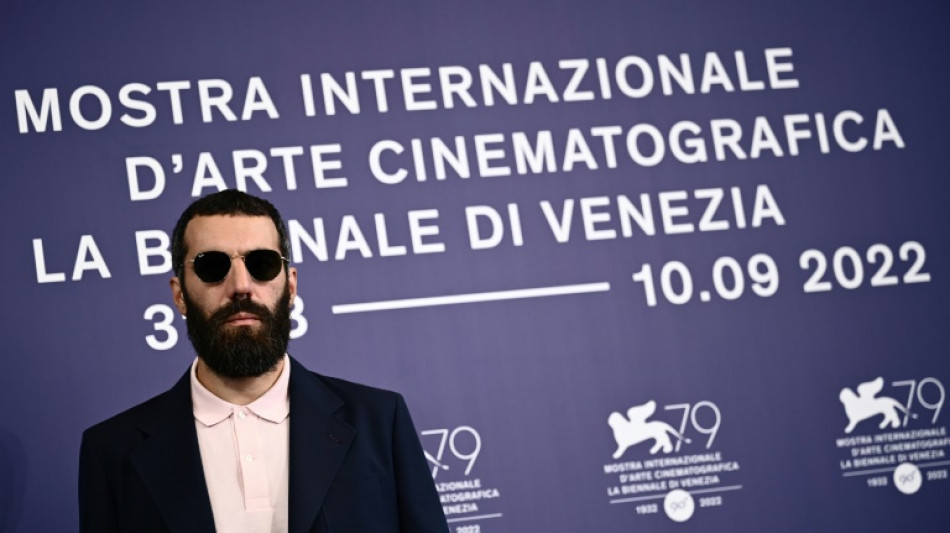
'Greek tragedy' set in France's neglected suburbs electrifies Venice / Photo: © AFP

 US Mortgage Rate Falls for Fourth Week but Remains Above 7%
 13 Native American-Owned Restaurants in Arizona to Experience Indigenous Culinary Traditions
 Best Digital Photo Frames 2026: Aura, Skylight, and Amazon Compared
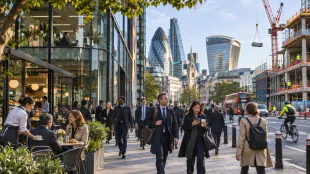 UK Economy Grows 0.7% in Third Quarter as Services Lead Expansion

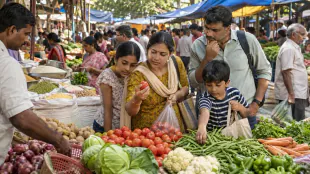 India's Retail Inflation Reaches 6.09% as Food Prices Accelerate
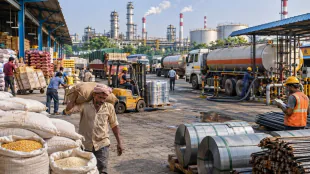
 China's October Activity Data Reveal a Weak Start to the Fourth Quarter
 South Korea Launches Probe into NewJeans Contract Controversy

 Helen Rees Reflects on Four Decades of South Africa's HIV Journey

 Foreign Investors Return to Indian Equities with ₹84,290 Crore Inflow

 Interactive Map Reveals 1,000 Unsolved Murders Across UK
Civil war sparks with lightning speed in Romain Gavras' film about riots in Paris' neglected suburbs, but don't ask the director to take sides on the violence plaguing France's tough "banlieues".
"It's not a film about police against youth," Gavras told AFP Saturday at the Venice Film Festival, adding that he did not consider his movie a political statement.
The French director imagines the youth insurrection in one of the countless gritty high-rise neighbourhoods ringing urban centres as a Greek tragedy in "Athena", giving heft and timelessness to one of France's most intractable social problems.
In the vein of 1995's "La Haine" or 2019's "Les Miserables", whose director here serves as producer and co-writer, "Athena" gives us a front-row seat inside the explosive suburbs as they careen towards chaos for a frenzied 24 hours, to tragic effect.
"I don't think I make films that have a message, I think I make films that try to transmit emotions," said Gavras, the son of fiercely political film-maker Costa-Gavras.
"When you work through emotions, with symbolism, you're more moved," he said.
France has struggled for decades to integrate its grim housing project neighbourhoods, home to a racially mixed community of mostly first- and second-generation immigrants.
Long neglected, and marked by high unemployment and few opportunities, the "banlieues" are prone to recurring social unrest and tensions with the police, exacerbated by episodes of police brutality.
- Enraged -
Not one minute into Gavras' film, all hell breaks loose.
The youth of Paris' projects are enraged over the latest episode of police brutality against one of their own and brazenly attack a police station.
From the moment the first molotov cocktail is thrown, Gavras never lets up the tension, capturing the euphoria, fear, recklessness and danger as the situation spirals out of control.
At the centre of the drama is a story of three brothers, whose differing responses to tragedy fuel the action.
Abdel, played by Dali Benssalah, is a soldier who returns home to his restive neighbourhood to attend his brother's funeral. His attempts to diffuse tensions in his neighbourhood are thwarted by younger brother Karim, newcomer Sami Slimane.
Older brother Mokhtar (Ouassini Embarek), meanwhile, is focused on keeping his drug-dealing business afloat as the violence escalates.
"This familial anger spills over to a group of people and a neighbourhood and a nation," Gavras said.
Images in the film -- such as the young rioters stripped to their waist and kneeling before police or officers hurling tear gas cannisters into crowds of protesters at close range -- are easily identifiable from recent events in France.
But weighing in on how to fix the cycle of violence is not his job, Gavras said.
"I make images, I have no solution, I am not a politician," Gavras said.
"I don't know if films can stop the anger," he added.
"On the other hand, giving a vision, like Greek tragedy does, of a dark future, that's interesting."
P.Anderson--BTB