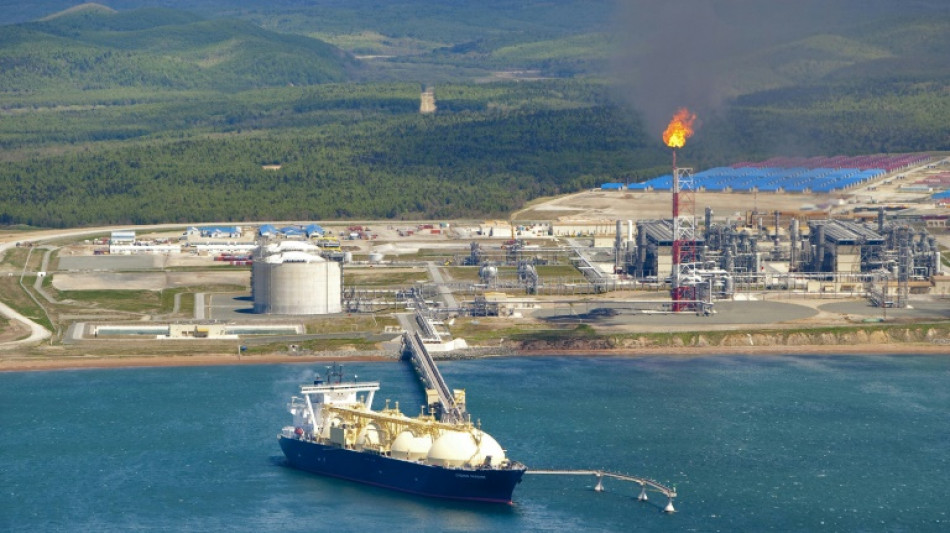
Moscow approves Japan stakes in Sakhalin energy project / Photo: © RIA NOVOSTI/AFP

 US Mortgage Rate Falls for Fourth Week but Remains Above 7%

 13 Native American-Owned Restaurants in Arizona to Experience Indigenous Culinary Traditions

 Best Digital Photo Frames 2026: Aura, Skylight, and Amazon Compared

 UK Economy Grows 0.7% in Third Quarter as Services Lead Expansion

 India's Retail Inflation Reaches 6.09% as Food Prices Accelerate

 China's October Activity Data Reveal a Weak Start to the Fourth Quarter
 South Korea Launches Probe into NewJeans Contract Controversy

 Helen Rees Reflects on Four Decades of South Africa's HIV Journey

 Foreign Investors Return to Indian Equities with ₹84,290 Crore Inflow

 Interactive Map Reveals 1,000 Unsolved Murders Across UK
Two Japanese trading houses will maintain stakes in a Russian energy project despite Tokyo joining sanctions on Moscow over the war in Ukraine, as the Asian country looks to secure its power supply.
Moscow is transferring operation of the Sakhalin-2 oil and gas project to a new Russian firm, with foreign stakeholders required to apply for approval to maintain their interests.
Like other countries that have joined sanctions, Japan is seeking to reduce its reliance on Russian energy imports but struggling to find alternatives.
The resource-poor country faced a power crunch during a summer heatwave this year, and is looking ahead to a potentially difficult winter.
Mitsubishi Corp said Thursday that its 10 percent stake in the Sakhalin-2 project had been approved by Moscow, a day after Mitsui said its 12.5 percent interest had also been given the green light.
The Japanese government had backed both firms continuing in the project.
Russia supplies around nine percent of Japan's liquified natural gas (LNG) demands, almost all of which comes from Sakhalin-2.
"This decision is extremely significant for our nation's stable energy supply," government spokesman Hirokazu Matsuno said at a regular briefing on Thursday.
"We will continue to monitor the situation to ensure stable LNG supplies, together with the public and private sectors."
Japan is heavily dependent on imported fossil fuels, in part because many of its nuclear reactors have been offline since the 2011 Fukushima disaster.
The country had previously ruled out withdrawal from the Sakhalin-2 project, despite joining Western-led energy sanctions on Russia.
Last week, Prime Minister Fumio Kishida called for a push to revive the country's nuclear power industry in a bid to tackle soaring imported energy costs linked to the war.
Before the Fukushima meltdown, around a third of Japan's power generation came from nuclear sources, but in 2020 the figure was less than five percent.
"LNG accounts for over one-third of electricity generation in Japan, while the recent closure of ageing thermal power plants has further constrained policymakers' options," wrote James Brady, vice president of Teneo consultancy, in a note.
"The Sakhalin decisions reflect the pragmatic realities of keeping the country's heat and lights on during the most challenging international energy market environment for decades."
L.Janezki--BTB