
India GDP surges 13.5% on pandemic rebound, despite headwinds / Photo: © AFP

 Brazil Faces Debt and Inflation Test as Lula Prepares Fourth Term

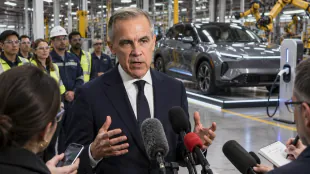 Canada Signals Openness to Chinese Automakers if US Trade Talks Fail

 US Mortgage Rate Falls for Fourth Week but Remains Above 7%

 13 Native American-Owned Restaurants in Arizona to Experience Indigenous Culinary Traditions

 Best Digital Photo Frames 2026: Aura, Skylight, and Amazon Compared

 UK Economy Grows 0.7% in Third Quarter as Services Lead Expansion

 India's Retail Inflation Reaches 6.09% as Food Prices Accelerate

 China's October Activity Data Reveal a Weak Start to the Fourth Quarter

 South Korea Launches Probe into NewJeans Contract Controversy

 Helen Rees Reflects on Four Decades of South Africa's HIV Journey

 Foreign Investors Return to Indian Equities with ₹84,290 Crore Inflow

 Interactive Map Reveals 1,000 Unsolved Murders Across UK
A post-pandemic rebound saw India's economy grow 13.5 percent in the June quarter, official figures showed Wednesday, but inflation and other headwinds signal a looming slowdown in Asia's third-largest economy.
The double-digit expansion from last year reflects a dramatic uptick in activity since mid-2021, when the peak of the country's most devastating coronavirus wave began to recede.
That outbreak saw thousands of people dying across India each day, overwhelming hospitals and crematoriums, and came after an extended lockdown that pummelled consumer spending and brought factories to a standstill.
Wednesday's figure from the national statistics office was the highest since the 20.1 percent expansion recorded during the same period last year, at a time when business activity was recovering from government shutdown edicts.
State Bank of India chief economic advisor Soumya Kanti Ghosh said in a note that India was navigating well through global uncertainty "with leading indicators continuing to show acceleration".
A rebound in capital inflows in August after months of investor flight from Indian debt and equities also pointed to improved sentiment, Ghosh said.
But Wednesday's result is lower than the 16.2 percent forecast by India's central bank, and other economists expect headwinds to buffet the economy and dampen growth into the next year.
Elevated crude oil prices and a seven percent fall in the rupee this year have hit living costs and left India struggling with a deteriorating trade balance.
India's merchandise trade deficit widened to a record $31 billion in July, compared to $10.6 billion in the same month last year, provisional data showed.
Import costs, led by petroleum products and coal, were more than twice as high as export revenues.
India imports more than 80 percent of its crude oil needs and shocks to the market since Russia's invasion of Ukraine have left its 1.4 billion people struggling with higher fuel charges.
Consumer inflation has consistently overshot the central bank's two-to-six percent target range this year, hitting an eight-year high of 7.79 percent in April before cooling to 6.71 percent in July.
In August, India's central bank hiked interest rates for the third time in four months, pushing borrowing costs up to pre-pandemic levels.
The Reserve Bank of India forecasts 7.2 percent growth for the current financial year owing to "geopolitical tensions" and the risk of "global recession".
The International Monetary Fund last month slashed its own outlook for the same period to 7.4 percent, a figure that still exceeds every other major economy besides Saudi Arabia.
T.Bondarenko--BTB