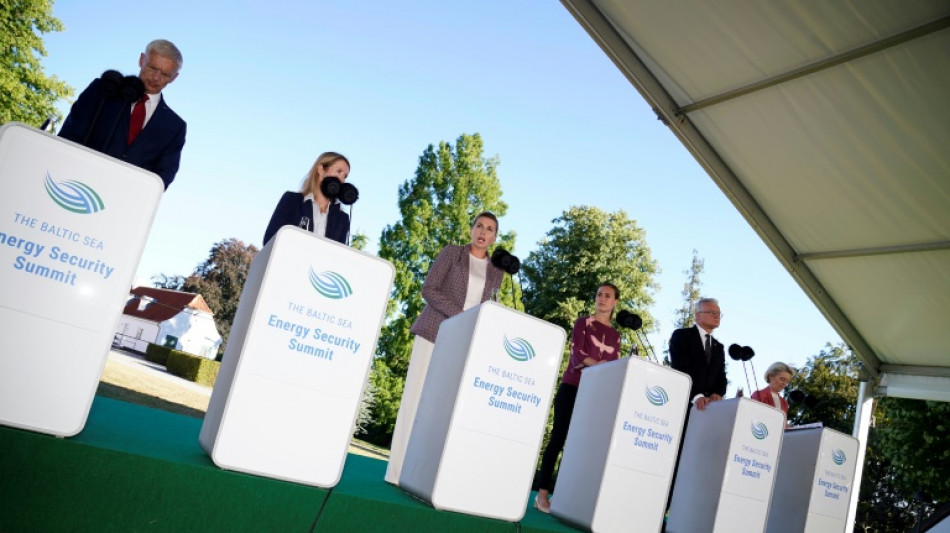
Baltic nations to boost offshore wind energy seven-fold by 2030 / Photo: © Ritzau Scanpix/AFP

 Brazil Faces Debt and Inflation Test as Lula Prepares Fourth Term

 Canada Signals Openness to Chinese Automakers if US Trade Talks Fail
 US Mortgage Rate Falls for Fourth Week but Remains Above 7%

 13 Native American-Owned Restaurants in Arizona to Experience Indigenous Culinary Traditions

 Best Digital Photo Frames 2026: Aura, Skylight, and Amazon Compared
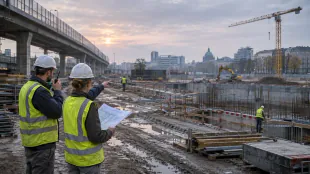
 UK Economy Grows 0.7% in Third Quarter as Services Lead Expansion

 India's Retail Inflation Reaches 6.09% as Food Prices Accelerate
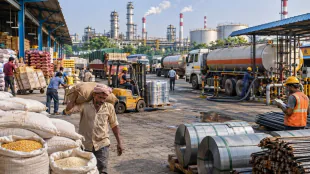
 China's October Activity Data Reveal a Weak Start to the Fourth Quarter
 South Korea Launches Probe into NewJeans Contract Controversy

 Helen Rees Reflects on Four Decades of South Africa's HIV Journey

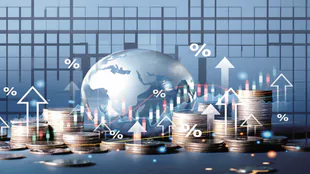 Foreign Investors Return to Indian Equities with ₹84,290 Crore Inflow

 Interactive Map Reveals 1,000 Unsolved Murders Across UK
Nations bordering the Baltic Sea agreed Tuesday to increase offshore wind energy to 20 gigawatts by 2030, as Europe seeks to wean itself off Russian gas following Moscow's invasion of Ukraine.
"We have agreed to increase offshore wind in the Baltic Sea seven-fold by 2030," Danish Prime Minister Mette Frederiksen told reporters after hosting a meeting between Denmark, Estonia, Finland, Germany, Latvia, Lithuania, Poland and Sweden.
"We are the frontline of European energy security", Frederiksen said.
Russia was the only Baltic Sea nation not in attendance at Tuesday's meeting.
"In this war Putin is using energy as a weapon and has put Europe, as we all know, on the brink of an energy crisis with skyrocketing energy prices", Frederiksen said.
Twenty gigawatts would be enough to supply electricity to 20 million households, "more than the current wind offshore capacity in the whole of the EU today", she added.
By 2050, the Baltic Sea's wind energy capacity could be brought to 93 gigawatts, the countries said in a statement.
"Putin's attempt to blackmail us with fossil fuels is failing", European Commission President Ursula van der Leyen said.
"We're accelerating the green transition. We are getting rid of the dependency on Russian fossil fuels," she added.
The Commission said in March it wanted to reduce dependence on Russian gas by two-thirds this year, and completely by 2030.
It also unveiled a target to increase its share of renewable energy from 40 to 45 percent by 2030.
The EU also aims to reduce greenhouse gases by 55 percent by 2030 and to be carbon neutral by 2050.
On Monday, Denmark said it would increase its wind capacity off the Baltic Sea island of Bornholm from two to three gigawatts, and link this production to Germany's electricity grid.
In May, Germany, Denmark, the Netherlands and Belgium announced a similar agreement to increase the North Sea's wind power capacity tenfold to 150 gigawatts by 2050 to help the EU achieve climate goals and avoid Russian hydrocarbons.
N.Fournier--BTB