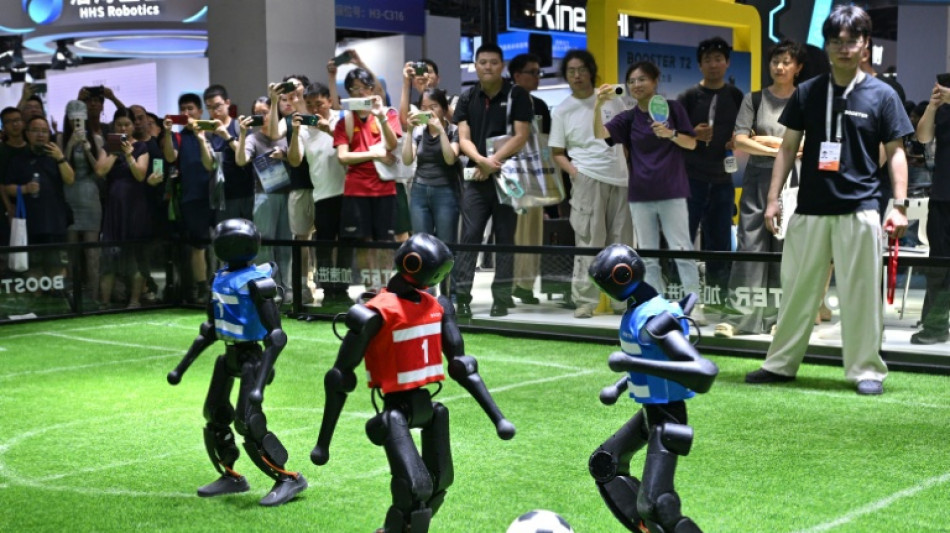
US government bans humanoid robots manufactured abroad / Photo: © AFP

 Russia probes bear attacks, as official says town under 'siege'

 Robertson tells Spurs to 'forget' past woes

 Italy police find 3 million euros stashed in mobster's house
 Renard versus Queiroz in AFCON qualifying blockbuster

 Former Mexico boss Aguirre returns to Spain with Valencia

 China swimmer, 13, seals Games hat-trick as North Korea win first gold

 China's Xi heads to US for talks with Trump: state media

 Azerbaijan pardons Frenchman after EU lifts sanctions on oligarchs

 Hadjar extends Red Bull contract for 2027 F1 season
 Black Sea drone attacks spell terror for Turkish sailors

 Canada judge to decide prison term for suicide poison seller

 Weinstein faces resentencing in New York for 2006 sex assault

 Outgoing UN chief makes climate push at New York summit
 AI risks, Iran war to take center stage at UN
 Badminton no.1 An tells dad to keep it down at Asian Games
 Runaway leader Antonelli eyeing third straight win

 Schoolgirl Yu, 13, fastest again in bid for third Asian Games gold
 Oil prices fall after Trump hails 'good' talks with Iran

 AI political ads warp reality ahead of US midterms

 Kenneth Branagh embraces action hero role -- to get in shape

 'New one' Klopp promises fresh approach as Germany reign begins

 Milne returns to New Zealand squad for India T20 series

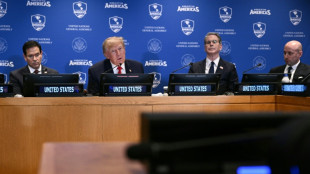 US-led Americas coalition backs sanctions against crime groups

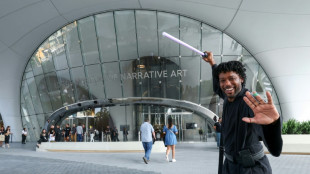 'Star Wars' fans and art lovers line up for new Lucas museum

 Trump renames AI 'super intelligence' as leaders jostle over dangers

US President Donald Trump's administration on Tuesday added humanoid and quadruped robots to a list of products and companies that are banned from being imported into the United States on national security grounds.
Most humanoid robots sold in the US are manufactured abroad, particularly in China.
"Advanced robotic devices" were added to the list, the Federal Communications Commission (FCC) announced Tuesday.
Certain types of drones, as well as Chinese companies Huawei and China Telecom, are already on the list, which now includes what the FCC called "mobile robots" -- or robots that mimic how humans and animals walk by standing on two or four legs.
The decision was based on findings from a task force convened by the White House, which concluded that the foreign-built robots could create "a cybersecurity risk that threatens the security of critical infrastructure" and "the safety and security" of US residents.
However, the Pentagon and Department of Homeland Security can grant exemptions.
Most humanoid robots are currently used for industrial applications in confined spaces, such as automobile factories or storage warehouses.
Among the examples cited by the task force was the case of French programmer Sammy Azdoufal, who reportedly accessed data from thousands of robotic vacuum cleaners made by Chinese manufacturer DJI.
The decision only applies to new models and not to those already sold or authorized in the United States, and it comes against the backdrop of the Trump administration's efforts to boost domestic manufacturing.
The FCC also added foreign-made inverters to the list -- devices that, among other functions, convert direct current from batteries or solar panels into standard alternating current, which can be used by the electrical grid.
Several robotics companies already manufacture some humanoid robots in the United States, including Boston Dynamics, Tesla, Figure AI and Agility Robotics.
South Korean automotive giant Hyundai -- which announced this month that it acquired Boston Dynamics -- has plans to build a robotics factory in the US that will eventually have the capacity to produce 30,000 units per year.
Tesla aims to begin industrial production of its own humanoid robot Optimus soon at two US factories.
The company claims it will eventually produce 1 million robots annually at the factory in Fremont, California and 10 million annually in Austin, Texas.
However, Tesla's efforts will involve assembly rather than full-scale production.
Buzzy startup Figure AI already assembles robots at its plant in San Jose, California, and Agility has a factory in Salem, Oregon, where it can produce up to 10,000 robots annually.
A Trump administration official specified that the ban covers robots that are fully assembled, as well as those assembled on US soil with more than 35 percent of their components manufactured abroad.
M.Schneider--VB