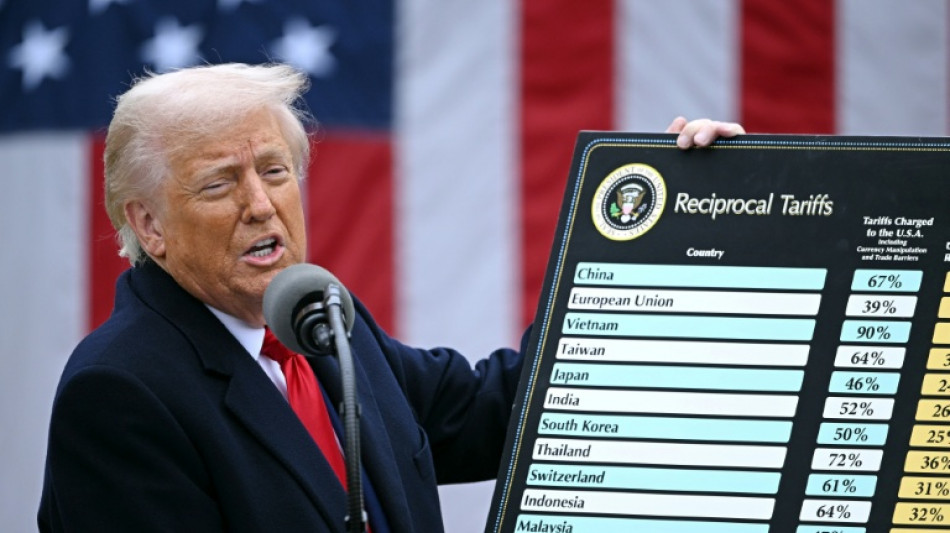
Trump tariff wall set to stay after Supreme Court blow: analysts / Photo: © AFP/File

 Alex Bodi and Prof. Dr Stefan Haupt agree to collaborate on a legendary art collection in Romania
 Stocks dip, oil rises as traders eye chances of Iran deal

 Israel squeezing UN Palestinian refugee agency ahead of polls: chief

 Dutch to resume Eurovision with new broadcaster
 Man Utd losses jump despite record revenues

 Ethiopia's Tigray rebels seize airports, clash with govt forces
 China prodigy wins third Games gold as North Korea weightlifters roar

 China's Yu, 13, wins third Asian Games gold but has 'some regrets'
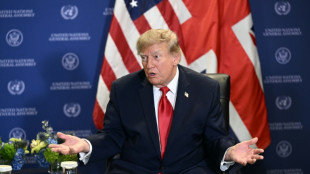 Oil falls, stocks steady as Trump hails 'good' Iran talks
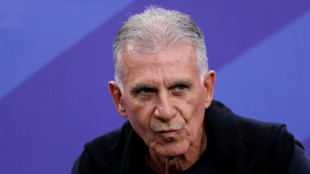
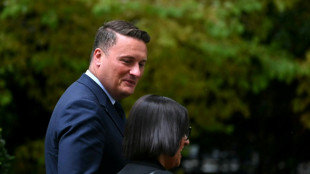 UK sets up unit to combat disinformation from Russia, AI

 ICC convicts C.Africa rebel leader

 China's Yu, 13, wins third gold with latest Asian Games record
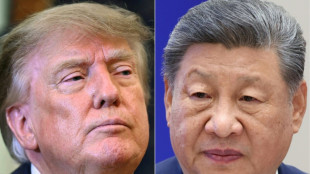
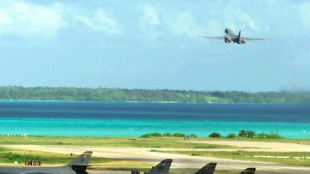 UK says will revisit Chagos deal after latest Trump criticism

 In first, French presidential candidate gives birth during campaign
 Cambodia no 'safe haven' for cyberscams, PM says
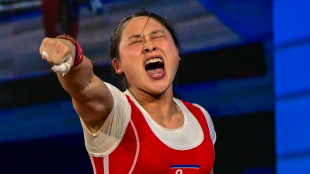 North Korea weightlifter sets three world records for Asian Games gold

 A Full Moon for Every Child: STARTRADER's STARCARES Brings Support to SOS Children's Village Ho Chi Minh City
 Meta leans into AI, smart glasses amid privacy pushback
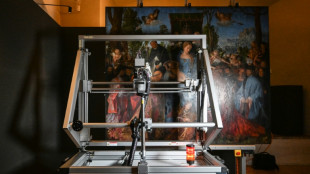 Battered Duerer masterpiece up for five-year revamp
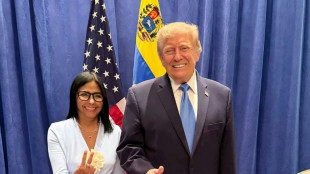 Trump met with Venezuela's interim leader at UN

 Malaysia furore after Najib wins conditional house arrest
 Italy hope for new dawn under Mancini

 Mongolian herders enlist new tech against harsher, drier climate
 Tata turmoil shines light on India succession woes
 World Cup 'not enough' as Spain begin next chapter
Circumventing the US Supreme Court, President Donald Trump has found a way to resurrect his tariff wall in a fashion that analysts say could prove more durable to legal challenges.
Just this week, Trump slapped sweeping new tariffs on 60 trading partners and saw 25-percent duties take effect on Brazilian products. Both cases involved an authority that has previously been used to impose levies.
Trump separately tapped an untested justification for 50-percent tariffs on many Canadian goods.
The actions and threats "underscore the president's continued affection for tariffs, and that they are not going away as long as he is in the White House," Asia Society Policy Institute senior vice president Wendy Cutler told AFP.
Trump's latest tariffs of 10 percent to 12.5 percent apply to goods from 60 economies starting Friday.
They came after probes over forced labor concerns, under Section 301 of the Trade Act of 1974.
Cutler said this has a lower likelihood of being overridden by courts, noting Trump's top trade official Jamieson Greer had carefully navigated procedural requirements before imposing duties.
More concerning was Trump's targeting of Canada using the untested Section 338 of the Tariff Act of 1930, the Atlantic Council's Josh Lipsky told AFP.
The justification was Canada's alleged discriminatory treatment of US exports, with duties effective after a month.
"That's more tariff-as-punishment" and could signal that Washington intends to keep less conventional tools at its disposal, Lipsky said.
This is an "uncertainty generator," added Scott Lincicome of the libertarian Cato Institute.
- Court's reluctance -
Already, Trump's newest tariffs face legal challenges from small businesses.
As courts have earlier allowed the use of Section 301 for imposing duties, arguments against Trump's latest salvo would likely focus on official findings that justified action, Lincicome said.
"That's just not something that courts typically want to weigh in on," he added.
Still, some argue that Trump lacks such broad powers to impose sweeping tariffs.
Within months of returning to the presidency, Trump unleashed a barrage of tariffs on US trading partners.
He invoked emergency economic powers to impose a swath of these duties quickly, a move deemed illegal by the high court this February.
Trump's sector-specific tariffs, imposed under different legal authorities on steel, automobiles and other goods, are unaffected.
Officials have since launched Section 301 investigations, including on forced labor, to reinstate duties.
Lincicome warns however that past investigations were more substantive. A probe into China during Trump's first term took a year to result in duties.
This time, probes into 60 economies including major partners like the EU and India spanned just four months.
- Hard to undo -
US tariffs are tough to undo. Former president Joe Biden, the Democrat who succeeded Trump after his first term, kept his predecessor's tariffs on China intact.
Even if a future leader wanted to reverse Trump's duties, revenue considerations will complicate the situation, Lipsky predicts.
Many countries were likely hoping the worst of trade wars are behind them, he said, but some may now have doubts.
The Trump administration has struck 19 framework or reciprocal tariff deals. Yet, threats of further duties loom with Washington investigating 16 economies including China, the EU and Japan over excess industrial capacity.
"The administration has been careful not to exceed the tariff levels agreed to in bilateral agreements," Cutler said. "But partners are concerned that this assurance may not hold."
Chad Bown of the Peterson Institute for International Economics believes Trump is missing a chance to address bigger problems like China's rare earth export curbs.
Trading partners have to "fight a two-front trade war –- dealing with Trump's tariffs and China's export restrictions –- instead of just being able to focus on China," he said.
While countries have expressed disappointment, Cutler said, there are no signs of retaliation, "knowing full well they would risk further US tariff escalation."
R.Braegger--VB