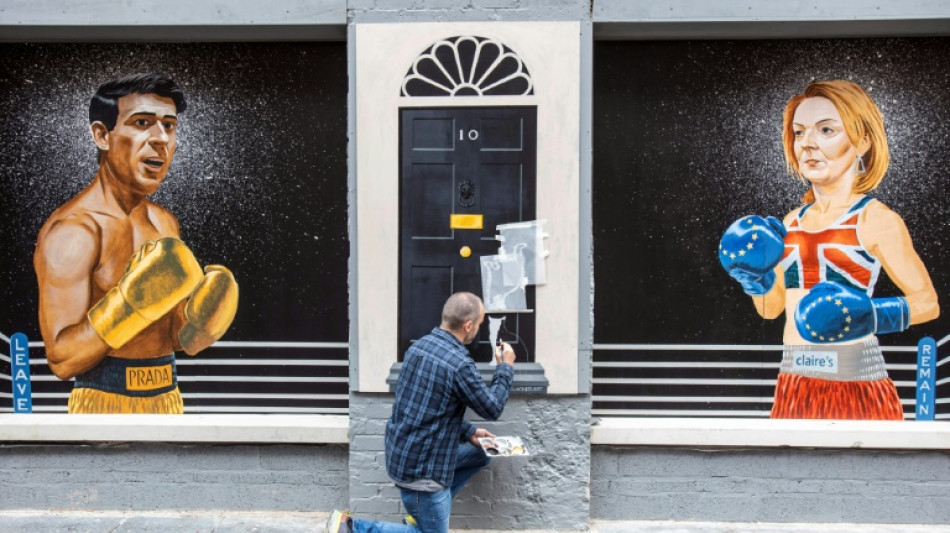
Cost of living crisis dominates UK leadership campaign / Photo: © AFP

 US Retail Sales and Fed Minutes Set Up a Critical Test for Consumers
 Oil Heads for Second Weekly Loss as Supply Surplus Emerges

 Brazil Faces Debt and Inflation Test as Lula Prepares Fourth Term

 Canada Signals Openness to Chinese Automakers if US Trade Talks Fail
 US Mortgage Rate Falls for Fourth Week but Remains Above 7%
 13 Native American-Owned Restaurants in Arizona to Experience Indigenous Culinary Traditions

 Best Digital Photo Frames 2026: Aura, Skylight, and Amazon Compared

 UK Economy Grows 0.7% in Third Quarter as Services Lead Expansion

 India's Retail Inflation Reaches 6.09% as Food Prices Accelerate

 China's October Activity Data Reveal a Weak Start to the Fourth Quarter
 South Korea Launches Probe into NewJeans Contract Controversy

 Helen Rees Reflects on Four Decades of South Africa's HIV Journey

 Foreign Investors Return to Indian Equities with ₹84,290 Crore Inflow

 Interactive Map Reveals 1,000 Unsolved Murders Across UK
With double-digit inflation and an economy teetering on the brink of recession, the cost-of-living crisis has dominated the race for Downing Street.
But the two candidates vying to succeed Boris Johnson as Conservative party leader and UK prime minister have differing approaches to the problem.
- Cost of living -
UK inflation is currently at 10.1 percent -- the highest level in 40 years -- with predictions that it could climb to 13 percent in October.
Analysts at Citibank believe it could even surge beyond 18 percent next year on the back of soaring energy costs.
A new energy price cap is due to be announced on Friday, as some experts predict certain households could soon be paying an eye-watering £6,000 ($7,100) a year for gas and electricity.
A University of York study suggested that more than half of UK households or 15 million people will be unable to keep their homes heated properly by January next year.
The leadership frontrunner Liz Truss has promised tax cuts and reversing increases in National Insurance contributions that fund the public health service and welfare payments.
She is also proposing to axe taxes on fuel which pay for the transition to cleaner energy and rejected "sticking plaster" solutions to the cost-of-living crisis such as direct government aid.
Supporters of the current foreign secretary say she is planning an emergency budget within weeks if she wins the internal party vote.
Her opponent, Rishi Sunak, believes cutting taxes will not have any effect on low-income households as they do not earn enough to pay them anyway.
The former finance minister -- privately wealthy through his career in business and by marriage -- favours direct help for low-income families more likely to be affected by the rise in prices.
He has called promises of tax cuts during an economic slump and skyrocketing inflation a "fairy tale"
Instead, he has proposed a cut in sales tax (VAT) on energy bills and to lower taxes on commercial properties (business rates).
- Energy -
Both candidates have officially backed the UK's ambition to achieve carbon neutrality by 2050.
But Truss, who favours all-out investment in energy including controversial fracking technology where it is backed by locals, called for a better way to achieve it without hurting people and business.
She wants more energy to come from the North Sea and backs current UK government policy on investment in nuclear power and renewables.
- Brexit -
Truss backed remaining in the European Union before the 2016 referendum on membership of the bloc, switching sides after the public voted to leave.
Now unashamedly pro-Brexit, she has spearheaded proposed legislation to override parts of the Northern Ireland Protocol the UK signed with the EU governing post-Brexit trade in the province.
She has promised to take all EU law off the UK statute book to help "turbocharge" growth.
Like Sunak, she has made no proposals to address chronic post-Brexit labour shortages in the UK, particularly of seasonal workers.
Sunak has been an ardent Brexiteer for years and was one of the main backers of the creation of free ports to boost growth.
- Financial regulation -
Truss has called for an overhaul of regulators in the City of London financial district if she becomes prime minister.
Notably she wants to merge the Financial Conduct Authority, the Prudential Regulation Authority which oversees banks and is part of the Bank of England, and the Payment Systems Regulator.
Truss has been critical of the Bank of England's response to rising inflation and has proposed examining the statute that gave it operational independence over monetary policy in 1997.
Governor Andrew Bailey noted in response that the UK's financial credibility was dependent on the bank's independence from government.
K.Thomson--BTB