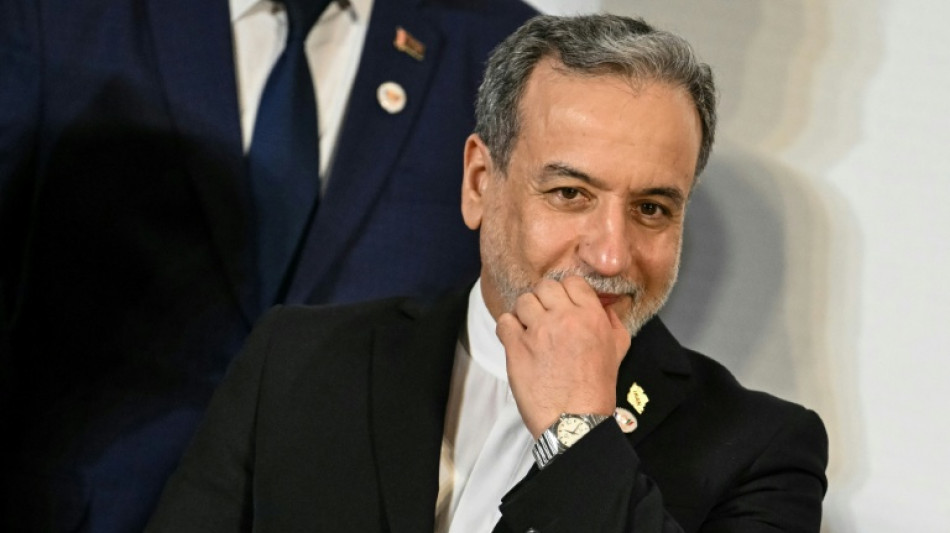
US-Iran deal could be finalised soon, mediator Pakistan says / Photo: © AFP

 Thailand slams chaotic Asian Games organisation as 'musical chairs'

 North Korea to keep nuclear weapons 'forever': foreign minister

 Markets mixed as China's Xi arrives for US talks
 Swiss voters expected to shun stricter neutrality
 Rapper-turned-PM faces first big test after Nepal disaster
 Tuchel seeks tonic to England World Cup 'scar' in Spain showdown
 'Helps me cope': Catholic baptisms rise among French youth
 Colombians in Santa Marta stay inside after violence wracks the city

 Iran airlines cancel flights as US sanctions hit
 Meta launches camera-free AI glasses amid privacy pushback
 Australian PM says OpenAI hacked government health website

 Xi arrives in US to personal Trump welcome

 Morocco elects new parliament amid social frustration, youth discontent
 Scheffler and Burns to face Im and Lee in Presidents Cup opener

 Crushing wins for Lyon and Barca in women's Champions League
 Rio breaks record for rainiest September amid powerful El Nino
 At UN, tech chiefs urge caution in AI development
 Russian strikes kill seven in Ukraine, Zelensky vows winter campaign
 Venezuelan shot by ICE needs urgent medical care, mother tells AFP

 Zelensky says Putin using fighters from 47 countries in Ukraine war

 Klopp calls on Germany to 'rise above ourselves' as new era begins

 Russian strikes kill seven in Ukraine as Russia vows no 'pause' to war

 ArcPoint Expands Globally with Institutional Intelligence Platform for Modern Investors

 Ronaldo focussing on 'present' ahead of Wales test

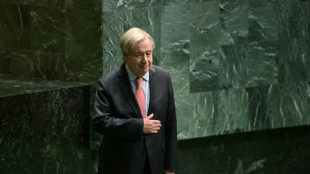 Outgoing UN chief makes final climate push at New York summit
The United States and Iran could finalise an agreement to end the Middle East war within as little as 24 hours, mediator Pakistan said Saturday, after both sides expressed optimism about the chances of concluding a deal.
The apparent momentum came in spite of new skirmishes in the Strait of Hormuz, which has been at the centre of the months-long war that has roiled the region and the global economy.
Weeks of negotiations on a long-term peace agreement following an April 8 truce have so far been fruitless, with US President Donald Trump repeatedly insisting a deal was near only for the wrangling to drag on.
"We are closer to a peace deal than ever before," Pakistani Prime Minister Shehbaz Sharif, whose country has played a crucial role in peace talks, wrote on X.
"With finalisation likely expected in the next 24 hours, Pakistan is preparing for the electronic signing of the peace deal immediately after, followed by technical level talks next week."
The schedule for the signing remains to be seen, however.
A Pakistani foreign ministry statement said it was planned for Sunday, while Iranian foreign ministry spokesman Esmaeil Baqaei on Saturday said it was yet to be determined, "although it will not be tomorrow".
He nonetheless added: "The possibility of this happening in the coming days cannot be ruled out."
Foreign Minister Abbas Araghchi had likewise said on Friday that the deal could be signed "in the coming days", while a senior US official had put their confidence in finally reaching an agreement at "80 to 85 percent".
However, the warring parties have released conflicting information about the contents of the deal, as each seeks to show it emerged from the war with the upper hand.
- Hormuz drones -
Among other things, Tehran has insisted on its right to enrich uranium and maintain control over the Strait of Hormuz, both of which appear to be sharply at odds with Washington's longstanding red lines.
The strait is a key maritime trade route carrying oil and gas from the Gulf to markets worldwide, and Tehran has blockaded the waterway since the outbreak of the war.
It has insisted vessels obtain permission from its armed forces before transiting, and has established a new body to oversee and collect tolls in the strait.
The US has responded with its own blockade of Iranian ports in an attempt to choke off the country's energy exports.
Earlier Saturday, the United States said it downed multiple Iranian drones over the strait.
The US military's Central Command posted on X that Iran had "launched multiple one-way attack drones in an attempt to strike commercial ships transiting the Strait".
It added that "US forces have downed all of them in recent hours".
- Diverging terms -
Trump on Friday denied that the peace deal favoured Tehran after Iranian media outlets published a purported breakdown that clashed with Washington's description.
The reports, Trump said in a social media post, "have NOTHING to do with the terms that were agreed to, in writing".
Araghchi provided some details on the deal in an interview with state television, saying it called for the lifting of the US naval blockade and unspecified changes to the administration of the Strait of Hormuz.
He also said the only way to deal with Iran's enriched uranium "is to dilute it inside Iran".
Trump, who has justified the war as necessary to prevent Iran from obtaining nuclear weapons, had previously said the US would take control of the uranium.
Prime Minister Benjamin Netanyahu of Israel -- which launched the war in tandem with the US in February -- said Trump had promised him any agreement would include the removal of Tehran's enriched nuclear material.
Iran has long insisted its nuclear programme is peaceful.
- 'Don't trust their word' -
In the streets of Tehran, there was scepticism the latest agreement would cross the finish line.
"I don't think there is any deal soon," said Saeed Sadeghi, 49. "I don't trust their word."
Another man in the city of Tonekabon named Ali, who only gave one name, said deal or no deal, Iranians would suffer.
"Neither outcome is in the people's interest. If they reach an agreement and no longer have to worry about the international community, they'll oppress people a thousand times harder," he said of the Iranian authorities.
There were also contrasting views among Iran's major media, with the reformist newspaper Etemad on Saturday welcoming the progress as a way to break "chronic geopolitical and economic deadlock".
But ultra-conservative newspaper Kayhan said Iran's leverage in negotiations lay in its control of Hormuz and that deterrent must be maintained.
"No sane person would bring their greatest strength to the negotiating table," it said.
burs-smw/jsa
J.Sauter--VB