
-
 Redmi Note 18 5G Battery Specs Leaked: Larger Capacity in Chinese Variant
-
Shomari Figures Defies Redistricting in Alabama Amid Disaster Relief Crisis

-
 COP31 Presidency Publishes First Draft Cover Decision on Climate Action
-
BYD Dolphin G Leasing Deal: Plug-in Hybrid Supermini Available from £174 a Month

-
 EU Club Group Files Antitrust Complaint Against UEFA Over Prize Money
-
Egypt Opens Registration for 2027 Total Solar Eclipse Viewing Packages

-
 Heat and El Niño Drive Surge in Preterm Births Across Southern Africa
-
French Economy Shrinks 0.1% as Consumer Confidence Slumps

-
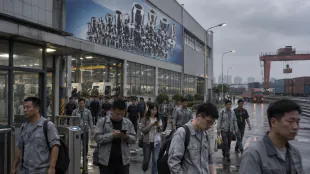 China's Factory Activity Contracts as Export Orders Weaken
-
Wall Street Ends Turbulent Week Higher Despite Inflation and AI Jitters

-
 US Retail Sales and Fed Minutes Set Up a Critical Test for Consumers
-
Kansas City Fed Chief Says Inflation Is Still Running Too Hot

-
 Oil Heads for Second Weekly Loss as Supply Surplus Emerges
-
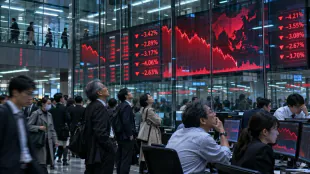
Asian Markets Slide as AI Concerns Hit Chip Stocks
-
 Brazil Faces Debt and Inflation Test as Lula Prepares Fourth Term
-
Tom Brady’s Viral Reaction to Deebo Samuel’s Trick-Play Touchdown

-
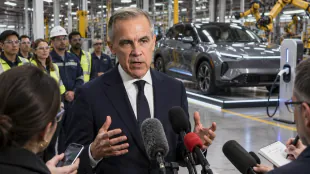 Canada Signals Openness to Chinese Automakers if US Trade Talks Fail
-
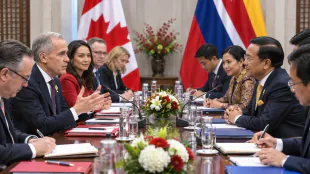
Canada Expands Asian Trade Push as US Negotiations Resume
-
 US Mortgage Rate Falls for Fourth Week but Remains Above 7%
-
US Jobless Claims Rise to 200,000 but Layoffs Remain Historically Low

-
 13 Native American-Owned Restaurants in Arizona to Experience Indigenous Culinary Traditions
-
Italy Raises 2026 Growth View but Warns Energy Will Keep Inflation High

-
 Best Digital Photo Frames 2026: Aura, Skylight, and Amazon Compared
-
Euro-Area Growth Slows to 0.4% While Employment Stalls

-
 UK Economy Grows 0.7% in Third Quarter as Services Lead Expansion
-
US Wholesale Inflation Eases Monthly but Hits a Four-Year Annual High

-
 India's Retail Inflation Reaches 6.09% as Food Prices Accelerate
-
India's Wholesale Inflation Jumps to 12.29% as Fuel Costs Surge

-
 China's October Activity Data Reveal a Weak Start to the Fourth Quarter
-
Japan's Economy Edges Into Contraction as Costly Oil Weighs on Demand
-
 South Korea Launches Probe into NewJeans Contract Controversy
-
Colin Farrell and Emma Fogarty on Friendship, Disability, and 'The Slightest Touch'

-
 Helen Rees Reflects on Four Decades of South Africa's HIV Journey
-
Knicks Coach Mike Brown Unfazed by Josh Hart's Offensive Struggles

Scholz opens door to extend nuclear as Russia squeezes gas supply
German Chancellor Olaf Scholz on Wednesday raised the possibility of keeping nuclear plants going as he accused Russia of blocking the delivery of a key turbine to throttle gas supplies to Europe.
The continent's biggest economy has been scrambling for energy sources to fill a gap left by a reduction in gas supplies from Moscow.
Standing next to the turbine, Scholz said that extending the lifetime of Germany's three remaining nuclear power plants "can make sense".
The power stations, which are set to be taken off the grid at the end of the year, were "relevant exclusively for electricity production, and only for a small part of it," Scholz said.
In total, the nuclear fleet accounts for six percent of Germany's electricity output.
The government has said it will await the outcome of a new "stress test" of the national electric grid before determining whether to stick with the long-planned phaseout.
- Nuclear switch -
Former Chancellor Angela Merkel spectacularly decided to ditch atomic energy in 2011 following the Fukushima nuclear disaster in Japan.
Extending the lifetime of the plants has set off a heated debate in Germany, where nuclear power has been a source of controversy stretching back before Merkel's move.
The question has split the governing coalition, with Scholz's Social Democrats and the Greens hitherto sceptical, and the FDP favouring an extension.
Germany has already moved to restart mothballed coal power plants to guard against an energy shortfall.
The first of these was already "supplying electricity to the network", Scholz said Wednesday, adding that Germany had to prepare for a "difficult time".
The squeeze comes as Russia dwindles supplies of gas, which Germany has long relied on to power industry and heat homes.
Russian energy giant Gazprom has chalked up limited supplies to technical issues.
The delayed return of a turbine from Canada, where the unit was being serviced, was behind the initial reduction in deliveries via the Nord Stream 1 gas pipeline in June, according to Gazprom.
Supplies via the energy link were further reduced to around 20 percent of capacity in late July, after Gazprom halted the operation of one of the last two operating turbines due to the "technical condition of the engine".
- Turbine trouble -
Berlin has dismissed Gazprom's justifications for the reduction to supply, seeing instead a "political" move in response to the West's support for Ukraine.
The turbine which was transferred from Canada to Germany was "available and working", Scholz said Wednesday.
"There is no reason why this delivery cannot happen," he said, adding that it had received "all the approvals" needed for export from Germany to Russia.
Pipeline operators only had to say "they want to have the turbine and provide the necessary customs information for transport to Russia", Scholz said.
But Kremlin spokesperson Dmitry Peskov insisted that Gazprom was still waiting for documents confirming the unit was "not affected by sanctions".
It was however "technologically possible" in the opinion of Russian President Vladimir Putin to continue deliveries via the Nord Stream 2 pipeline, Peskov said.
The second pipeline, which runs parallel to Nord Stream 1, stands completed but was blocked by the German government in the run up to the invasion of Ukraine.
Former Chancellor Gerhard Schroeder, who signed off on the pipeline while in office, told German magazine Stern it was "the easiest solution" to use Nord Stream 2 instead.
But Scholz has rejected the call, saying Nord Stream 1 provided sufficient capacity for gas flows.
F.Pavlenko--BTB
