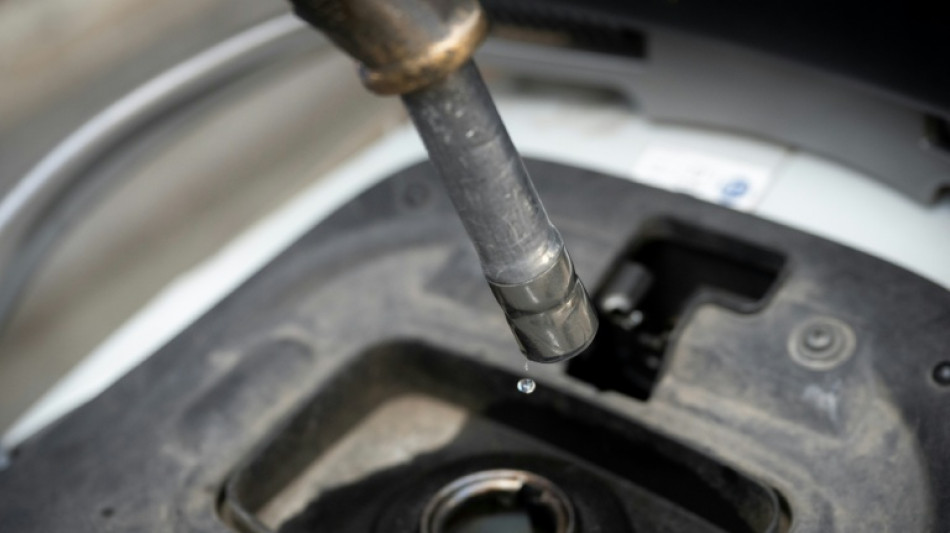
Countries act to limit fuel price rise, cut consumption / Photo: © AFP/File

 Welcome aboard the Costa Serena, the Asian Games floating hotel

 Asian markets mixed after recent oil surge
 Cash for nature protection: hotelier's offer to Principe islanders
 US miner KoBold bets on AI to gain edge in DR Congo mineral hunt

 Internet disrupted in Ethiopia as conflict rages

 Asian markets mixed after oil gains

 'Genius' Ohashi bids for third Asian Games gold after world record

 India's 'Tree Father' plants for a greener future
 Hopping mad: New health warning stirs up Belgian brewers
 Canadian capital to rename 'Trump Ave'
 Pope heads to France on first state visit in 18 years

 Bacteria suspected in deaths of hundreds of baby whales off Argentina

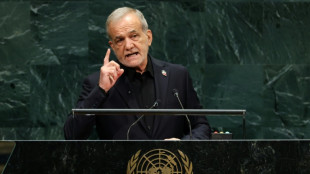 US 'must choose' whether to end war: Iran president to Fox News

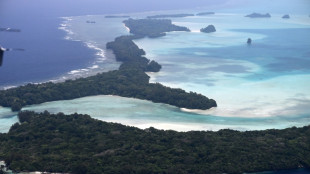 UN approves resolution on dealing with rising sea levels

 Yalcouye makes dream debut as Ivory Coast beat Ghana in AFCON qualifier

 Chicago's White Sox and Cubs book MLB playoff berths

 Last-gasp Gakpo strike snatches Dutch draw to sour Klopp debut

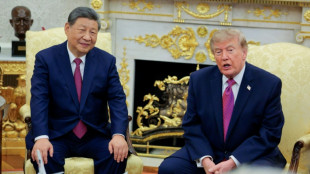 Global stocks mostly fall as oil prices and bond yields rise

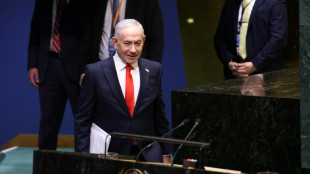 Israel's Netanyahu denounces enemies, allies in fiery UN speech
 Hollywood stars among arrests in NY anti-Netanyahu protest

 Losing start in AFCON qualifying for 78-year-old coach Le Roy
 Italy bans burqas in schools, caps numbers of foreign students per class

 Israel policies threaten 'life and existence' of Palestinians, Abbas says

 Paolini steers Italy past China in BJK

 Zidane admits emotion on eve of first game as France coach

The surge in fuel prices triggered by the war in the Middle East has prompted countries to take measures to limit the financial impact on consumers and businesses.
Countries have also moved to reduce consumption, especially when they have limited reserves.
Here are some of the measures that have been adopted:
- Tax cuts and aid -
Some countries are targeting the price of fuel in order to limit the impact of the rise of crude oil prices on consumers and businesses.
Spain has launched a five-billion-euro ($5.8-billion) plan that reduces the value added tax (VAT) on fuel which should result in a reduction of 30 euro cents per litre.
A similar measure is in place in Portugal and has been announced in Sweden.
Since US-Israeli attacks on Iran set off the war on February 28 a number of countries such as Croatia, Hungary, South Korea and Thailand have set price limits on fuel.
Vietnam has waived customs duties on fuel imports through the month of April.
Japan is using subsidies to refiners to ensure the pump price of petrol stays around 170 yen ($1.07) per litre, having hit a record 190.8 yen in the middle of the month.
Taiwan uses a mechanism that absorbs 60 percent of increases.
China on Monday limited the amount that fuel prices may rise at the pump.
Greece has earmarked 300 million euros ($347 million) in relief for households and farmers in April and May to help them cope with rising fuel prices.
Morocco has put in place a special direct subsidy for road transport firms.
Brazil has announced temporary measures to limit fuel price increases, including suspending taxes on diesel fuel.
Germany has banned service stations from raising prices more than once per day.
- Stocks, rationing, restrictions -
The war is also forcing countries to dip into their strategic stocks and take other measures to avoid shortages, including rationing and reducing travel.
The 32 member countries of the International Energy Agency (which includes the G7 nations) have released a record amount from their strategic reserves.
Bangladesh has imposed rationing.
Egypt has limited non-essential travel by government employees.
The Philippines has reduced ferry services and prices of local public transport have risen.
India, the world's number two importer of liquefied petroleum gas which is used to produce cooking gas, has prioritised supplies for households.
South Korea's ruling party said the country will lift a cap on coal-powered generation capacity set at 80 percent and boost the use of nuclear power to about the same level.
- Reducing energy consumption -
Other countries are introducing measures to reduce fuel consumption.
Thailand is encouraging government employees to work from home, while Vietnam is encouraging employers to do so.
Indonesia is looking at imposing one day of working from home for government employees, while the Philippines has gone further, introducing a four-day work week for government employees.
In Thailand, the temperature in public buildings has been raised to 26 degrees Celsius (79F) to reduce electricity consumption for air conditioning.
Vietnam is encouraging people to ride bicycles, share rides and use public transport.
Bangladesh shut universities and brought forward the Eid holidays, the end of the Muslim holy month of Ramadan, to limit electricity consumption.
It also cancelled decorative light displays on government buildings on Eid and those scheduled for Independence Day celebrations on March 26 and asked shopping malls to do the same.
Countries are also looking at importing Russian crude after the United States temporarily suspended sanctions in mid-March.
I.Stoeckli--VB