
-
 Williams boss hails Chadwick as F1 inspiration for women
-
Pope warns against losing humanity in 'paradise of machines'

-
 World No.1 Sinner delays return with China Open withdrawal
-
From FBI warning to literary acclaim: the Russian journalist who took on Putin

-
 South Lebanon children return to school destroyed by Israel strike
-
China swimmer in Asian Games first as North Korea lifters reign

-
 Jewish group urges Berlin far-left vote winners to tackle antisemitism
-
French literary prize removes novel from longlist after AI claims

-
 European stock markets climb as oil prices drop
-
China's Zhang wins record seventh Asian Games swimming gold

-
 Trump accuser E. Jean Carroll finally has her damages
-
Verstappen edges Russell in final practice in Azerbaijan

-
 Germany's Havertz, Musiala ruled out of Greece match with injury
-
English, Spanish, Italian, German football leagues call for FIFA reform

-
 Ireland's Gaza stance spills from Eurovision into football
-
Pope arrives in France on first official visit in 18 years

-
 Welcome aboard the Costa Serena, the Asian Games floating hotel
-
Pope arrives in France on first state visit in 18 years

-
 Asian markets mixed after recent oil surge
-
Heavy fighting, internet disruption as Ethiopia conflict rages

-
 Cash for nature protection: hotelier's offer to Principe islanders
-
From transit to consumption: drug use surges in Mozambique

-
 US miner KoBold bets on AI to gain edge in DR Congo mineral hunt
-
Chicago teams, Guardians and Padres all book MLB playoff berths

-
 Internet disrupted in Ethiopia as conflict rages
-
Bijan Robinson destroys Packers in 35-14 win for Falcons

-
 Asian markets mixed after oil gains
-
Harimoto hails new era as Japan dethrone table tennis kings China

-
 'Genius' Ohashi bids for third Asian Games gold after world record
-
India rape cases turn focus back onto women's safety

-
 India's 'Tree Father' plants for a greener future
-
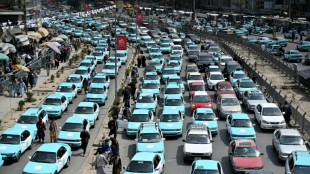
Rebellious Afghan taxi drivers defy ban on music
-
 Hopping mad: New health warning stirs up Belgian brewers
-
Brazil candidates mount digital armies for fierce online campaign

-
 Canadian capital to rename 'Trump Ave'
-
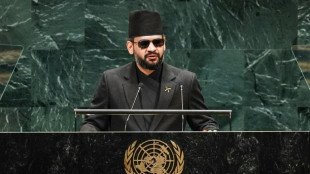
Nepal PM says floods 'a warning to the world' about climate change
-
 Pope heads to France on first state visit in 18 years
-
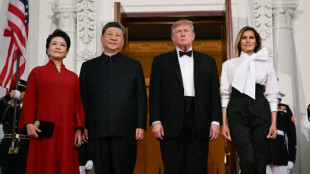
Trump hosts Xi for state dinner as pomp masks tensions
-
 Bacteria suspected in deaths of hundreds of baby whales off Argentina
-
Scheffler and Burns give US 3-2 Presidents Cup lead

-
 US 'must choose' whether to end war: Iran president to Fox News
-
Hollywood stars among 100 arrested in NY anti-Netanyahu protest

-
 UN approves resolution on dealing with rising sea levels
-
Klopp denied on Germany debut as Portugal win in Nations League

-
 Yalcouye makes dream debut as Ivory Coast beat Ghana in AFCON qualifier
-
Rich nations should foot climate bill, says Nepal minister

-
 Chicago's White Sox and Cubs book MLB playoff berths
-
Wellalage and Mendis star as Sri Lanka level England series in thriller

-
 Last-gasp Gakpo strike snatches Dutch draw to sour Klopp debut
-
Felix gives Portugal win over Wales as Ronaldo misfires

China approves 'ethnic unity' law condemned by rights groups
China approved what it called an "ethnic unity" law on Thursday, which rights advocates warn could further marginalise minority groups such as the Uyghurs.
The law, passed by the National People's Congress, formalises policies to promote Mandarin as the "national common language" in education, official business and public places.
China's government has been accused for decades of pursuing policies to force assimilation across the vast country into the Han majority.
Social cohesion is a key focus of the new "ethnic unity" law, which criminalises engaging in "violent terrorist activities, ethnic separatist activities, or religious extremist activities".
The law aims to "strengthen cohesion" within China, which the legislation argues is undergoing unprecedented social change.
China officially recognises 55 official ethnic minorities within its borders that speak hundreds of languages and dialects.
Government policies have already directed that Mandarin Chinese be used as the language of instruction in some areas with large minority populations, such as Tibet and Inner Mongolia.
Yalkun Uluyol, a China researcher at Human Rights Watch, described the new legislation as a "significant departure" from a Deng Xiaoping-era policy that guaranteed the right of minorities to use their own languages.
Educational institutions will now need to use Mandarin as the principal teaching language. Teenagers will now be required to have "a basic grasp" of Mandarin upon completing compulsory education.
No minority languages are specifically cited in the new law, although it will likely affect Uyghur, Mongolian and Tibetan speakers.
"It is no coincidence that the law targets spaces where children are most likely to encounter their mother tongue," Erika Nguyen from PEN America told AFP.
"The intent being to sever children's ties with their identity, history, and culture."
A recent report by PEN and the Southern Mongolian Human Rights Information Center (SMHRIC) said that more than 80 percent of Mongolian language websites in China have been "censored or banned".
Requiring fluency in Mandarin in public life could also inhibit the chances of Mongolian-speakers advancing professionally, SMHRIC director Enghebatu Togochog said in a statement.
"Economically, it marginalises Mongolians, as Chinese fluency becomes a gatekeeper for jobs and advancement," Togochog said.
The law also states that its provisions can also be applied outside China's borders.
While it calls for "strengthening ties" with overseas Chinese communities, it also warns that people outside China who "engage in activities that undermine ethnic unity" or inciting "ethnic separatism" will be held legally liable.
W.Huber--VB