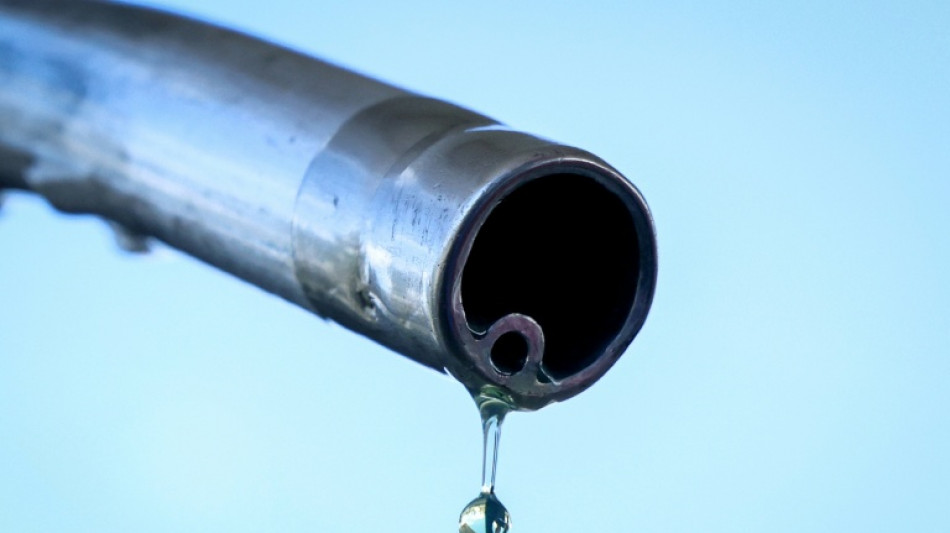
Oil crisis: Is world better placed than in 1973? / Photo: © AFP/File

 Williams boss hails Chadwick as F1 inspiration for women
 World No.1 Sinner delays return with China Open withdrawal

 South Lebanon children return to school destroyed by Israel strike

 Jewish group urges Berlin far-left vote winners to tackle antisemitism

 European stock markets climb as oil prices drop

 Trump accuser E. Jean Carroll finally has her damages
 Germany's Havertz, Musiala ruled out of Greece match with injury
 Ireland's Gaza stance spills from Eurovision into football
 Welcome aboard the Costa Serena, the Asian Games floating hotel

 Asian markets mixed after recent oil surge

 Cash for nature protection: hotelier's offer to Principe islanders
 US miner KoBold bets on AI to gain edge in DR Congo mineral hunt
 Internet disrupted in Ethiopia as conflict rages

 Asian markets mixed after oil gains

 'Genius' Ohashi bids for third Asian Games gold after world record

 India's 'Tree Father' plants for a greener future
 Hopping mad: New health warning stirs up Belgian brewers
 Canadian capital to rename 'Trump Ave'
 Pope heads to France on first state visit in 18 years
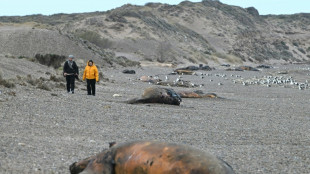 Bacteria suspected in deaths of hundreds of baby whales off Argentina

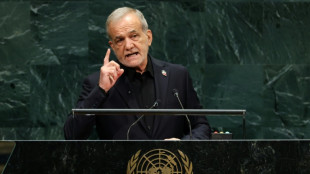 US 'must choose' whether to end war: Iran president to Fox News

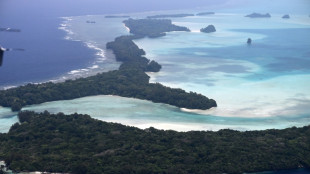 UN approves resolution on dealing with rising sea levels

 Yalcouye makes dream debut as Ivory Coast beat Ghana in AFCON qualifier

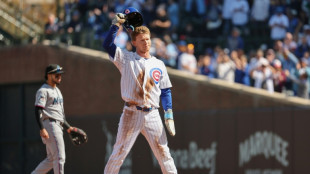 Chicago's White Sox and Cubs book MLB playoff berths

 Last-gasp Gakpo strike snatches Dutch draw to sour Klopp debut

Ten days after the first American and Israeli strikes against Iran, oil prices have cooled slightly after soaring above $100 a barrel.
Even if they risk rocketing once more because of ongoing military action, the situation remains very different compared with the oil shock of 1973. AFP looks at why:
- Blockade versus embargo -
The current crisis' mechanics differ radically from those of 1973. Back then, the shock was political -- a deliberate embargo by OPEC's Arab member countries against pro-Israeli Western nations during the Yom Kippur War.
In 2026, the shock is logistical -- a military blockade of the Strait of Hormuz by Iran, a key transit point through which 20 percent of global production usually passes.
In the current situation, the resource is not being refused by producers, rather it is physically blocked.
Saudi Arabia, Iraq, the United Arab Emirates and Kuwait have the capacity to open the floodgates to stabilise the market but they are hampered by the fact that "they are all dependent on Hormuz", Francis Perrin, an energy expert at French think tank IRIS, told AFP.
This bottleneck is the result of a lack of sufficient alternative routes to export Middle Eastern crude.
These Gulf giants have already begun reducing their production owing to a lack of local storage capacity, noted Jorge Leon, an analyst at Rystad Energy.
"The current crisis could potentially become a major energy crisis if this is sustained over time," he told AFP.
It is this difference in nature -- a physical barrier rather than a deliberate diplomatic rupture -- that makes a price explosion similar to that of 1973, when prices quadrupled in three months, virtually impossible according to analysts.
- Pressure of US elections -
Iran's threat to block Middle East exports of oil to US and Israeli allies as long as the war continues aims to keep energy prices high, heaping pressure on the United States ahead of its midterm elections in November.
President Donald Trump will want to avoid at all costs a prolonged surge in oil prices, which would become his political Achilles' heel.
On Monday, Trump contained price increases by asserting that the war could end sooner than expected.
He said he would also waive some sanctions on Russia, having allowed India to temporarily import Russian oil.
- Strategic reserves -
Unlike the first oil shock, when Western countries were caught off guard, OECD members can now rely on massive strategic reserves, equivalent to three months of imports.
This safety net is managed by the International Energy Agency, an institution created in the aftermath of the 1973 crisis to address this type of emergency.
To compensate for the Iranian blockade, the IEA could soon inject some of these reserves into the market to curb price speculation and fill the supply gap.
It is an essential safety valve that remains "effective only if the conflict doesn't last too long", cautioned Perrin.
- Affect on green transition -
The balance of power has also radically changed. While OPEC took advantage of the chaos in 1973 to impose record prices, exporting countries today fear that fresh all-time peaks could form the strongest argument for a transition to green energy.
The challenge is all the more complex because the world remains hooked on oil.
"We are still struggling to replace the king that is oil," said Perrin, recalling its indispensable role in transportation and petrochemicals.
While crude oil's share of the global energy mix has decreased, overall consumption is reaching record highs.
"If the conflict drags on for a few more weeks, prices could easily climb to $140," predicted Leon, weakening the global economy.
F.Fehr--VB